

























































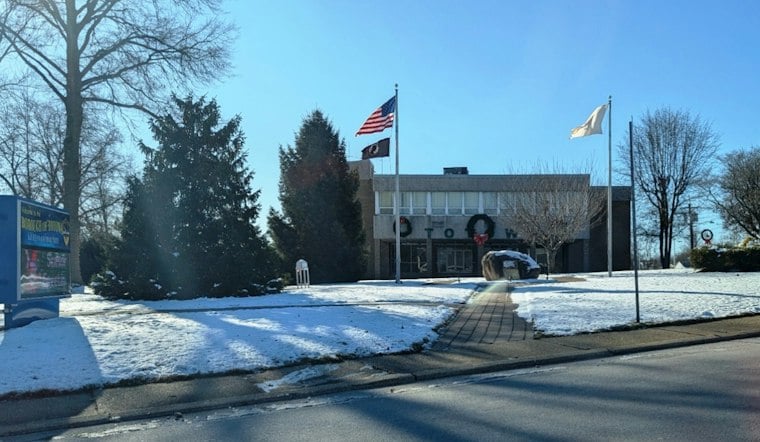
Totowa’s Borough Council has introduced a proposal to ban commercial drone delivery hubs anywhere in the borough, with officials saying they would rather get ahead of the issue than wait for a company to show up and start flying packages over residents’ backyards. The plan would block drone takeoffs, landings, testing and storage facilities on borough-owned property, and would stop commercial operators from dropping packages on that same public land.
According to TAPinto, the ordinance is meant to address privacy and safety concerns before any drone delivery company actually establishes operations in Totowa. Borough-owned property covered by the ban includes municipal buildings, parks, parking facilities and public sidewalks, and the measure would apply to all of Totowa’s zoning districts, including commercial and industrial areas, to the extent permitted by federal and state law.
Why Totowa Is Acting Now
Mayor John Coiro said Amazon’s reported plans for drone deliveries in South Jersey are what pushed the proposal forward, per the mayor. New Jersey is not currently among Amazon’s operating drone delivery locations, and Totowa has not received any inquiries or proposals from companies interested in establishing drone delivery operations there, but officials wanted rules in place regardless.
“We don’t want drones delivering product. We don’t want drones sort of spying on our residents,” Coiro said, according to the same report. Totowa reviewed model ordinances and restrictions already adopted by Woodland Park and Wayne, and officials chose to prohibit hubs throughout the entire borough rather than allow them in selected commercial or industrial zones. A key concern driving that decision, the report notes, was the difficulty of distinguishing legitimate deliveries from drones that could be used to invade residents’ privacy.
What The Ordinance Would and Wouldn't Cover
Under the proposal, individual deliveries would still be allowed where otherwise lawful, as long as no delivery hub is established in Totowa. A delivery hub is defined as a building, rooftop or other property used to store, charge, launch or land drones transporting commercial goods. Deliveries to private property would still require permission from the property owner or lawful occupant, and residents could continue using drones on their own property, or on private property with permission, subject to federal, state and local requirements.
The ordinance would also prohibit drone operations that cause unauthorized physical contact with people, vehicles, buildings or other property, or that create dangerous conditions, and any drone activity on borough-owned property would have to comply with existing noise regulations. There are carve-outs, too: authorized law enforcement, firefighting, emergency medical and other government operations are exempted, and educational institutions, nonprofits and research facilities may conduct lawful drone activities under applicable regulations.
Enforcement Questions Remain
Coiro acknowledged that enforcing drone restrictions could be difficult, especially when aircraft are simply flying overhead, per the mayor. Totowa still needs to determine its available enforcement options and how other municipalities actually police drone operations in practice. That tension reflects a broader legal reality: the Federal Aviation Administration oversees aviation safety and airspace use, including airspace below 400 feet, while municipalities generally hold more authority over land use, zoning and activities on the property they control than over aircraft flight paths themselves. The proposed ordinance recognizes those federal limitations and would apply its restrictions only to the extent permitted by law.
Violators could face fines ranging from $500 to $1,250 per violation, with unauthorized drone takeoffs, landings or deliveries potentially triggering additional penalties. Continuing violations could be treated as separate offenses for each day they occur. The Totowa police chief is separately looking into the broader drone delivery issue, the report states.
The Mayor Sees Upside, Too
Coiro wasn’t only focused on the downsides. He said drones can serve useful purposes, particularly in public safety, describing a scenario in which police could send a drone to a traffic accident to observe scene conditions before officers physically arrive. The ordinance was introduced on first reading, and a second-reading vote was expected at the Borough Council’s next meeting.
How Other Towns Are Handling Drone Delivery
Totowa’s move comes as Amazon has been pushing to widen its Prime Air footprint nationally. The company said over the summer that it wanted to expand drone delivery coverage to nearly 500 cities and towns nationwide by the end of the year, even though, at the time, its Prime Air program operated from launch sites in just 11 U.S. cities, none of them in the Northeast, according to inquirer.com. Amazon representatives had told West Deptford and Mantua officials in South Jersey that the company planned to begin drone delivery from its West Deptford facility as early as October, and nj.com reported Amazon expected to launch deliveries in parts of southern New Jersey from that same fulfillment center around the same timeframe.
Other municipalities have taken a more permissive, regulatory approach rather than an outright ban. A Belvedere staff report recommended regulating commercial drone delivery ground activity, proposing delivery hours of 8 a.m. to 8 p.m. seven days a week, and suggested that such facilities only be allowed in the Mixed Use zone with a conditional use permit. That same staff report cautioned that a total ban on commercial drone deliveries creates an even greater risk of violating federal law. Elsewhere, the shift from planning to reality is already underway: the Chicago Tribune reported that Amazon began Prime Air deliveries from its Markham, Illinois, location in October, serving an area within a 7.5-mile radius. West Deptford officials, meanwhile, told 42freeway.com that Amazon still needed FAA approval for its specific local operation and airspace, along with Planning or Zoning Board approval, before deliveries could proceed there. Amazon has said its delivery drones’ cameras do not track individuals or record movement, per the same Inquirer report.


