

























































A towering fiberglass pirate skull that once loomed over the Las Vegas Strip has left its resting place at the Neon Boneyard, lifted by crane and hauled off for a long-overdue touch-up. The sculpture, one of the last physical relics of Treasure Island's original pirate-themed marquee, is now in the hands of restoration crews who plan to patch it up before sending it back to the museum that has kept it safe for more than two decades.
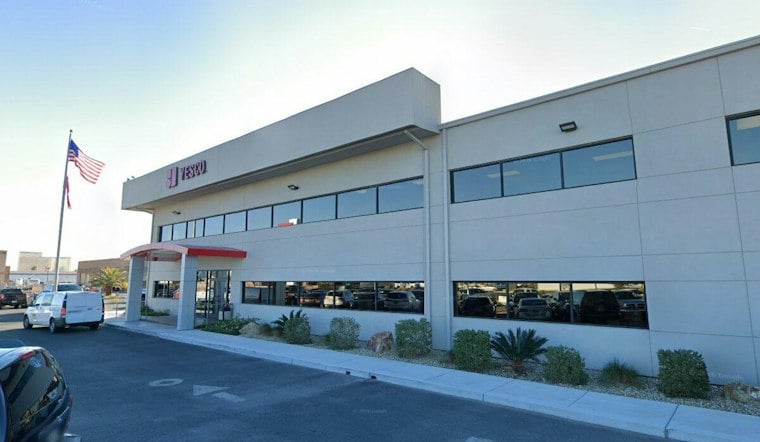
The skull was carefully lifted by crane and taken to YESCO, the Young Electric Sign Company, where it will undergo restoration before returning to The Neon Museum, according to KLAS 8 News Now. The outlet reports the sculpture is the only remaining of two identical skulls that were originally mounted on both sides of Treasure Island's pylon sign when the resort opened in 1993. KLAS describes it as measuring approximately 32 feet tall and 29 feet wide, made of polychromatic molded fiberglass and consisting of three components — the skull, an earring and a bandana knot. A separate account from Vegas24Seven describes the sculpture as 30 feet tall, a detail that conflicts with the station's figure.
From Pirate Mascot to Museum Piece
Treasure Island opened in the midst of Las Vegas's family-friendly era in 1993, according to The Neon Museum, which notes the resort's pirate theme extended well beyond signage into a live show featuring a sinking ship, stunts and pyrotechnics. During the 1980s and 1990s, Las Vegas as a whole leaned into that family-oriented marketing push, the museum's account notes, and Treasure Island's towering skull was part of the visual language built to match it.
That pirate identity didn't last. The station's report notes the resort shifted away from its original pirate theme in 2003, and the sign came down during a ceremony on July 10 of that year featuring pyrotechnics and fireworks. The Las Vegas Sun later recounted that Steve Wynn had opened the $450 million pirate-themed resort next to The Mirage in 1993, only for it to pivot toward adult entertainment a decade later. The skull-and-crossbones sign, the Sun reported, was replaced with one that simply read “ti.”
How the Skull Was Built
Behind that marquee was a serious sculptural undertaking. MJM Studios, based in South Kearny, New Jersey, was contracted to design and create the oversized marquee with a pirate's skull as its centerpiece, according to Smooth-On, the materials company whose products were used in the process. The original model was sculpted from nine tons of plaster by MJM artisans, Smooth-On's account states, before mold rubber was used to create molds that were shipped to Las Vegas, where artisans cast the fiberglass-and-resin skull reproductions that eventually flanked the pylon sign.
Fading Colors Get a Second Life
Decades of desert sun left their mark. The sculpture's once-vivid colors have faded over time, per the station's report, and YESCO will perform fiberglass patching, stabilization and repainting to revive the skull's original colors. No return date has been set; the station notes The Neon Museum says more information on when the skull will come back will be announced at a later date.
The Neon Museum describes itself as committed to preserving and celebrating Las Vegas history, a mission this restoration project fits squarely within. For now, the pirate skull that once greeted Strip visitors sits in YESCO's shop rather than the Boneyard's rows of retired signage, awaiting the work that will determine when — and in what shape — it makes its way back.




