

























































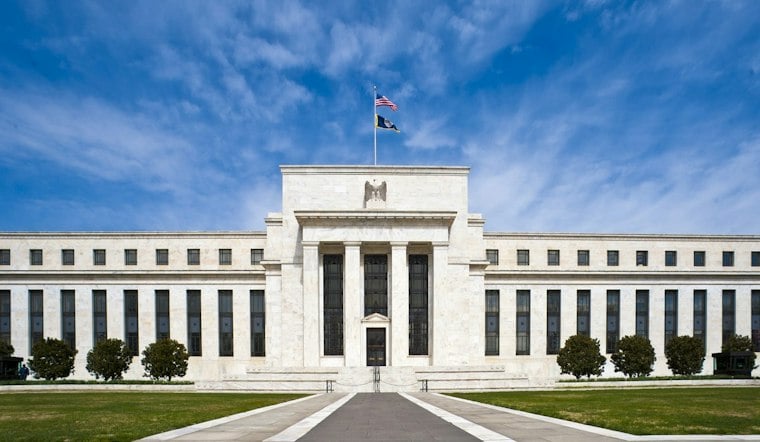
Treasury Secretary Scott Bessent said Friday the Federal Reserve should not hike interest rates too aggressively in response to an energy supply shock tied to the Iran war, arguing that the shock is already fading. His comments came the same day Chicago Fed President Austan Goolsbee warned that inflation has drifted further from the central bank's target and that the Fed still has work to do to win back its credibility.
Speaking in an interview on CNBC's Squawk Box, Bessent said he would avoid reversing last year's rate cuts dramatically just because of a supply-driven price spike. According to CNBC, Bessent said it would be a mistake to hike too much into an energy supply shock when it's coming down. He pointed to recent moves in fuel markets as evidence the pressure is already easing, saying gasoline has dropped below $4 a gallon, crude is down $20, and diesel is down 10 percent so far.
Bessent also predicted the next inflation reading would come in mild. We're going to get a benign number likely next week, he said, according to the same CNBC interview. He described the underlying U.S. economy as very strong, as reported by Reuters, and said the Fed should keep an open mind rather than lock in a hawkish response.
Goolsbee Sees a Broader, Stickier Problem
Goolsbee offered a starkly different read in his own CNBC interview the same day. The central bank has definitely got work to do to continue to reestablish its credibility, he said, arguing that inflation has spread well beyond energy prices. Per the Chicago Fed president, price pressure has moved into services and medical care and has been fueled in part by strong demand tied to AI data center construction.
We've been above 2% for almost six years, Goolsbee said, adding that the U.S. is not currently on a path back to that target. He told CNBC that tariff-related inflation and the oil price shock have both persisted longer than expected, and that broad-based inflation has shown signs of trouble for several consecutive months. Categories untouched by oil or tariffs, he said, have either stalled or gotten worse — a dynamic he called troubling, noting that preventing demand from overheating is simply conventional economic wisdom.
What the Latest Price Data Shows
The disagreement lands against a backdrop of mixed inflation signals. The consumer price index rose a seasonally adjusted 0.4% in October, with core CPI up 0.3%, according to CNBC. Within that report, the energy index climbed 0.7% and gasoline prices rose 1%, even as natural gas prices slipped 0.8%. At its October meeting, the Fed voted 10-2 to hold its benchmark rate in a range of 3.75% to 4%.
Wholesale prices painted an even sharper picture. The Producer Price Index rose 0.3% in October and 6.5% over the past year, its highest annual rate since November 2022, per CNN. Core PPI, which excludes food and gas, rose 0.3% for the month and 5% annually.
Modeling the Energy Shock's Reach
A working paper from the Federal Reserve Bank of Dallas modeled alternative oil-disruption scenarios and their potential effects on inflation.
Separate research from the Boston Fed shows just how fast energy costs moved earlier this year. Average monthly real WTI oil prices jumped from $65 a barrel in February to almost $100 in May, a 54% increase, according to the Federal Reserve Bank of Boston. Year-over-year PCE inflation rose from 2.9% in February to 3.8% in April over the same stretch, driven primarily by those energy increases. The Boston Fed also found that the historical link between oil shocks and weaker employment growth has largely disappeared in recent years, and that a comparable oil shock today would push year-ahead inflation up by roughly 1.5 percentage points, versus 2.2 points before the mid-1980s.
Oil Shocks and Inflation
Oil shocks can affect inflation and employment.
Market pricing on the Fed's next move has varied. Separate reports put the odds of a quarter-point rate increase at 88% and 87.3%. The Fed's next meeting is scheduled for December 8-9, 2026.
For now, the split between Treasury and the Fed over how to weigh an energy shock against stickier, broad-based inflation leaves the central bank's next move an open question heading into its December meeting.





