

























































President Donald Trump said Thursday that he wants to “get Cuba done” before leaving office, telling conservative radio host Hugh Hewitt he would consider using military force to take over the island before his term ends in 2029. Trump said his administration was monitoring the situation in Havana “very closely” and described Cuba as a “failed” state.
“I want to get Cuba done before I leave,” Trump told Hewitt, according to Politico, which reported it was the first time the president had put a timeline on a possible military operation against the island. Trump also said Secretary of State Marco Rubio “would love to do that,” referring to a potential operation in Cuba, and he said he would “certainly consider” a short U.S. military operation there, according to CNBC.
The remarks arrived as the Treasury Department imposed fresh sanctions on Cuban oil tankers and shipping companies and threatened to target international entities or individuals doing business in Cuba’s marine or maritime industries, the outlet’s report noted. The U.S. has long enforced a comprehensive economic embargo against Cuba, and that embargo has contributed to the deepening energy and economic crisis now gripping the island of roughly 10 million people.
Cuba’s Embassy Calls Sanctions ‘Collective Punishment’
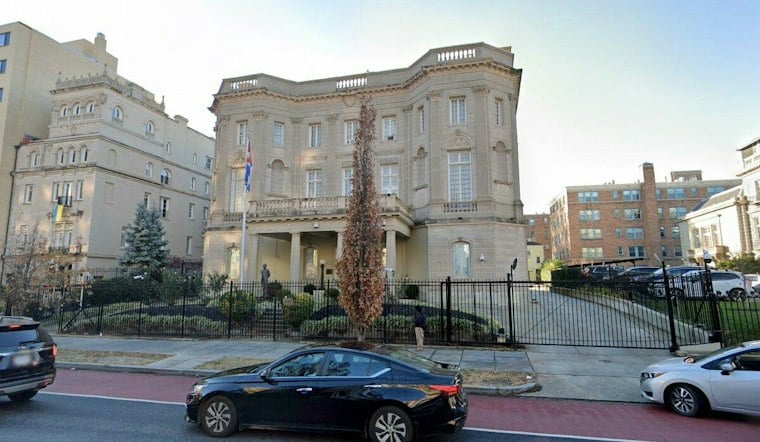
Cuba’s Embassy in Washington, D.C. said the U.S. sanctions deepen an energy siege that leaves hospitals without reliable power and families facing blackouts, per the same CNBC account. The embassy went further, characterizing the blockade as collective punishment that hits ordinary people every day. It separately estimated that the blockade cost Cuba $8 billion between March 2025 and February 2026.
The U.S. government has said its push aims to end what it calls the Cuban regime’s malign activities on the island and across the hemisphere, the report states. Trump has previously discussed a friendly takeover of Havana and said the White House could turn its sights on Cuba after the Iran war; he has also said he could do anything he wanted with Cuba and might have the honor of taking it, according to the same account.
Blackouts, Shortages and a Fuel-Starved Island
Cuba has suffered repeated nationwide blackouts along with fuel and food shortages through 2026, and Cuban Energy Minister Vicente de la O Levy said in May the country had run out of fuel oil and diesel entirely. NPR reported frequent blackouts lasting longer than a day alongside critical shortages of food, fuel and medicine. Correspondent Eyder Peralta described large stretches of Havana going dark at night, saying, “At night, huge parts of this city are pitch-black.”
Peralta also reported that Cubans’ money was losing value and that residents no longer received basic food and medicine the government once provided, saying, “They no longer get the basic food or medicine that the government used to give them.” Those findings echo a UN News report that found more than 96,000 pending surgeries in Cuba, including 11,000 for children, and roughly one million people dependent on water trucking that has been constrained by the lack of diesel. The UN said humanitarian needs remained acute and persistent despite recent fuel deliveries.
Analysts Doubt a Military Campaign Is Imminent
Despite Trump’s comments, analysts cited by CNBC consider further economic pressure on Cuba more likely in the near term than an actual U.S. military campaign. A Responsible Statecraft analysis separately assessed that opening what it called “a completely new, unauthorized front in Cuba” would be both operationally implausible and politically explosive, citing ongoing hostilities elsewhere in the Middle East. The same analysis predicted Rubio would more likely accelerate sanctions and covert planning aimed at weakening the Cuban government while allowing some private-sector sales and humanitarian aid to continue.
Earlier reporting has outlined limited U.S. military groundwork rather than any confirmed operational decision. CBS News reported that an internal Army Reserve message in September sought feedback on formations that could possibly be needed to support U.S. Southern Command within 90 to 120 days, but the outlet noted there was no indication any units had received deployment orders. CBS also reported that U.S. military planners examined options for possible action against Cuba in July, with officials stressing that those briefings did not mean the president or the Pentagon had decided to proceed.
The pressure campaign against Havana followed a broader regional shift. Washington imposed an oil blockade on Cuba after a U.S. operation in Venezuela deposed Nicolás Maduro. As of Trump’s latest comments, no decision, order or timeline for a Cuba operation beyond his conditional remarks to Hewitt has been confirmed.



