

























































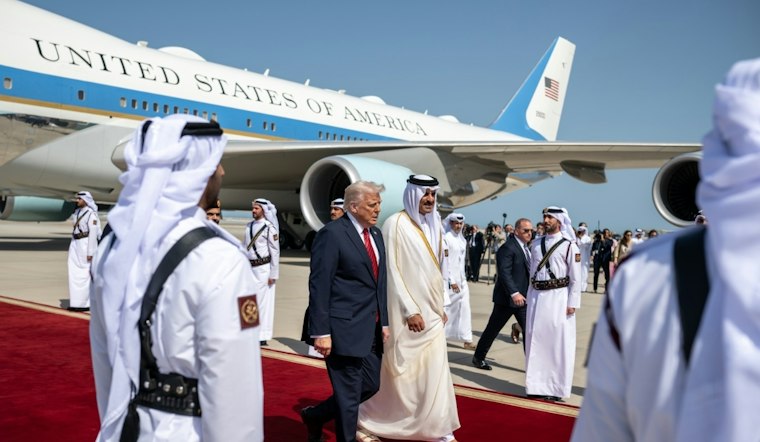
Qatar's prime minister and foreign minister, Sheikh Mohammed bin Abdulrahman Al-Thani, is set to hold a closed-door meeting with President Trump at the White House on Monday, as Doha's monthslong push to broker an end to hostilities between Washington and Tehran runs into fresh resistance from both sides. Vice President JD Vance is also scheduled to meet with the Qatari leader the same day, according to a U.S. official. The sit-down comes as diplomats scramble to keep alive a fragile, months-long effort that has so far produced disputes rather than a deal.
According to the Kansas City Star, Qatar has played a central intermediary role between Washington and Tehran, ferrying proposals back and forth as it tries to bridge differences over Iran's nuclear program and the terms for ending the conflict. Officials told The New York Times that Qatar participated in two rounds of talks in Tehran and hosted a third round in Doha over the past week, part of what officials described as mediation efforts aimed at preventing a return to full-blown war. The conflict between the two countries remains ongoing, and diplomatic efforts to end it face significant obstacles.
Sticking Points Over Uranium and Inspections
At the center of the dispute is Iran's stockpile of highly enriched uranium. The Financial Times reported that sticking points in the negotiations include the sequencing of any agreement and the fate of Iran's 440-kilogram stockpile. The same report said the United States wants Iran to agree to let International Atomic Energy Agency inspectors visit its main nuclear facilities, a condition that has proven difficult to resolve.
The Guardian reported that one Qatari proposal under consideration would have Iran reopen the Strait of Hormuz on the second day of a deal's implementation, a detail that underscores how closely the talks are tied to the shipping lane's economic stakes. The strait is a vital corridor for global oil flows, and a Reuters report carried by the New Hampshire Union Leader noted that oil prices rose about 1.3% after falling more than 7% the previous day amid hopes that diplomacy was progressing.
Rubio Calls Iran's Demands Unacceptable
Secretary of State Marco Rubio struck a far less optimistic tone Saturday, speaking before departing Florida for a G7 foreign ministers meeting in Paris. Rubio said negotiations with Iran had made little progress and that he did not see an imminent breakthrough. According to the Jerusalem Post, Rubio said, “the Iranian demands are simply unacceptable,” and he described some of Iran's positions as outrageous, ridiculous and not realistic.
Rubio's bleak assessment stands in contrast to the view of people involved in the mediation. Axios reported that those sources described progress as real but very slow, quoting one account that said, “there has been progress, but it's been very slow.” Qatar's International Media Office, for its part, said Qatari mediators remain in close coordination with Washington and Tehran to support the negotiations, according to Shafaq News.
Military Options Still on the Table
Even as diplomacy grinds forward, Washington has not taken military pressure off the table. The United States has identified additional infrastructure targets in Iran, including bridges, and officials have said the U.S. may resume military action against Iran if talks collapse. Trump said he prefers a diplomatic solution to the conflict and that he would be highly unlikely to order new strikes if negotiations progress and produce a strong agreement.
The Associated Press framed its own coverage around the tension between diplomacy and force, reporting that the U.S. military carried out targeted strikes even as Iran's leaders weighed the mediators' proposals. A separate Reuters report, carried by the Union Leader, described Iran and the United States as still far apart on a deal to end the war even as Qatar pushes its mediation. The Arab Weekly reported that mediators have stepped up their efforts amid concerns that hostilities could resume after the U.S. midterm elections.
Monday's meeting between Trump and Sheikh Mohammed bin Abdulrahman Al-Thani will mark the latest face-to-face test of whether Qatar's quiet diplomacy can close the gap between Washington's demands for inspections and Tehran's resistance to the terms on the table. For now, the two sides remain divided over sequencing, the uranium stockpile, and how quickly shipping through the Strait of Hormuz might resume — leaving the outcome of the talks very much unresolved.




