

























































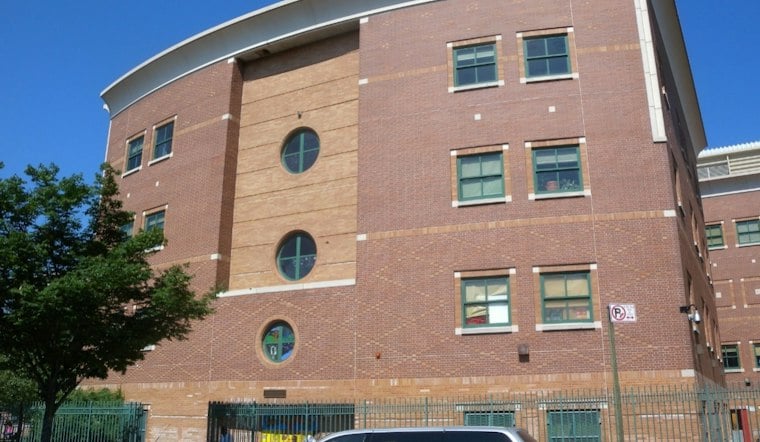
Tucson has opened its first low-barrier resource center for people experiencing homelessness, a site that asks visitors for nothing in return for help: no sobriety requirement, no identification, and no restrictions on what they carry with them, not even their pets. The R.O.S.E. Center sits at 3202 East 1st Street and is open 11 a.m. to 3 p.m. Monday through Friday.
The name stands for Resources, Outreach, Showers and Education, and according to AZPM, the center offers free on-site showers alongside connections to service providers covering medical care, identification assistance, housing and shelter support, and detox and recovery services. Visitors can connect with up to two service providers per day, and the center does not restrict what belongings people bring in with them.
A Model Built on What Came Before
The R.O.S.E. Center grew out of the Ward 6 office's earlier cooling-center program, which began in May 2026 and served more than 2,200 people during its first summer, per the same AZPM report. Victoria DeVasto, the program director who created both Ward 6 programs, said the low-barrier model helps more people, including those previously excluded elsewhere because of substance use, pets, or a lack of identification.
DeVasto said the center provides wraparound support covering life skills, mental health, identification, and housing and shelter help, all on-site, the outlet reports. She said her goal is to replicate that summer program's success throughout Tucson, and she hopes the initiative leads to more centralized service locations around the city. The center is slated to transform back into a cooling center in May 2027.
Ward 6's Earlier Chill Space
The Ward 6 office's original chill space, which KGUN9 described as opening in midtown Tucson, offered free water, snacks and air conditioning along with hygiene products and showers. The City of Tucson notes that the Ward 6 Chill Space Cooling Center closed for the season on September 30, 2026, which helps explain why a successor program like the R.O.S.E. Center was positioned to pick up where it left off.
The Numbers Behind the Need
The timing lands against a backdrop of tight shelter capacity across the region. Pima County's 2026 Point-in-Time Count recorded 2,130 people experiencing homelessness, a roughly 4% decrease from the prior year, according to azluminaria.org. More than 70% of those counted were living unsheltered, and the outlet reports that overall homelessness in the county has remained relatively flat since 2022.
Shelter capacity itself has been shrinking. A 2026 report from the Tucson Pima Collaboration to End Homelessness identified 881 shelter beds countywide while the Point-in-Time Count found 861 people staying in shelter that night. The report says the county lost nearly 200 shelter beds between 2025 and 2026, attributing much of that loss to reduced state funding that had previously supported 117 emergency shelter beds through hotel vouchers. Notably, the same report found that the decrease in sheltered homelessness did not come with a corresponding rise in unsheltered homelessness.
How Tucson's Model Compares
Low-barrier approaches are not unique to Tucson. In Phoenix, Key Campus has functioned for two decades as a hub bringing together 13 nonprofit and governmental agencies across a 13-acre site, according to keystochangeaz.org. Its Brian Garcia Welcome Center operates 24 hours a day, seven days a week, connecting unhoused residents to both on-campus services and outside community resources.
In Minnesota, Avivo's St. Cloud shelter follows a similar philosophy, with mprnews.org reporting that the shelter does not require sobriety and allows people who may be actively using substances to stay there. Whether Tucson's R.O.S.E. Center produces similar results, or how many people it will ultimately serve before its scheduled shift back into a cooling center next May, remains to be seen.




