

























































A Tulsa developer has spent about a year and a half turning real stretches of downtown Tulsa and the historic Greenwood District into a playable 3D world, complete with a zombie outbreak survival storyline wrapped around dozens of faithfully modeled local buildings.
The project, called PlayTulsa, is the work of founder John Doster, who describes it as a project turning parts of Tulsa into a 3D interactive digital experience, according to FOX23. Doster has modeled around 46 buildings so far, drawing on photographs, online research and historical information to recreate them as accurately as he can. The in-game world currently includes parts of downtown Tulsa and the Greenwood District, along with recognizable landmarks like the BOK Center, the Tulsa Theater and the Philbrook Museum of Art.
Doster framed the entire effort as an attempt to showcase Tulsa's artistic, musical, architectural and historical significance. “Anything you're going to encounter in game came from here,” he said, per the outlet's report.
Greenwood's Real History Looms Large
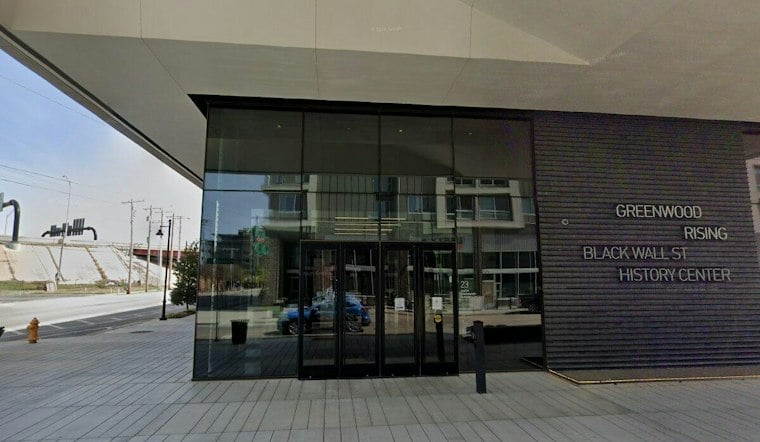
Greenwood's inclusion in the game carries particular weight given the neighborhood's history. The district traces back to 1906, when O. W. Gurley purchased 40 acres just north of Tulsa's historic Frisco Railway to be sold exclusively to Black settlers, according to a Tulsa City-County Library history of Greenwood. By 1921, the neighborhood had grown into a 35-block community with two schools, two newspapers and a hospital, as reported by the New York Times. The library's history also notes that Greenwood's population had reached approximately 10,000 people by that time.
That community was devastated when the Tulsa Race Massacre of 1921 killed hundreds of residents and burned more than 1,250 homes, per the same Times account. Greenwood rebuilt in the decades that followed, and by 1942 it boasted 242 Black-owned and Black-operated business establishments, according to the Oklahoma Historical Society. The encyclopedia entry notes that the district's decline set in beginning in the 1960s and continued throughout the 1970s and early 1980s.
Research Shapes the Game's Design
Doster said he's learned about Tulsa's underground tunnels, its oil boom and Black Wall Street while building the game, and he suggested that historic Black newspapers the Tulsa Star and the Oklahoma Eagle could inspire interactive features down the line, the station's report states. He said he hopes PlayTulsa will introduce people to unfamiliar parts of Tulsa and, more broadly, that people around the world will get to experience the city's history through the game. “It's really bringing Tulsa to the global stage,” Doster said.
The game itself is designed as a first-person shooter with a zombie outbreak survival concept, layering a modern gaming hook onto the historical and architectural detail Doster has built into the environment.
What's Next for PlayTulsa
Doster said the initial release drew an encouraging response, and development has since shifted toward involving a smaller group of players first rather than a full public rollout. He's now collecting information from people interested in becoming alpha testers. Doster said he plans to have a small group playing a closed version of the game around Christmas, with hopes of expanding the experience over the next six months to a year.
Ultimately, Doster described the goal as giving people a new way to share Tulsa's history, creativity and identity with the world, a framing that ties together the game's mix of local landmarks, survival gameplay and the city's layered past.




