

























































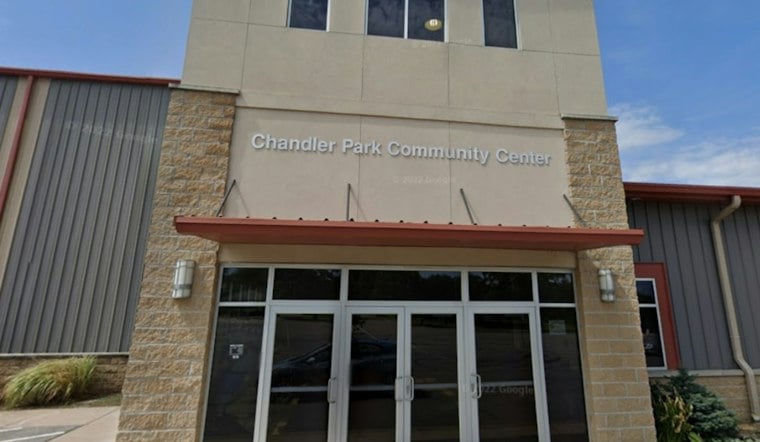
The Oklahoma Compost Conference is coming to Tulsa for the first time on Thursday, drawing enough interest that organizers had to raise the attendee cap after seats sold out weeks ahead of the event. The gathering lands at Chandler Park Community Center, 6500 W. 21st St., even as Tulsa still has just one option for residents who want their food scraps composted rather than landfilled.
A Sold-Out Debut for a 12th-Year Event
According to the Oklahoma Compost and Sustainability Association, the Thursday conference marks the first year the group has hosted its annual event in Tulsa rather than Oklahoma City, where its training and workshops have predominantly taken place, as Tulsa Flyer reports. The conference is the 12th annual event the association has organized, and this is the first time it has had to increase its attendee limit because seats sold out weeks prior, per the same report. Amanda Scofield, president of the association's board, said the group aims to spread composting knowledge and connect the compost community statewide, the outlet notes.
The agenda includes a full day of educational topics and discussions, featuring emerging compost technologies, a mushroom inoculation workshop, local success stories, and a climate justice discussion, according to the association's registration page. Other sessions cover municipal waste sludge composting and a collaboration panel with tribal environmental protection agency managers, the Tulsa Flyer report states. Local businesses and partners are contributing food, utensils, recycling and composting services to help the event run as a zero-waste gathering, the Tulsa Flyer report notes, while organizers describe it on their registration site as a low-waste event.
Tulsa Still Lags Oklahoma City on Composting Access
Ali Kalenak, education outreach manager at the Tulsa-based Metropolitan Environmental Trust, said Tulsa has traditionally lagged Oklahoma City in composting, according to the Tulsa Flyer account. That gap shows up starkly in the options available to residents: SCRAPS is the only option that accepts food waste composting in Tulsa, the outlet reports, and the city has no commercial food-waste composter. Tulsa residents can sign up with SCRAPS for a compost bucket and pickup services for a suggested monthly donation of $25, per the same report.
The scarcity traces partly to permitting history. Noncommercial composting operations faced difficulty obtaining state permits until recent years, the Tulsa Flyer report states, and strict permitting led to previous composting operations such as Full Sun Composting closing. Full Sun Composting had been founded by Natalie and Don Mallory in October 2016, according to TulsaPeople. The Oklahoma Recycling Association separately confirms that commercial composting options for food waste remain limited statewide.
Grassroots Composting Fills Some of the Gap
James Taylor, an OCASA board member who founded SCRAPS Community Composting and the Heights Community Garden, helped bring the conference to Tulsa, the Tulsa Flyer report states. The association hosted a compost workday at Crosbie Heights Community Garden for International Compost Awareness Week in May, collecting around 1,000 pounds of food scraps, per the outlet's reporting. Elsewhere in the city, the Kitty Gang Family Foundation runs weekly food pickups from a whole slew of different neighborhoods right now, and from a few different restaurants, according to TulsaPeople, and donates the resulting compost to gardens across Tulsa, including the Heights Community Garden, an educational garden at Emerson Elementary School, and a new community garden in Crosbie Heights.
Beyond backyard efforts, Tulsa has held zero-waste events using small-scale composters, including the 2025 Billie Eilish concert, the Tulsa Flyer report notes. Those small-scale composters can accept food waste from restaurants and commercial kitchens, the outlet reports, offering a workaround while the city lacks a larger commercial facility.
The Case for Diverting Food Waste
The stakes extend beyond backyard bins. The Environmental Protection Agency estimates that 66 million tons of food waste are generated annually, based on 2019 data, and about 60% of that waste is sent to landfills, according to the Tulsa Flyer report. Food decomposing in landfills is responsible for nearly 60% of landfill methane emissions, the outlet notes, and composting can help extend municipal landfill life by diverting that waste. Kalenak said reducing food waste could lower city trash processing costs and help limit residents' rate increases, keeping food waste out of trash reduces the fees residents pay, according to the same report.
Other cities have moved further on municipal composting. Fort Worth launched a residential composting program working with local community gardens, the Tulsa Flyer report states, while Austin collects a food waste bin with trash and recycling through its own municipal program. A municipal composting program generally requires public interest and a sufficiently large facility, the outlet notes — conditions Tulsa has not yet met, even as contamination remains the largest current challenge for the city's existing recycling program.
Looking Ahead for Oklahoma's Compost Advocates
Scofield urged people to speak to representatives, city council members and legislators about wanting composting at a larger scale, according to the Tulsa Flyer account. The association says it advocated for updates to state rules on community-level composting, after the Oklahoma Department of Environmental Quality had classified commercial kitchen waste as requiring delivery to a commercially permitted composting site. The group pushed for a small-scale community composting permit exemption for operations under 100 tons or 200 cubic yards, per Scofield's account relayed by the outlet.
The association describes itself as a resource for all of Oklahoma and says it plans to expand its programming across the state, according to the Tulsa Flyer report. It is also seeking to fill vacancies on its board of directors and working committees, and offers membership to individuals and entities for a small fee, with members receiving early access to workshop, training, conference and festival registration along with one cubic yard of compost for free pickup, the outlet reports.
For now, Tulsa residents looking to start composting at home have several resources to draw on. The city's mulch site offers land-waste composting services for tree branches, grass clippings and leaves, while Gem Dirt and Organic Recyclers also accept land waste, according to the Tulsa Flyer report. The Metropolitan Environmental Trust, the Oklahoma Recycling Association and OSU Extension all provide composting guides, and Tulsa Master Gardeners offers backyard composting resources along with an eight-week master composter training program, the outlet notes.



