

























































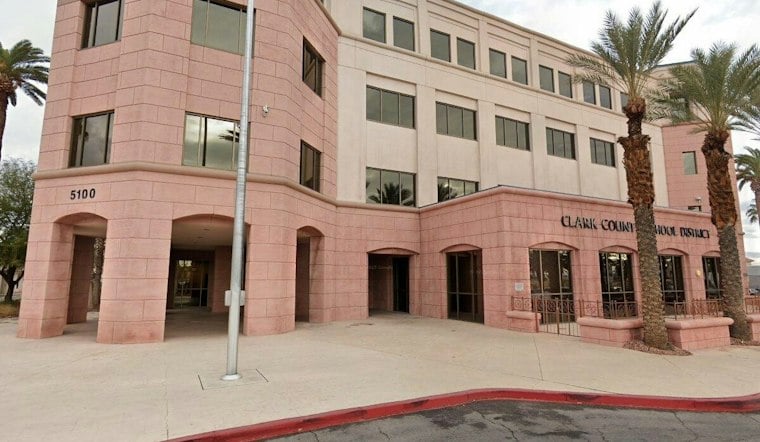
Two Clark County School District trustees filed suit against the district and its Board of Trustees on Monday, claiming board policies meant to govern how members speak publicly actually let the board majority punish dissenting views. Lorena Biassotti and Lydia Dominguez brought the case in Clark County District Court, arguing the rules known as GP-2 and GP-3 unlawfully restrict what elected trustees can say about district business.
According to KSNV, the trustees allege the policies limit negative or disparaging remarks about the district, board members, or board decisions, while also discouraging posts about education topics that could come before the board or opinions on socially and politically sensitive issues. The lawsuit claims those provisions are vague enough that they allow selective discipline against trustees whose views clash with the board majority, the station reports. Board President Emily Stevens is named as a defendant in her official capacity, per the complaint as described by the station.
The legal fight traces back to August, when Biassotti faced scrutiny over social media posts and a T-shirt she wore to a board meeting. Per the station's reporting, Biassotti claims the board applied the policies against her specifically because of her shirt's message and related posts.
The August Shirt and the Public Reminder
Biassotti wore an XX-XY Athletics T-shirt to the CCSD board meeting on Aug. 13, 2026, according to the Las Vegas Sun. She later said the shirt reflected her beliefs, telling the paper, “I wore the XX-XY shirt because it reflects a sincerely held religious belief.”
At a board meeting on Aug. 27, Stevens publicly reminded Biassotti of board policy on member conduct, the Sun reported, after what the complaint describes as earlier private warnings. The board said at the time that no vote or formal action would be taken at that meeting. Stevens has said the reprimand enforced existing board policies and was not meant to punish Biassotti for her beliefs, per the same account.
Biassotti now claims in the lawsuit that the board considered misconduct allegations against her without the notice required under state law, and the trustees have asked the judge to remove references to the August proceeding from board records. The suit also asks that Biassotti be restored as CCSD's representative to the Council of the Great City Schools, according to the station's report.
A Second Trustee Says She Could Be Next
Dominguez joined the suit over fears the same policies could be turned against her for expressing similar views or criticizing board decisions in public, the complaint alleges. The lawsuit claims violations of the First and Fourteenth Amendments, the Nevada Constitution, and Nevada's open meeting law, and it requests a jury trial.
The trustees are seeking damages and attorney's fees, and they're asking the judge to block enforcement of the policies against what they characterize as protected trustee speech. The evidence reviewed does not show how the district or board has responded to the lawsuit, nor does it establish how a court might rule on any of the requested relief.
How CCSD Describes Its Governance Policies
CCSD describes its governance policies broadly as a framework for how the board oversees district operations and works with the superintendent, according to the Clark County School District. The district says policies under consideration for adoption, amendment, or repeal are posted for five business days before going to the Board of School Trustees.
This isn't the first time CCSD's approach to trustee speech has drawn scrutiny. The board voted in September 2021 to adopt its Board Public Communications policy, which the Las Vegas Review-Journal reported says trustees should refrain from speaking individually to the media about board or district matters under policy or program deliberation, even as it also tells members to use their own judgment in individual communications. UNR media law professor Patrick File told the Review-Journal that policies steering officials to route media comment through a supervisor or public information officer reflect “a growing trend in both the public and private sector.”
Legal precedent on how far a public body can go in disciplining an elected member's speech remains unsettled. In Houston Community College System v. Wilson, the U.S. Supreme Court noted that rejecting a censured board member's retaliation claim did not mean verbal reprimands or censures could never give rise to a First Amendment retaliation claim. The opinion offers limited context for the CCSD dispute rather than a direct ruling on it.





