

























































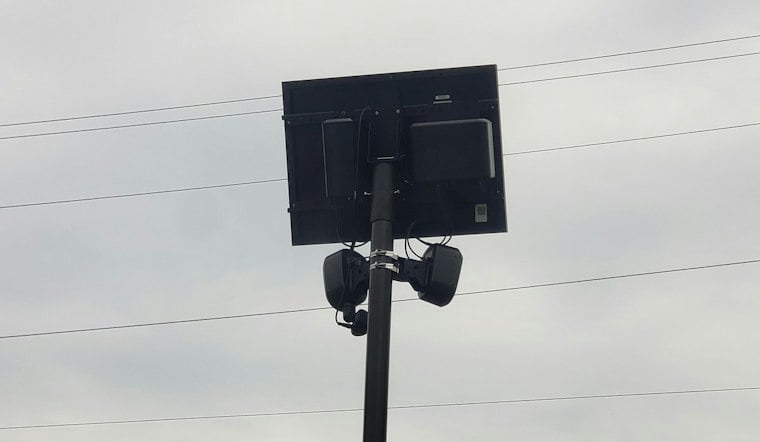
The University of Michigan Police Department signed a $127,500 contract with Flock Safety to install cameras around campus, and nearly two years later, none of them have gone up. The deal, inked in February 2025, was meant to bring more than a dozen license plate reader cameras to the Ann Arbor campus, but the cameras remain uninstalled.
The contract value and scope were first detailed by The Michigan Daily, which reported that UMPD's agreement covers cameras from a company specializing in automated license plate reader technology. According to FOX 2 Detroit, which first aired the story, the deal covers more than a dozen cameras across campus, but it remains unclear whether or when those cameras will ultimately be installed.
FOX 2 reported that the university did not respond to its questions about why the cameras haven't gone up or whether installation is still planned, and that Flock Safety itself had not commented at the time of that report. The station noted simply, “We haven't heard back yet,” underscoring just how little public explanation has accompanied a six-figure contract sitting unused for nearly two years.
Cameras Already Watching Campus, Just Not From Flock
While the Flock cameras sit uninstalled, the university hasn't exactly left campus unwatched. Per the station's report, U-M had already added non-Flock cameras at the entrances of campus buildings, parts of the Diag and other main corridors. Cameras were also installed around the Diag and Law Quad during summer 2025, expanding the visible camera presence even as the Flock-branded cameras remained uninstalled.
University policy, specifically Standard Practice Guide 510.02, assigns DPSS primary responsibility for governing physical security technologies on campus. Standard Practice Guide 606.01 states cameras must not be used in ways that violate privacy, including placement in locations where people have a reasonable expectation of privacy.
A National Backlash Against License Plate Readers
U-M's stalled rollout lands in the middle of a broader reckoning over Flock's presence on college campuses nationwide. The pushback has been swift: the The Guardian reported that at least ten university campuses across seven states have scrapped their Flock contracts since April.
Those cancellations include some notable names. Emory University removed a dozen Flock license plate readers from its Atlanta campus and declined to renew its contract, Inside Higher Ed reported, while Cornell University announced it would not renew its own agreement and would be removing its cameras. Pennsylvania State University officials likewise announced plans to end their Flock contract, according to the same outlet. The University of Buffalo, meanwhile, put an indefinite pause on a planned 60-day Flock pilot program, per The Guardian's reporting.
Data-Sharing Concerns Fuel the Pushback
Data access has become a flashpoint: The Guardian reported that Houston police searched UNC Charlotte's Flock camera network a total of 183,000 times between March and May, more than any other agency.
Michigan itself has become a flashpoint in that wider fight. MLive identified 177 government agencies and 28 private entities statewide sharing Flock camera data with the Michigan State Police as of September 1. Several Michigan communities have since moved against the technology — Lansing City Council approved a resolution in August asking its police department to sever all Flock contracts and shut down the city's 26 cameras, the Bay City Commission voted against a Flock contract that same month, and Macomb County's Eastpointe nixed its own contract in September, according to MLive. In Livingston County, repeated vandalism of Flock cameras led the sheriff to temporarily remove them on September 1 for what was described as a cooling-off period.
Against that backdrop, U-M's uninstalled cameras and unanswered questions leave the university's next move an open one. Whether the contract eventually results in cameras going up, or joins the growing list of campus Flock deals that quietly stall out, remains to be seen.





