

























































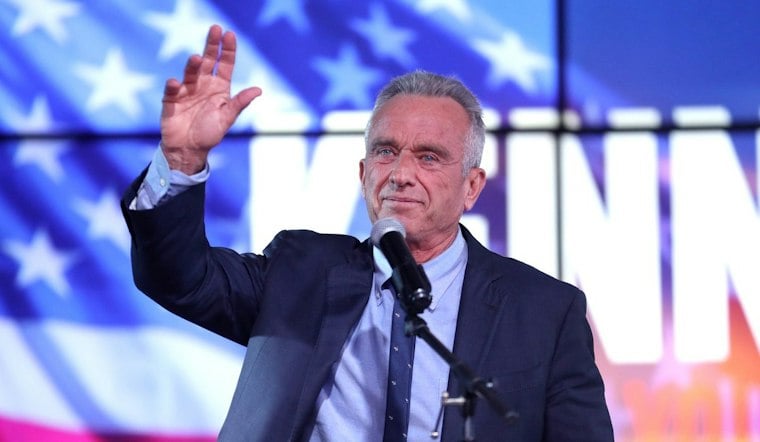
Health Secretary Robert F. Kennedy Jr. said Thursday the federal government will spend up to $4.9 million preparing clinical trials of ibogaine as a possible PTSD treatment for veterans. The check is for the work that comes before a study. It is not for treating anyone.
The money will come from the federal health research agency ARPA-H, Investing.com reported. Kennedy drew the line himself: the awards "do not fund patient treatment or human subject research."
A generic price, if approval ever arrives
Kennedy said Mark Cuban Cost Plus Drug Company will develop ways to produce ibogaine in the United States, and that its price would be similar to generic drugs if it wins approval. Approval is doing the heavy lifting in that sentence. Thursday's announcement focused on preparing for a study.
He also said ARPA-H would fund another ibogaine effort, this one focused on substance-use disorder, and that the announcement should come by the end of 2026. That is a date on a calendar, not a study already underway.
Fifty million, then a prep budget
The new figure also has a larger number sitting behind it. President Donald Trump allocated $50 million for ibogaine research in April. Seven months later, the sum attached to this announcement is up to $4.9 million, and Kennedy says it stops short of human-subject research.
Ibogaine is not the only compound in that broader funding pipeline. The National Institute of Mental Health has opened a $20 million program to study drugs including ketamine and psilocybin, with award winners expected to be named in summer 2027.
Nineteen remissions, and a hard limit
Nineteen remissions, and a hard limit The veteran results drawing attention are smaller, and more carefully caveated, than a funding announcement tends to sound. Stanford Medicine reported in October that 30 veterans traveled to Mexico for ibogaine therapy; 25 completed the one-year follow-up. Of those 25, 23 had been diagnosed with PTSD beforehand, and 19 of those 23 reached remission within days.
Among participants who initially reached remission, the reported likelihood of sustained remission at 12 months was 84% for PTSD, 66% for depression and 61% for anxiety. During the reported treatment, participants were medically monitored and received magnesium infusions to protect against heart complications associated with ibogaine.
The researchers said the one-year study was observational and could not establish that ibogaine alone caused the sustained improvements. A result in 25 people treated in Mexico is not a prediction for a U.S. trial that this award is not yet allowed to run.
The complication without a count
The magnesium was not a courtesy. A medical review describes ibogaine-related QTc prolongation as a pathway to ventricular tachyarrhythmias and torsades de pointes, which can be fatal. It does not say how often that happens.
What Thursday actually bought is preparatory work, with a separate substance-use announcement still expected by year's end and other psychedelic awards not due to be named until summer 2027. A veteran looking for federally funded ibogaine treatment will not find it in this $4.9 million.





