

























































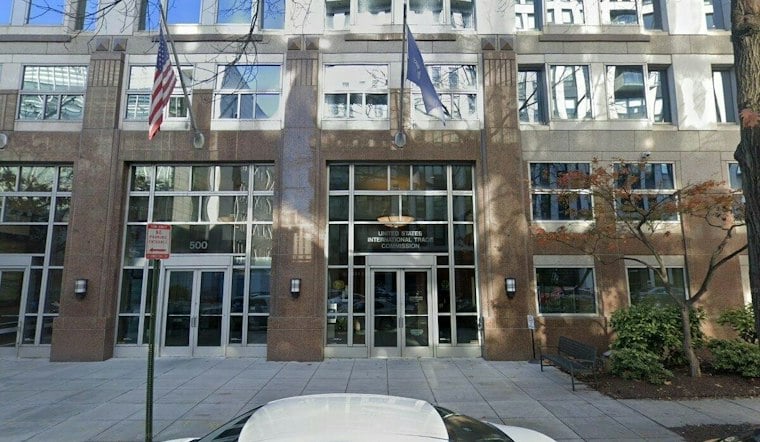
Two American shrimp companies filed a complaint with the U.S. International Trade Commission this week, asking federal regulators to block imports of shrimp produced with forced labor by a major Indian seafood producer they accuse of relying on forced labor to undercut U.S. boats. Versaggi Shrimp Corp. and W & W Dock, LLP, are seeking an exclusion order that would stop Nekkanti shrimp produced with forced labor from entering the country, and the complaint also names the company's importers and some of the biggest grocery chains in America.
The complaint was filed on October 28 with the help of Corporate Accountability Lab and the law firm Picard, Kentz & Rowe, LLP, according to Corporate Accountability Lab, the nonprofit serving as co-counsel for the shrimpers. The filing names Nekkanti as a proposed respondent and alleges the company relies on forced labor inside its shrimp-processing facilities. It also pulls in wholesaler Eastern Fish and grocery chains ALDI, Meijer and Ahold Delhaize as proposed respondents, arguing those retailers sell shrimp tied to Nekkanti's supply chain.
As reported by Livingston Parish News, the case is backed by the Southern Shrimp Alliance, an industry group that has pushed for years against what it sees as unfair foreign competition. Blake Price, the alliance's executive director, framed the stakes bluntly: “Forced labor is not a competitive advantage; it’s an inhumane practice that must end,” he said, per that outlet's reporting.
What the Complaint Alleges About Conditions at Nekkanti
According to the complaint cited by Corporate Accountability Lab, most Nekkanti workers earn less than Andhra Pradesh's minimum wage, and some reported not being paid for overtime work. The filing also states that these workers live in guarded company hostels, a detail the organization says is drawn directly from the complaint itself. Nekkanti produces more than 32,000 metric tons of shrimp a year, the vast majority of it destined for the United States, per the same source.
Corporate Accountability Lab says its allegations build on three years of research, including its 2024 report Hidden Harvest, which examined conditions at two of Nekkanti's facilities in Andhra Pradesh. The organization's findings, described in the Livingston Parish News account, point to debt bondage, recruitment fees, withheld wages and severe restrictions on workers' movement across India's shrimp industry. Some migrant workers were reportedly housed in company-owned facilities under guard supervision, with certain workers telling investigators they could leave the premises only once a month, that outlet reported.
The U.S. Department of Labor added shrimp from India to its 2024 List of Goods Produced by Child Labor or Forced Labor, citing migrant workers' recruitment debts, restricted movement and other coercive employment conditions, according to National Fisherman. The State Department's 2024 Trafficking in Persons Report on India similarly noted observers found indicators including failure to pay minimum wage, restricted freedom of movement and dangerous working conditions in some shrimp and aquaculture facilities, particularly in Andhra Pradesh.
Retailers Named, Industry Responses Still Forming
Bloomberg Law reported that the complaint concerns Indian shrimp sold to companies including Aldi and Meijer, and that it alleges reduced labor and operational costs artificially lowered the price of that shrimp. Corporate Accountability Lab's account adds that these stores sell shrimp from Nekkanti alongside domestic shrimp from the U.S. Gulf Coast, a dynamic the shrimpers argue puts American boats at a built-in disadvantage.
Separately, SeafoodSource reported that Sysco said it has suspended its purchases of shrimp from Nekkanti pending an internal investigation.
An Industry Already Squeezed by Imports
The filing lands amid a years-long slide for domestic shrimpers. The value of the U.S. shrimp industry fell by half between 2021 and 2023, and the number of commercial shrimp licenses in the Gulf has dropped to less than one-third of its 2000 level, according to figures cited by National Fisherman and credited to the Southern Shrimp Alliance. India has become the dominant foreign supplier to the U.S. market, supplying roughly 52 percent of all peeled shrimp and 40 percent of frozen warmwater shrimp imported into the country in 2025, per the same alliance data.
The scale of that trade is enormous. The United States imported 649.9 million pounds of frozen, non-breaded warmwater shrimp from India in 2024 alone, valued at $2.2 billion, according to the Southern Shrimp Alliance. India's own trade data, reported by Business Standard, shows the country's seafood exports hit a record 1,972,018 metric tonnes worth roughly $8.46 billion in fiscal 2025-26, with the United States remaining its single largest market for frozen shrimp at 256,128 metric tonnes. That same report found India's exports to the U.S. actually declined 19.51 percent in volume and 14.22 percent in dollar value over the fiscal year, even as its global totals climbed.
The shrimp trade has already drawn federal scrutiny on pricing grounds.
What a Section 337 Case Could Mean
The complaint proceeds under Section 337 of the Tariff Act of 1930, arguing that forced labor itself constitutes an unfair method of competition, per Corporate Accountability Lab. The U.S. International Trade Commission states that the principal remedy available in a Section 337 investigation is an exclusion order directing Customs officials to stop infringing imports from entering the country. Whether the commission will formally institute an investigation, and what it might ultimately decide, remains to be seen.
Supporters of the case believe it could set a legal precedent recognizing forced labor as an unfair method of competition, potentially opening the door for other American industries facing similar import pressure to bring comparable challenges, according to the Livingston Parish News report. For now, the allegations against Nekkanti and the named retailers remain just that — allegations laid out in a complaint that has yet to be tested before federal regulators.




