

























































Domestic flights nationwide are experiencing three-hour tarmac delays at rates not seen in more than 15 years, even as the federal government has stopped issuing fines for the violations altogether.
The New York Times reported on extended tarmac delays at U.S. airports.
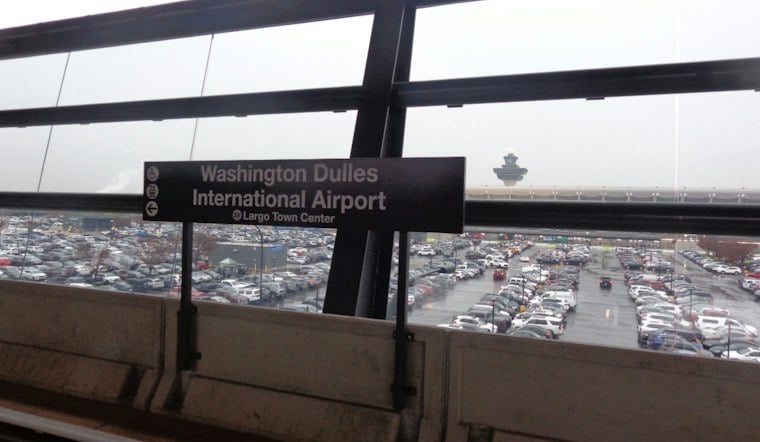
The gap between the busiest hubs and everywhere else is stark. Houston's Bush Intercontinental sat at 1.9 per 10,000 flights, Philadelphia at 1.5, and O'Hare and Atlanta tied at 1.2, the Times reports. Washington Dulles came in at 1.0, Reagan National at 0.9, and Raleigh-Durham at 0.8 — all a fraction of what travelers are experiencing in the New York region.
Fines Have Stopped Under the Current Transportation Secretary
The Transportation Department began enforcing tarmac passenger protections in 2010 and, per the Times, levied fines for tarmac delays every year from 2011 through 2024. Since Sean Duffy became transportation secretary in 2025, the department has issued zero fines for extended tarmac delays, and it has not fined a U.S. airline for any consumer protection violation in nearly two years.
Teresa Murray, consumer watchdog director at the U.S. Public Interest Research Group, discussed delay statistics and causes.
A Transportation Department spokesperson told the Times the agency continues investigating extended delays and will enforce the rules when warranted, and said its approach focuses on getting airlines to fix the root causes of travel disruptions.
A Rule Born From a 2009 Stranding
The current tarmac delay rule requires airlines to let domestic passengers deplane within three hours and international passengers within four hours, with exceptions allowed for safety, security, or air-traffic-control-related reasons. It also requires airlines to provide snacks and water after two hours.
The rule traces back to a Continental Express flight that left passengers stuck on a parked plane for six hours overnight in 2009 — the seed reporting places the number at 47, while NBC News reported 49 passengers were aboard Flight 2816 on the tarmac at Rochester International after it diverted from Houston to Minneapolis. LaHood called for an investigation at the time, and Continental said it was responding to the Department of Transportation.
NBC News reported that airlines opposed a proposed three-hour provision.
Factors Behind Tarmac Delays
Weather, heavy air traffic, and air-traffic-control limitations can cause delays.
Alexandre Jacquillat, an M.I.T. Sloan School associate professor of operations research and statistics, is cited alongside McCormick in the Times reporting on the broader conditions driving the trend. McCormick said convective weather is intensifying and extending later into the year with climate change, creating aviation hazards that include turbulence, icing, and wind changes.
The November 13 Ground Stop
A nationwide ground stop took place on November 13.
Lisa Price experienced a four-and-a-half-hour tarmac delay at Dallas Fort Worth International Airport during the outage. She said planes were everywhere when her flight landed and that the rules meant to protect passengers appeared not to apply during the disruption, according to the Times.
Separately, a U.S. PIRG report relayed by WDTV found more than 700 domestic tarmac delays in 2025, up 63 percent from the year before — the largest volume since the tarmac delay rule took effect in 2010. That report also found 2025 had the worst on-time airline performance since 2014, with Murray noting that among all U.S. airlines, one in 12 flights was an hour or more late. The outlet's review of federal data found some of the lowest on-time arrival rates at Washington Reagan, Newark, LaGuardia, Boston, Dallas-Fort Worth, and O'Hare. The Bureau of Transportation Statistics data cited by the Times suggests 2026 is on pace to be the worst year for tarmac delays since 2009.




