

























































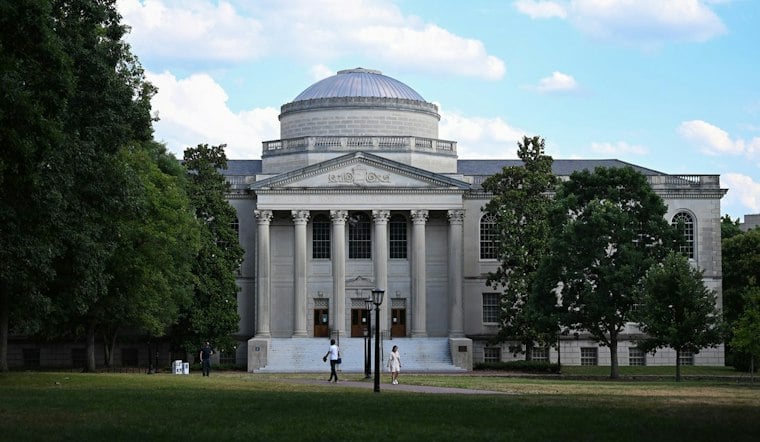
UNC-Chapel Hill is on the hook for a $4.9 million penalty after enrolling out-of-state freshmen at 20% of its incoming class, two percentage points above the 18% cap the university is required to follow, and it marks the second consecutive year the school has gone over the line.
The penalty traces back to a UNC System rule that triggers a state operating budget reduction whenever a university exceeds its nonresident enrollment cap for two consecutive fiscal years, according to the UNC System Policy Manual. The policy sets Chapel Hill's cap for nonresident students in its entering first-time undergraduate class at 18%, a threshold that has applied since fall 2025. According to the Raleigh News & Observer, Chapel Hill exceeded its out-of-state freshmen allowance by 104 students this cycle.
The math behind the $4.9 million figure comes straight from the policy itself: the budget reduction is based on the number of nonresident students enrolled above the cap, multiplied by the base nonresident undergraduate tuition rate for the academic year, per the same policy manual. Chapel Hill used an out-of-state tuition rate of $47,472 per excess student to calculate the penalty, per the seed reporting on this story.
Where the Clawed-Back Money Goes
Under current UNC System policy, operating funds removed from a university's budget for exceeding the cap are transferred to the North Carolina State Education Assistance Authority to help fund the system's need-based scholarship program, according to the UNC System Policy Manual. The UNC System has also proposed cutting school budgets after just one year of noncompliance rather than two, and would allow penalty money to be directed toward need-based scholarships, enrollment initiatives, and other strategic initiatives determined by the system president, who would then have to explain that spending to the UNC Board of Governors. A UNC Board of Governors committee is expected to vote on the amended policy later this week.
This is not Chapel Hill's first brush with the penalty. The university was previously fined $1 million for exceeding its out-of-state ratio in the 2015-16 school year, and a later budget modification bill reimbursed the university $500,000 in 2016. UNC-Wilmington faced a much larger proposed penalty in 2023: $4,102,644 after its out-of-state enrollment hit 27%, nine points over its own 18% cap, for two consecutive years, according to WUNC. That proposed penalty was described by the station as the largest enrollment-cap penalty assessed to a UNC System school dating back to at least 2004. Wilmington's case moved toward the same destination as Chapel Hill's: the UNC Board of Governors' Budget and Finance Committee voted to redirect that total to a need-based scholarship fund, pending a full board vote.
Not Every Overage Gets Punished the Same Way
The two-consecutive-year trigger matters because it has spared schools before. Chapel Hill itself exceeded its 18% cap in 2023 but was not penalized that time, since the overage did not happen two years running, WUNC reported. Western Carolina University exceeded its own out-of-state cap by 83 students this year, but that school's cap sits at 25%, and it faces no penalty under the current policy unless the overage repeats for a second consecutive year. Chapel Hill is one of just five universities in the 16-school UNC System still holding to the 18% cap, with the rest of the system now capped anywhere from 25% to 50%, according to the News & Observer.
Dean Stoyer, UNC-Chapel Hill's vice chancellor for communications, said the university accepts responsibility for exceeding the cap and is refining its enrollment models. Stoyer said Carolina uses those models to estimate which admitted in-state and out-of-state students will actually enroll, and that enrollment decisions vary from year to year, with small shifts capable of changing both class size and the overall mix of students. The university's aim, Stoyer said, is to fill available first-year seats while staying within the cap.
A Bigger Push for In-State Seats
The penalty lands as Chapel Hill is already moving to grow its in-state enrollment. The university is targeting 6,000 in-state freshmen by 2030, according to the Triangle Business Journal, part of what it describes as an accelerated undergraduate enrollment growth strategy meant to expand access for North Carolina students. The university previously announced it would enroll 500 additional first-year students during an earlier admissions cycle, with most of those added seats going to in-state applicants, the News & Observer reported. A separate working group had recommended adding 5,000 undergraduates over the next decade, split evenly between in-state and out-of-state students, while also raising the out-of-state cap itself from 18% to 25%.
Stoyer said more seats for North Carolinians could help prepare graduates for the state's workforce needs and their home communities. Part of that expansion plan includes Carolina North, a planned 230-acre satellite campus that Stoyer said will provide space for more students while expanding academic, research, and housing capacity. The project is expected to include student and workforce housing, classrooms, research facilities, retail and entertainment space, restaurants, health services, and a hotel.
Tuition is rising alongside the enrollment debate. Chapel Hill increased out-of-state tuition by 10% this year and wants to raise it another 10% next year, a push that comes as the university works to balance its budget against penalties like this one while still chasing its in-state enrollment targets.



