

























































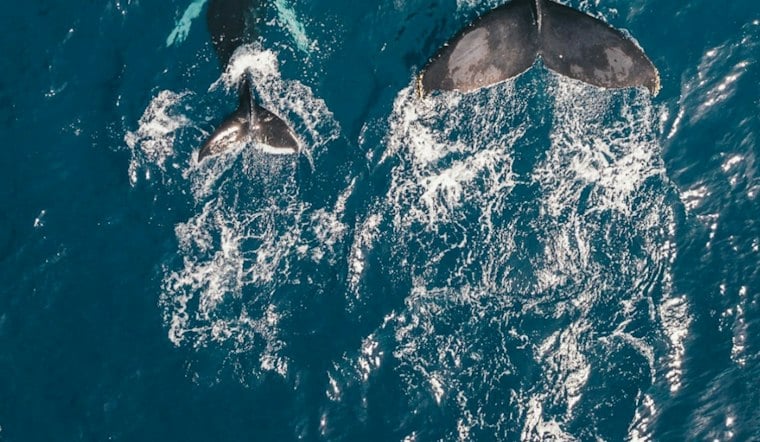
A North Atlantic right whale calf that no one knew existed turned up swimming beside its mother near Anticosti Island, Quebec, in late September, and scientists only confirmed what they were looking at weeks later. The mother, a 38-year-old whale named Silt, had not been documented since a sighting in the southeastern United States calving grounds back in February, and the calf itself had slipped past every boat-based and aerial survey conducted along the U.S. East Coast throughout the spring and summer.
A Calf That Slipped Past Every Survey
Researchers with the Mingan Island Cetacean Study, a nonprofit research organization based in Quebec's coastal Côte-Nord region, photographed the mother-calf pair on September 25, according to the New England Aquarium. Scientists there later determined the calf had likely been born during the 2025–2026 calving season but had gone unseen in winter surveys, meaning it existed for months without anyone documenting its birth. Silt hadn't been seen since that February sighting, the Aquarium says, before she reappeared off Anticosti Island trailing a calf nobody had logged.
North Atlantic right whales typically give birth off the southeastern United States in winter before traveling north to New England and Canada to feed, according to The Boston Globe. Richard Sears, founder and director of the Mingan Island Cetacean Study, told the paper that the ocean is large and animals can get lost out there — a reminder of just how easily a calf can go undetected even while researchers are actively watching for them.
Silt's Long, Difficult History
Silt has now given birth to six known calves in her life, per the Aquarium's account, but her history with motherhood has not been without tragedy. Her 2022 calf, a whale cataloged as Division, succumbed to a severe entanglement earlier this year, the same source reports. Amy Warren, in comments to the Globe, said the September discovery was exciting precisely because it came so late in the year.
The newly identified calf brought the season's total to 24 births, the Aquarium says, after 23 mother-calf pairs had already been recorded. That tally made the 2025–2026 season the fourth-highest calf count on record. The Globe notes the whales have reached 20 calves in a season only a few times since 2010, and that 2018 produced no births at all — context that underscores how unusual a strong season like this one actually is.
A Species Still Fighting Long Odds
The North Atlantic right whale population is estimated at about 380 and remains critically endangered, the Aquarium says, with ongoing threats from fishing-gear entanglements and vessel strikes continuing to weigh on recovery. The Globe reports the population fell roughly 25 percent between 2010 and 2020 and has regained only some ground since, with about 70 reproductive-age females left to sustain the species.
Canadian officials are tracking vessel behavior closely in whale habitat. As of November 5, Transport Canada had monitored 9,427 vessel movements within speed restriction zones in the Gulf of St. Lawrence, and recorded 439 vessels either exceeding the speed limit or entering a restricted area. The agency says its measures are mandatory for vessels over 13 metres inside vessel traffic management zones and/or applicable areas, and that violations of the right whale Interim Order can draw administrative penalties of up to $250,000, or a summary conviction carrying a fine of up to $1 million and as much as 18 months in prison.
For a species down to an estimated 380 individuals, a single uncounted calf matters. Silt's new offspring, discovered only by chance near Anticosti Island months after it was likely born, is now part of the official record — one more data point in a slow, uncertain climb back from the brink.




