

























































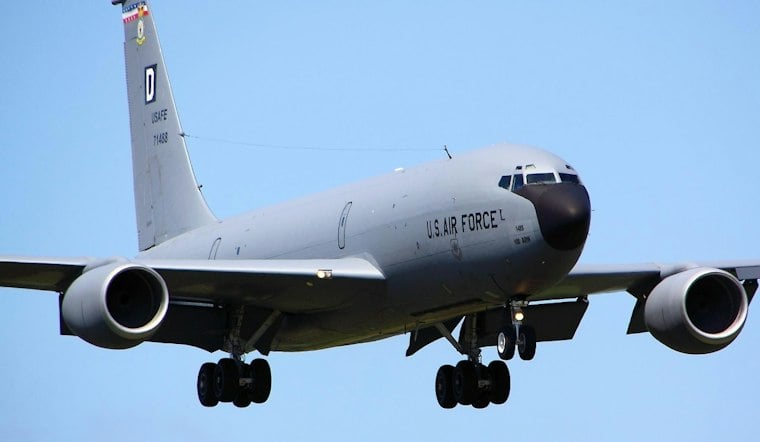
US military aircraft pulled out of RAF Mildenhall in eastern England this week as security at the base ramped up, with a US official confirming the departures amid a reported threat tied to Iran. The exact number of aircraft involved depends on which outlet you read, and American officials are refusing to explain what triggered the move.
A US official confirmed that several military aircraft left RAF Mildenhall as the security posture at the base increased, according to NBC News. The station reported that at least eight air-refueling tankers left the Suffolk base on Monday along with three Ospreys, which were moved to nearby RAF Lakenheath, while CNN put the number of relocated refueling aircraft at 10. The Telegraph reported a third figure, nine tankers, relocated to bases in the UK, Germany and Spain. The accounts don't agree on a precise count, but they agree something unusual happened at Mildenhall on Monday.
CNN's reporting offered the most detailed breakdown of where the aircraft actually went: four KC-135 Stratotankers to Germany's Spangdahlem Air Base, one to Germany's Ramstein Air Base, four to Spain's Morón Air Base, and one to Glasgow Prestwick airport in Scotland, per the network's figures. Atlanta News First, citing a Wall Street Journal report, separately described two tankers diverted to Germany with several others relocated across Europe.
Why Iran Keeps Coming Up
The Wall Street Journal reported that the aircraft movement followed a threat from Iran, but the BBC said it had not independently verified that explanation, per the BBC. Stars and Stripes reported that the exact nature of the reported threat remains unclear, even as officials raised security. The outlet also reported that Mildenhall and Lakenheath had been placed on Force Protection Condition Charlie, the second-highest security alert level.
A US official told Stars and Stripes that security had been increased at both bases but declined to say what prompted the heightened measures. US European Command said it would not provide further information on the movement of assets, citing operational-security concerns, the same report notes. A US Air Force spokesperson gave a similarly guarded response to the BBC, stating only that, due to operations security, the Air Force would not provide further information on the movement of assets.
Britain's Ministry of Defence was equally tight-lipped. A ministry spokesperson told the BBC that aircraft and other assets move regularly according to operational requirements, and that the ministry does not routinely comment on the activity of other nations.
Mildenhall's Role in NATO Refueling
RAF Mildenhall is home to the 100th Air Refueling Wing, which operates KC-135 Stratotankers, according to Stars and Stripes. The Associated Press, in reporting carried by Atlanta News First, described the wing as the only permanent refueling wing in the European region, flying the four-engine KC-135 with a 131-foot wingspan and the capacity to carry up to 83,000 pounds of cargo. The base operates under access, basing and overflight agreements the US maintains with allies and partners.
An Echo of the Fairford Scare
The Mildenhall moves come less than two months after the US Air Force withdrew all 12 of its B-1B bombers from RAF Fairford, roughly 100 miles away, following new threats about an Iran-backed plot against that installation, according to The New York Times. The Times described that withdrawal as unusually rapid for an allied air base in a peacetime country. Those bombers had previously been used to strike Iran during the US-Israeli war against the Islamic Republic, per the AP's Atlanta News First report.
The Fairford scare followed a suspected plot uncovered in September, when five men were arrested outside the Gloucestershire base after three suspicious vans were spotted traveling toward it, according to The Guardian. Two men, identified in a separate Guardian report as Mohmed Abdulkarim and Nouman Essghir, were later charged under the National Security Act 2023; police said they believed the foreign intelligence service involved in the case was Iranian.
Neither the Pentagon nor British defense officials have tied the Mildenhall tanker movements directly to that Fairford case, and the dossier of public reporting stops short of confirming a link. What's clear is the pattern: twice in two months, American aircraft have left British bases on short notice amid reported Iranian threats, and twice officials on both sides of the Atlantic have declined to explain exactly why.





