

























































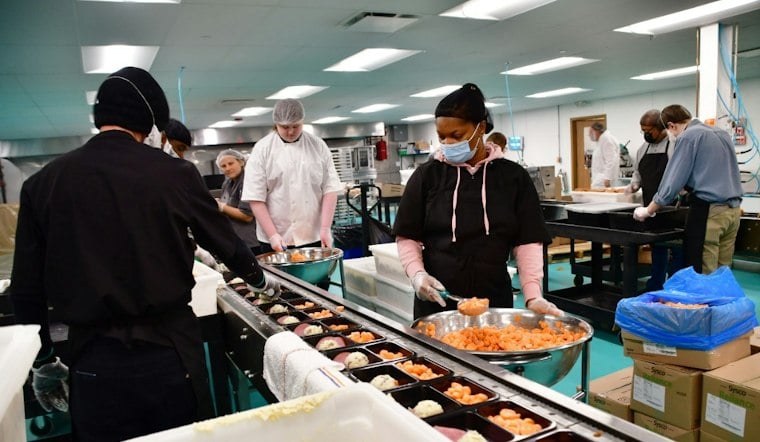
The U.S. Department of Agriculture is pushing more money toward getting locally grown food onto school lunch trays, rolling out a new round of grants under its Harvest to Hallways initiative that includes a record $47 million for farm-to-school projects and $50 million for cafeteria equipment. The funding lands as school nutrition directors nationwide say they are stretched thin on money, labor, and kitchen infrastructure alike.
A Record Year for Farm-to-School Grants
Harvest to Hallways is aimed at increasing the number of scratch-made meals made with local ingredients in schools, according to Foodservice Director. The initiative also includes an education and outreach campaign built around the Local Option School Procurement Program, which lets schools get reimbursed for buying local foods, the outlet reports. As part of the push, USDA plans to offer up to $25 million in new Patrick Leahy Farm to School Grants for fiscal year 2026, per the same source.
Those new dollars bring total Farm to School support in 2026 to more than $47 million across 149 projects nationwide, which USDA describes as the largest annual investment in the program's history, according to a USDA press release. As reported by KSST Radio, the department says it announced more than $77 million in federal child nutrition funding overall to connect local farms with school cafeterias, with USDA's Food and Nutrition Administration unveiling more than $27 million in additional Patrick Leahy Farm to School Grants alongside the $50 million equipment package.
Kitchen Upgrades for Cold Storage and Commercial Ranges
The equipment side of the package is meant to help districts replace aging cafeteria infrastructure. USDA is investing $50 million in school cafeteria infrastructure for equipment, food safety improvements, and School Breakfast Programs, the trade publication notes. The grants are intended to help districts upgrade cafeteria infrastructure with cold storage, commercial ranges, and modern processing tools, according to KSST Radio's account of the announcement.
How that money actually reaches districts is murkier. Foodservice Director reports that states will competitively award subgrants to school districts for equipment purchases valued above $1,000, while USDA's own Food and Nutrition Administration states separately that it will distribute the $50 million in non-competitive grant funds proportionally to 54 state agencies, based on the FY 2026 Child Nutrition State Administrative Expense allocation formula. KSST Radio's reporting likewise describes the NSLP Equipment Assistance Grants as being distributed to state agencies non-competitively. The two descriptions of the award process do not match, and the dossier does not resolve which applies.
Officials Frame the Push Around American Agriculture
U.S. Secretary of Agriculture Brooke L. Rollins said the initiative represents the largest investment in farm to school in the program's history and equips cafeterias to serve healthier meals, according to KSST Radio. Rollins also said every child deserves nutritious food grown by American farmers and ranchers on their lunch tray, the station reports. Health and Human Services Secretary Robert F. Kennedy Jr. emphasized that equipping cafeterias to prepare raw, locally sourced ingredients builds healthy habits for life, per the same account.
Farm to School grants are meant to fund direct partnerships between school districts and regional agricultural producers, including nutrition and farming education components, KSST Radio notes. The package is also described as targeting procurement funding and infrastructure bottlenecks that some school districts face when sourcing local meat, produce, and dairy, with state agencies able to help local schools install refrigeration and cooking capacity for items like fresh beef, citrus, and produce from regional producers. USDA and HHS are also encouraging schools to adopt a voluntary Pledge for Healthier School Meals aligned with the 2025-2030 Dietary Guidelines for Americans, according to Foodservice Director, while HHS will invest $30 million in research into practical and cost-effective ways to improve school meal nutrition, the outlet adds.
Nutrition Directors Describe a Funding Squeeze
The new grants arrive against a backdrop of financial strain in school cafeterias. A School Nutrition Association survey of 1,240 school meal program directors found that 99 percent cited a need for more funding, while 98 percent reported food-cost challenges and 95 percent each reported labor- and equipment-cost challenges, according to Foodservice Director's reporting on the survey. Nationally, the picture on local-food purchasing is mixed: among participating school districts, 78 percent reported purchasing some quantity of local food during the school year, while about 43 percent reported buying local foods through produce distributors, per the USDA Economic Research Service.
Other states have already seen how quickly local-food funding can shift. In Iowa, two farm-to-school programs received a combined total of more than $700,000 for fiscal year 2026, according to the Iowa Capital Dispatch. That comes after the state's COVID-era Local Food for Schools program, which had funneled nearly $2 million to Iowa schools buying from local farmers, was terminated in March 2025, the outlet reported. Nationally, USDA had already awarded nearly $20 million in fiscal year 2026 farm-to-school support across 37 states before the latest round, according to the same report.
Texas has emerged as a focal point in USDA's framing of the initiative. The state has more than 230,000 ranches and farms and is described as a leading producer of cattle and cotton with one of the nation's largest school food footprints, serving millions of lunches daily, according to KSST Radio. USDA expanded Harvest to Hallways to center public school menus on American agriculture, the station reports, with the stated aim of ensuring Texas agriculture feeds Texas children for generations. That framing echoes a 2022 cooperative agreement in which the USDA Agricultural Marketing Service said the Texas Department of Agriculture would purchase and distribute local and regional foods and beverages for schools through the Local Food for Schools Cooperative Agreement Program.





