

























































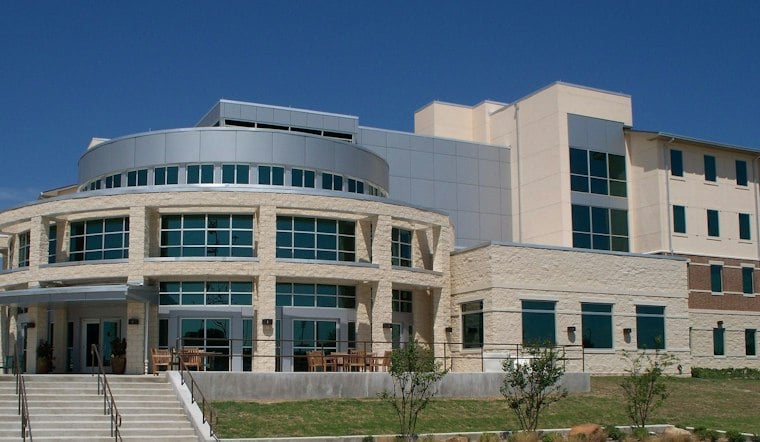
T. Russell Hunter, founder of the Oklahoma-based anti-abortion group Abolitionists Rising, was arrested on the University of Texas at Dallas campus after spending hours debating students about abortion and Christianity on a campus plaza. Hunter says the arrest violated his free speech rights, while the university says it simply enforced a policy limiting who can demonstrate on its grounds.
Accounts of exactly when the arrest happened differ. According to Christian Post, Hunter was taken into custody Nov. 18 and charged with criminal trespass, while Hindustan Times reported the arrest occurred Nov. 19 and that it remained unclear whether any charges had actually been filed. UT Dallas’s own crime log listed a criminal-trespass incident in the campus mall area at about 1:46 p.m. Wednesday with a disposition of “cleared by arrest,” though the log did not name the person involved, Christian Post reported.
Hours of Debate Before Police Were Called
Before the confrontation with campus officials, Hunter engaged in one-on-one conversations with students for nearly three hours without interruption, according to Christian Post’s report. Hindustan Times reported that UT Dallas administrator Tricia Losavio eventually asked Hunter and his associates to leave, citing complaints from students, and that police were called afterward. UT Dallas campus police then arrested one person after university officials asked the group to leave and the group declined repeated requests to do so, according to The Dallas Morning News.
UT Dallas spokesperson Katherine Morales told the paper that no student, faculty or staff group had invited Hunter and Abolitionists Rising to campus. Morales said campus property functions as a limited public forum open to students, faculty and staff, not the general public, and that UT Dallas applies its expressive-activity policy in a viewpoint-neutral manner. Hindustan Times reported that Hunter later confirmed in a Facebook post that he had been released, and that Christian Post said UT Dallas did not respond to its request for comment. Abolitionists Rising representatives also did not respond to an emailed request for comment from the Dallas Morning News.
Hunter Says He'll Fight the Case
Hunter said UT Dallas violated his free speech rights by arresting him for speaking against abortion, and he plans to take legal action against the university, according to the Dallas Morning News. The university, for its part, maintains that its common outdoor areas are not traditional public forums and that it bars public assemblies, demonstrations and other expressive activity unless invited or sponsored by the university itself.
A Stricter Policy Than Some Sister Campuses
UT Dallas has one of the stricter protest policies among UT System schools, barring the public from protesting anywhere on campus unless invited or sponsored, the Dallas Morning News reported. By contrast, UT Arlington allows members of the public to protest in designated areas. UT System regents adopted the UT Dallas policy under a 2025 Texas law that authorized public university regents to designate which campus areas are open to protests by students, faculty and the public, rolling back a 2019 law that had treated common outdoor spaces as forums open to anyone.
The law also restricts expressive activity on campus overnight and during the last two weeks of a semester, and was passed in response to pro-Palestinian protests on campuses in Texas and nationwide, according to the Dallas Morning News. UT Dallas student groups are now suing the UT System over free-speech policies adopted under that law, represented by the Foundation for Individual Rights and Expression. FIRE attorneys argue the overnight and final-two-weeks provisions give administrators sweeping power to discipline students for speech the administration opposes.
A federal judge agreed in September 2025 that the law violates students’ First Amendment rights and temporarily blocked the challenged provisions, the Dallas Morning News reported. FIRE spokesperson Jack Whitten said Hunter’s arrest illustrates how the underlying law, known as SB 2972, enables administrators to suppress speech they consider objectionable. However, FIRE’s 2025 lawsuit does not challenge the specific law provision UT Dallas cited to remove Hunter from campus, leaving that part of the policy intact for now.





