

























































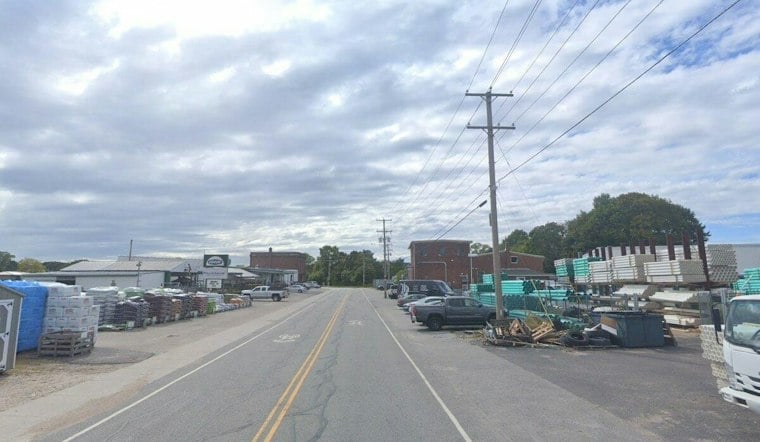
A vacant funeral home on Friendship Street in Westerly's North End is being converted into seven apartments, with one unit set aside for a lower-income household under a deed restriction. Developer Andrew Gencarelli says he hopes to begin leasing the units in the spring of 2027, turning a long-shuttered building into much-needed housing stock in a corner of Rhode Island squeezed by rising rents.
The conversion is a textbook case of adaptive reuse, giving an existing building a new purpose rather than tearing it down, according to NBC 10 News/WJAR reporter Jake Baum. The report says one of the seven apartments is reserved for a household earning no more than 80% of the area median income, with rent and utilities for that unit capped at $1,980 a month.
Gencarelli said that monthly cap actually surprised him when he learned the number, per the same account. He believes the building's life as a funeral home stretches back to the 1930s, and he has said its unusual history might even appeal to some prospective renters rather than scare them off.
No Ghosts, Just Opportunity
Asked directly about the building's past use housing the deceased, Gencarelli did not mince words: “No ghosts, nothing,” he said, according to the same report. For him, the project checks a personal box as well as a civic one — he has said it fulfills a longtime goal of owning rental properties in Westerly, a goal that took shape alongside his day job running a kitchen remodeling business.
That remodeling business, notably, just had its busiest year in 15 years even as Gencarelli juggled the apartment conversion, the report notes. He has also said that local residents he speaks with view the project as a positive use of a building that had otherwise sat empty and abandoned.
A Pattern of Reuse in Westerly
This isn't the first time an older Westerly structure has found new life as housing. Westerly has also seen other buildings converted to housing, including a former Methodist church on Park Avenue, suggesting the funeral home project fits a broader local pattern rather than standing alone.
Gencarelli himself sees that pattern continuing. He has said that strong demand for housing could spur more projects that repurpose older buildings or blend residential space with other uses.
The Broader Affordability Squeeze
Rhode Island's housing crunch provides useful context for why even a single income-restricted unit matters. According to the National Low Income Housing Coalition, the state faces a shortage of rental homes that are both affordable and available to extremely low-income households — those earning at or below the poverty guideline or 30% of area median income. The coalition reports that these households in Rhode Island often spend more than half their income on housing.
The scale of the gap is stark: the coalition estimates a minimum-wage worker in Rhode Island would need to work 68 hours a week, or hold 1.7 full-time jobs, just to afford a one-bedroom apartment at Fair Market Rent. For a two-bedroom, that figure climbs to 85 hours a week, or 2.1 full-time jobs. Those statewide numbers don't describe Westerly specifically, but they illustrate the pressure that makes projects like the Friendship Street conversion notable even at a small scale.
For now, the seven-unit building remains a work in progress, with leasing still roughly four to six months away by Gencarelli's own timeline. Whether more vacant buildings around Westerly follow the funeral home and the Park Avenue church into residential use may depend on just how much that housing demand keeps building.



