

























































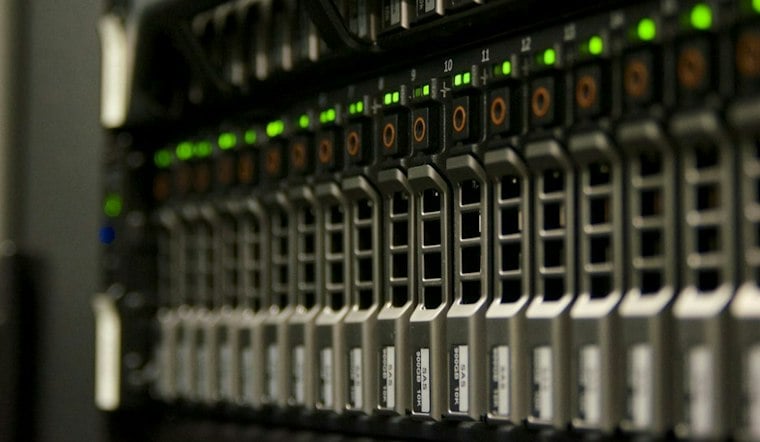
Vernon is the only place in the greater Los Angeles area where new data centers are going up, with one already running and five more in the pipeline. But even this tiny industrial city, long known for rolling out the welcome mat for heavy industry, is now having second thoughts about the servers humming within its borders.
About 50,000 people commute into Vernon every day to work, while only around 300 actually live there, according to the Los Angeles Times. A separate account from LA Public Press put the city's population at 222 residents in a 2025 report, a discrepancy that underscores just how small and unusual Vernon is even among Southern California's industrial enclaves. Vernon City Council members have taken a step toward zoning changes that would make data centers one of the few industries in the city required to undergo environmental review, the Times reports.
Why City Staff Say the Rules Are Changing
Vernon city staff say community concerns prompted the zoning review, according to the same Times report. Those concerns include the strain data centers place on electric systems and water supplies, emissions and noise from backup generators, and the relatively small number of permanent jobs the facilities actually create. Jesus Rivera said Vernon needs regulations for data centers, while Marisa Olguin said Vernon's employers, residents and workers are concerned and should learn more about what's being developed, per the Times.
Data centers need near-constant uptime — 99.99 percent, per industry standards cited by the Times — which means they typically rely on diesel-burning backup generators that can run during grid emergencies and for up to 50 hours a year of testing. Those generators emit soot, nitrogen oxide and carbon dioxide. The South Coast Air Quality Management District has already approved 52 diesel generators for just three data centers within a four-block radius in Vernon, the Times reports.
One Facility Shows the Scale of What's Coming
Prime Data Centers operates a 242,500-square-foot facility in Vernon with permits for 20 diesel generators that can draw up to 49.5 megawatts of power — enough, per the Times, to serve more than 26,000 homes for a year. If regulators approve the generators proposed for a planned Goodman Energy Park project, the total number of approved data-center generators in Vernon would climb to 92, the paper reports.
Vernon sits in a region with a long history of industrial conflict. Communities in Boyle Heights, Maywood and Huntington Park fought polluting industry tied to Vernon for years, and the Exide lead-battery recycling plant closed in 2015 after sustained community opposition, according to the Times. Felipe Aguirre described Vernon as a company town where people are reluctant to speak up, the paper reports — a dynamic now colliding with a new generation of industrial neighbors.
A School Becomes a Flashpoint
The clearest fight is unfolding across the street from Vernon City Elementary School, whose K-6 classrooms serve 144 students with special needs, most of them Latino, per the Times. The Los Angeles Unified School District opposes a data center planned there and has asked the city to block Digital Realty's project until a full environmental review is completed.
Digital Realty is developing a 217,800-square-foot facility and has requested 49 megawatts of power, according to city spokesperson Diana Figueroa, as cited by the Times. Pedro Salcido said the district wants information about noise, generator pollution, and dust from demolition and construction. Vernon and Digital Realty maintain the project is permitted by right and requires no formal environmental review, the paper notes, while Digital Realty said it has communicated with the city, the school and community stakeholders to understand concerns and reduce construction impacts.
Other projects are moving forward nearby. CoreSite Real Estate is constructing a roughly 50-megawatt center half a mile from the elementary school, and Scind Fruitland Point LLC is planning a 49-megawatt facility at 2761 Fruitland Avenue, per the Times. The Goodman Group is developing two large data centers along the Los Angeles River at Vernon Avenue and Soto Street, including a nearly 50-megawatt center expected to begin operating in February, and the separate Goodman Energy Park, a planned 99-megawatt facility at the former Farmer John slaughterhouse site that is seeking an exemption for 40 diesel backup generators from California Energy Commission small-power-plant regulations.
Health Costs and a Statewide Surge
Researchers have attached a price tag to the pollution. UC Riverside report authors estimated California's data-center backup-generator health costs at about $33 million in 2023, with roughly one-third of that burden falling on the Los Angeles region, according to the Times. The numbers fit a broader statewide trend: a Next 10 analysis found California data centers' electricity consumption rose from 5.54 terawatt-hours in 2019 to 10.82 terawatt-hours in 2023, an increase of nearly 95 percent, while water consumption climbed 96.4 percent over the same period, from 25.42 billion to 49.91 billion liters. Carbon emissions from the state's data centers nearly doubled, and the group projects consumption could reach between 16.16 and 25.28 terawatt-hours by 2028.
Vernon's public utility announced in December 2025 that it would stop processing new requests from data centers to connect to its grid, and the City of Vernon states on its website that it will not process new data-center project capacity or existing expansion requests until further notice. Vanessa Vasquez said Vernon's current approval process does not protect public health, according to the Times.
How Vernon Compares to Its Neighbors
Vernon's predicament stands in contrast to much of the region. Numerous surrounding jurisdictions have adopted moratoriums on data centers amid what the Times describes as a wave of opposition sweeping the nation, even as Vernon has spent recent years courting the industry. In nearby Monterey Park, the City Council unanimously backed a 45-day moratorium on data centers in January, and residents pushed for a ballot measure that would ban them outright, according to the Pasadena Star-News. A developer later withdrew its proposed 218,400-square-foot Monterey Park project after that community pushback. A Pasadena city report cited in the same article estimated that even a modest 10-megawatt data center could consume about 78,840 megawatt-hours of electricity and 40 acre-feet of water annually.
What's Next for Vernon's Vote
The debate inside Vernon itself remains split. At an October meeting, industry perspectives diverged sharply, the Times reports: Miles Solomon argued that data centers offer Vernon a real opportunity for business and revenue, and advocated making the city California's answer to Loudoun County, Virginia — taxing data centers rather than imposing new permitting requirements. Brian Baley, by contrast, argued for adopting the zoning change to help shape how the city develops going forward.
The Vernon City Council is set to hold a public hearing on November 17 on future data-center environmental review requirements and development agreements, with a vote potentially scheduled for December 15, according to the Times.





