

























































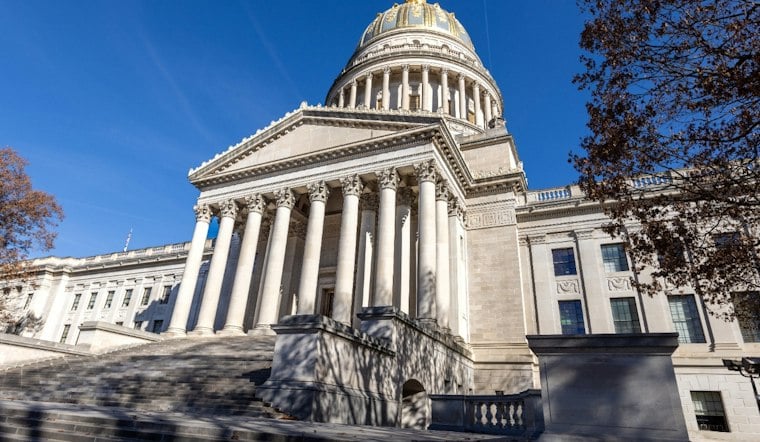
Virginia cities, counties and towns have spent more than a century needing the General Assembly's blessing before they can act on local problems, and a coalition of advocates is now pushing to flip that script. A proposed Virginia Home Rule Act would let localities move forward unless state lawmakers specifically limit or prohibit the action, reversing the default that has long defined who holds power in the commonwealth.
The current framework, known as Dillon's Rule, limits what counties, cities and towns can do without first getting permission from the Virginia General Assembly, according to WTVR. The station reports the rule has defined the relationship between Virginia's local and state governments for more than a century, though accounts of its exact origin differ: WTVR traces it to an Iowa Supreme Court case in the late 1870s, while the Virginian-Pilot reports that John Forrest Dillon formulated the principle in 1868 while serving as an Iowa Supreme Court justice.
A Different Test for Local Power
Del. Fernando Martinez, who is expected to sponsor the legislation, described the proposed shift in straightforward terms: instead of localities needing explicit state permission to act, the question would become whether the commonwealth has prohibited or limited that community from acting. Martinez was careful to frame the change as a recalibration rather than a retreat by the state. “This does not take away the General Assembly's ultimate authority. Strong statewide protections remain,” he said, per WTVR's reporting.
The proposal is still being evaluated. WTVR reported the bill was under review and had not yet been formally introduced as of its report. The outlet FFXnow adds that the measure, which Martinez is expected to patron, is being evaluated by the General Assembly's Division of Legislative Services ahead of the session that is expected to begin at the start of the new year. According to the Virginian-Pilot, the coalition behind the push is still seeking a sponsor in the Senate.
Advocates Make Their Case
Mariah Robalino of the Virginia Home Rule Project held a webinar earlier this week alongside Virginia lawmakers, community leaders and policy experts to preview the proposed legislation, the station's report notes. Robalino said the campaign advances home rule by giving local governments greater authority to meet local needs while preserving statewide protections, arguing that Virginia communities deserve the power to solve their own problems.
Christian Martinez of CASA, who participated in the push, said families seeking help from local governing bodies are too often told that officials' hands are tied under current law. He said Dillon's Rule limits can especially harm families struggling with rising rent, and declared that the organization is calling on Virginia to become a home-rule state. Home-rule supporters more broadly have characterized the existing restrictions as archaic and harmful to localities, the same account notes.
A Survey and a Bigger National Picture
Supporters point to research suggesting the current system has a chilling effect even before policy debates begin. Bruce McDonald, director of Old Dominion University's Municipal Research Lab, reported that more than 50% of surveyed localities had modified or abandoned a potential policy because they anticipated state preemption. Speaking separately with WVTF, McDonald said Dillon's Rule can keep officials from pursuing ideas that may never reach public discussion because they believe they lack the authority to pursue them.
Virginia's position is unusual nationally. FFXnow describes Virginia as an outlier, noting that most states provide some form of home rule. A Brookings Institution analysis finds that 39 states employ Dillon's Rule in some form to define local-government power, with 31 applying it to all municipalities and eight to only certain ones, while 10 states do not adhere to the rule at all. Brookings cautions, however, that Dillon's Rule and home-rule states are not polar opposites, and argues the rule neither prohibits nor inherently hinders strong local policymaking since state legislatures can still grant localities broad authority. The same analysis warns that expanded home rule is not a cure-all, noting that additional home rule probably offers no panacea for challenges like growth management.
Where the Proposal Stands
CBS 6, which first reported on the webinar and the bill's status, said it had reached out to Republican state leaders for comment and was still waiting to hear back as of publication. That leaves the political reception to the proposal, along with its precise legislative language, unresolved for now. With the General Assembly session expected to open at the start of the new year, the coalition's search for a Senate sponsor and the bill's formal introduction remain the next milestones to watch.





