
























































Visa and Mastercard asked a federal judge on Monday to give final approval to a $38 billion settlement that would reshape how merchants nationwide pay to accept credit cards. The deal, which covers more than 12 million merchants, would lower some swipe fees, cap others, and for the first time let businesses pick and choose which types of cards they're willing to accept.
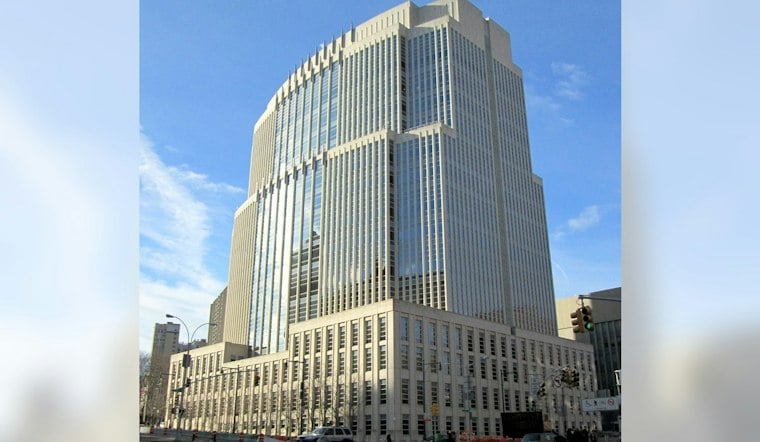
U.S. District Judge Brian Cogan held a hearing in Brooklyn, New York, but did not decide at the hearing whether to grant final approval, according to 1027wbow.com, which cited Reuters reporting. The case stems from merchants' accusations that Visa, Mastercard and banks conspired to violate U.S. antitrust laws through how they collect swipe fees, also known as interchange fees, as detailed in reporting from the Kansas City Star. Cogan previously granted preliminary approval of the settlement in June 2026, after a different judge had rejected an earlier, $30 billion version of the deal in June 2024 as too small.
What the Settlement Would Actually Change
Under the terms being presented to Cogan, Visa and Mastercard would lower swipe fees by 0.1 percentage point for five years and cap fees on standard consumer cards at 1.25% for eight years. The deal would also end the networks' long-standing Honor All Cards rule, which has required merchants to accept every Visa and Mastercard card or none at all.
In its place, merchants would be able to choose among three categories: commercial cards, premium consumer cards including rewards cards, and standard consumer cards — meaning a business could, for instance, reject certain cards while still accepting popular rewards cards. Card-network lawyers described the settlement as a fair compromise that fundamentally changes longstanding merchant relationships, the same report noted.
Backers Say It's a Breakthrough, Critics Say It Falls Short
Michael Shuster, representing the settlement's backers, said the deal offers potent relief for merchants and would change life for the card networks, adding that Visa itself was not pleased with the changes. Economists Joseph Stiglitz, a Nobel Prize-winning economist, and Keith Leffler, a University of Washington professor, estimated for the plaintiffs that the changes could save merchants $38 billion by 2031 and deliver $224 billion in overall benefits, including to consumers.
But the settlement has drawn fierce pushback. The court received slightly more than 1,000 objections, including from Walmart and the National Retail Federation, which describes itself as the world's largest retail trade group. Objectors argue merchants would still pay too much to accept rewards cards and would not be allowed to choose among individual card issuers.
Convenience Stores Say Competition Is 'Way Off Course'
Mithun Mansinghani, who represented the National Association of Convenience Stores and Circle K in objecting to the deal, said it created no structural reforms for meaningful competition among banks and card issuers. He argued fees would remain too high on commercial and premium consumer cards, which together make up more than 90% of the card market, and said competition should be the north star while the settlement is way off course.
Supporters of the settlement include the Electronic Payments Coalition, whose members include Visa, Mastercard, Bank of America, Capital One, Chase and Citibank. American Express and Capital One's Discover are not part of the settlement at all, meaning any relief negotiated here would not touch those networks' fee structures.
Fees Have Soared for Nearly Two Decades
The scale of the dispute reflects years of rising costs. Visa and Mastercard collected $25.6 billion in U.S. swipe fees in 2009, a figure that climbed to $111.2 billion in 2024 and $118.8 billion in 2025, according to the Merchants Payments Coalition. The average swipe-fee rate for Visa- and Mastercard-branded credit cards rose to 2.36% in 2025 from 2.35% the year before, the coalition reported.
Combined credit- and debit-card swipe fees across the industry hit a record $198.25 billion in 2025, up 5.9% from $187.2 billion in 2024, per the Merchants Payments Coalition. As Payments Dive noted, that total marks an 80% increase since the 2020 pandemic began. The underlying litigation itself stretches back even further — the consolidated payment-card antitrust actions were brought together as multidistrict litigation in 2005, according to a federal court filing.
Judge Cogan has previously said that rejecting the settlement could lead to a prolonged process if the 21-year-old case went to trial, a consideration that looms over Monday's arguments as both sides wait to see whether he grants final approval.