

























































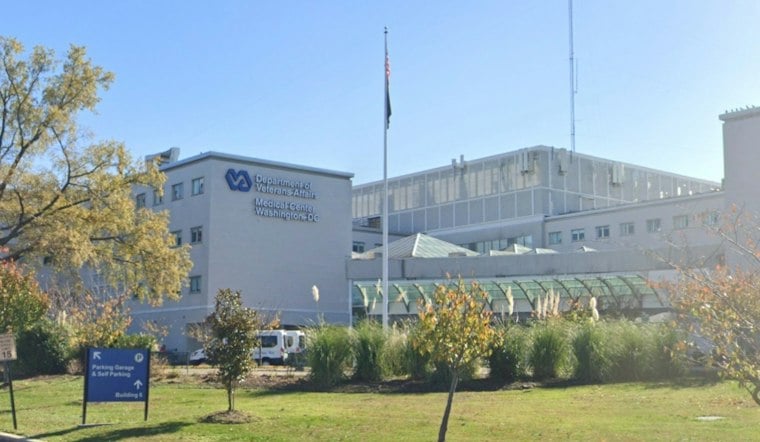
Volunteer musician Dante Ciolfi played the Eagles' "Desperado" for 93-year-old Army veteran Lawrence Ludden in the hospice unit at the VA Medical Center in Washington, D.C. Ellen Morris, who trains musicians on hospital protocol, walked him from room to room.
The afternoon is a named piece of Musicians On Call, a nonprofit founded in 1999 that brings live music to hospital patients nationwide, at the bedside and by Zoom. NPR's Marisa Peñaloza reported Wednesday, in the network's Here to Help section, that the group's volunteers have performed for more than a million patients. U.S. Air Force veteran Sidney Nichols was one of the men Ciolfi sang for.
What the Rooms Held
Ludden is an Army veteran with four children, five grandchildren and two great-grandchildren. At 93, he was in hospice. The song Ciolfi brought him was "Desperado."
Marine veteran John Fay was nonverbal. As he listened, he tapped his heart with his hand. Ciolfi has said he tries to hold emotional space with patients who cannot speak, and that playing creates a powerful exchange of energy. The tap is the gesture on the record.
Nichols' service sits in a harder register. He spent four years as a pararescue specialist in Southeast Asia, including Thailand, Vietnam and the Philippines. Ciolfi sang him Van Morrison's "Crazy Love."
A Guide, a Protocol, a Closed Chart
When he is not volunteering, Ciolfi teaches computer science to graduate students. In the hospital he skips the page most clinicians open first. "I intentionally don't because I want to stay focused on the music," he said of patients' charts.
Morris is what makes the path through the unit possible. She trains Musicians On Call volunteers on hospital protocols and guides them from room to room. She has called Ciolfi an excellent volunteer. The usual pace for musician volunteers is three or four hospital visits a month.
The national figure is easy to recite and hard to picture: more than a million patients since 1999. The Washington hospice round is one afternoon inside that count, with particular songs attached to particular men rather than to a tally.
What the VA's Music Therapist Argues
Nicolette Rubin, the music therapist in charge of the music program at the VA Medical Center, described music as more than a lift in mood. In her words, it "is not only uplifting to the spirit, but it's a restorative treatment that helps patients recover from and cope with emotional and physical trauma."
She was speaking about music in veteran care. Ciolfi was in the building as a volunteer, not as the therapist who runs that program. Morris's work that day was protocol and navigation: which room, which rule, which patient was ready for a song. Same medical center. Not the same job.
Studies That Measured Something Else
Other music work with veterans has been studied on its own terms, and those terms are not a bedside volunteer moving through a hospice unit.
A 2025 evaluation of a music therapist-led program for veterans in supportive housing used therapist notes, attendance logs, demographic data and unsolicited feedback from 45 sessions. Veterans in that program preferred rock, country, blues and folk. Singing and playing instruments were the most common strategies. Notes and comments suggested people appreciated the sessions, and that the room became a place where challenges could be addressed.
A separate 2025 study looked at chronic pain, not a hospital hallway. Researchers interviewed 16 veterans from a randomized trial of telehealth music listening or music-and-imagery. Those patients found the approach acceptable and endorsed music listening or music-and-imagery as non-pharmacological support.
A pilot has suggested that Guitars for Vets may be a safe and potentially effective intervention for PTSD and depressive symptoms among veterans with moderate to severe PTSD. None of those projects is Musicians On Call, and none of them measures the Washington hospice visit.
The Calendar After the Note
The visits keep an ordinary pace: three or four hospital visits a month; performances can be at a bedside or on Zoom. Nichols heard "Crazy Love" from Ciolfi. His service record runs four years through Thailand, Vietnam and the Philippines.




