

























































A mailer campaign tried to tie state Sen. Haseeb Fatmi to the Council on American-Islamic Relations and Hamas during his race for North Carolina Senate District 18. It didn’t work. Fatmi, a Democrat and Muslim, beat Republican corporate lawyer Chris Stock by nearly 12 points, holding the seat that covers northern Wake County and all of Granville County.
According to the Raleigh News & Observer, the mailers were sent by the North Carolina Senate Majority Fund and did not directly call Fatmi a terrorist, but they drew connections between him, CAIR, and Hamas. One mailer carried a “voter warning” header alongside a black-and-white image of Fatmi, the paper reported after reviewing two slightly different photographs of the mailers. Another claimed Fatmi was endorsed by an “unindicted co-conspirator” supporting Hamas — a reference, the paper found, to a 2007 case in which the Justice Department accused the Holy Land Foundation and its affiliates of funneling money to Hamas. The Justice Department listed CAIR as a co-conspirator in that case but never formally charged the group with funneling money to Hamas. The North Carolina Senate Majority Fund did not respond to the paper’s efforts to reach it before publication.
The mailers’ target was murkier than they let on. It was CAIR Action, the organization’s 501(c)(4) nonprofit arm, that endorsed Fatmi in its voter guide — while the allegations in the mailers concerned CAIR’s separate 501(c)(3) nonprofit arm, the News & Observer reported. CAIR has said its inclusion on the government’s co-conspirator list resulted from an untested allegation, and the paper noted CAIR was not a party to a 2010 federal appeals court ruling that found the government erred in making that list public — a ruling whose statement, per the paper’s review, actually referred to the North American Islamic Trust, not CAIR.
A Campaign Built on Local Fixes, Not National Fights
Fatmi, a former federal prosecutor and Campbell Law School professor who previously served as a Wake Forest commissioner, was appointed to the Senate District 18 seat by Gov. Josh Stein in May after then-Sen. Terence Everitt resigned, according to Indy Week. He and his wife learned they were expecting a baby girl just days before he stepped into the seat. On the campaign trail, Fatmi said his focus was affordability, education and healthcare across Wake and Granville counties, and that he aimed to ensure all his neighbors have a safe place to live.
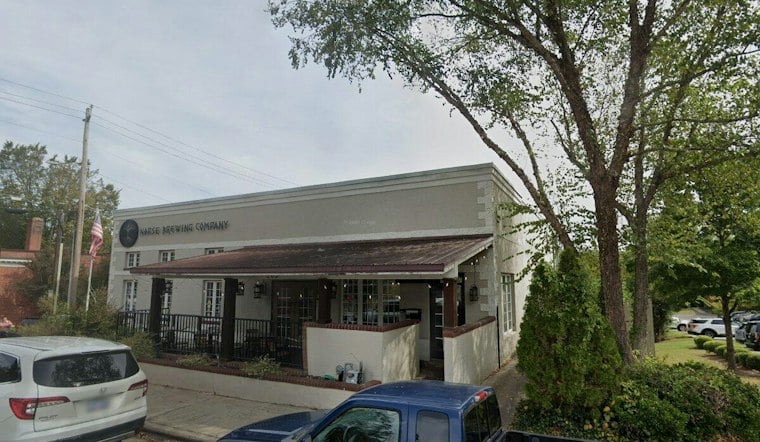
Indy Week’s tally of the race showed Fatmi taking 55% of the vote to Stock’s 43% and Libertarian Brad Hessel’s 2% — a margin the outlet also described as a 12-point gap between Fatmi and Stock, though it cautioned that results remained unofficial pending certification. At his victory speech at Norse Brewing Company in downtown Wake Forest, Fatmi thanked volunteers from the Northeast Wake Democratic Party and condemned what he called the racism and bigotry his campaign faced.
CAIR Calls It a Pattern Fatmi Didn’t Face Alone — Or Did
Al Rieder, the regional community manager for CAIR’s North Carolina chapter, congratulated Fatmi for facing anti-Muslim attacks with courage, according to the same News & Observer report. Rieder said Fatmi faced especially brutal anti-Muslim sentiment in his race but kept showing up at local festivals and events despite the attacks, describing the mailers themselves as mean and hateful. To his knowledge, Rieder said, other Muslim candidates in North Carolina did not face similar anti-Muslim attacks this cycle.
CAIR recorded six elected Muslims across North Carolina during the 2026 midterms, the highest number the organization has ever logged in the state, the paper reported. In a separate release, CAIR’s North Carolina office congratulated those six candidates for their wins in the 2026 general election. Nationally, CAIR and CAIR Action reported at least 97 confirmed American Muslim electoral victories across 21 states in 2026, including 38 state legislative wins — a total the organizations said was 15 higher than in 2022, according to a CAIR press release. Rieder said the midterm gains showed the country was done with hateful messaging, and that people were fed up with blaming minority groups and wanted to come together for community.
A Similar Fight Played Out in Michigan
Fatmi’s race wasn’t the only one shadowed by anti-Muslim rhetoric this cycle. Abdul El-Sayed, the Democratic candidate for U.S. Senate in Michigan, became the first Muslim senator in U.S. history, carrying the state by seven points, the News & Observer reported. President Donald Trump had called El-Sayed a jihadist and said he would have to pass through a metal detector to enter the Senate chamber. At his victory party, El-Sayed gave praise to Allah and introduced himself using his full Arabic name, Abdulrahman Mohamed El-Sayed, according to the Washington Post.
The wave of attack messaging arrives alongside a broader shift in public opinion. A Pew Research survey from January found that over half of U.S. adults said Islam encourages violence more than other religions do, double the share who agreed with that statement months after the September 11 attacks, the News & Observer reported. Pew Research Center has described overall views on Islam as now more negative and more partisan than they were in 2002, based on survey data stretching from 2016 through 2026. Hamas, which the United States designates as a terrorist organization, killed more than 1,200 Israelis in its October 7, 2023 attack.





