

























































Two census tracts in Waldorf and one covering the Newburg/Morgantown area will become Charles County's newest federal Opportunity Zones starting January 1, 2027, part of a statewide list of 114 tracts Maryland selected for the program's second round. The designations run for ten years, and they notably leave out Indian Head, a tract that qualified under the new eligibility rules but didn't make the final cut.
A Tighter, Rewritten Federal Program
According to Charles County's government, Maryland selected 114 census tracts for designation under the federal Opportunity Zones 2.0 program, with Charles County getting three: two in Waldorf and one in the Newburg/Morgantown area. The Southern Maryland Chronicle reports that Congress rewrote the Opportunity Zone program in 2025 and required every governor to submit a fresh set of tracts, with the Maryland Department of Housing and Community Development submitting the 114 tracts to the U.S. Treasury on behalf of Gov. Wes Moore. The outlet also reports that the U.S. Treasury released the official designations on November 5, and that Maryland had 149 zones under the original 2018 designations, compared with roughly 450 tracts statewide that met the new income and poverty tests this time — meaning Maryland could only designate about a quarter of those eligible.
Per the same account, Charles County Commissioners President Reuben B. Collins II said Opportunity Zones are an economic development tool intended to attract private capital. The designations do not fund or approve individual projects, the Chronicle reports, and private investment depends entirely on investors, developers and property owners choosing to invest. Jim Chandler said the designations support the county's redevelopment, business, entrepreneurship and investment goals, and his department will work with state agencies, developers and site selectors to market the areas — though the outlet notes those goals are not commitments from any company.
Five Tracts Qualified, Only Three Made the List
The gap between what qualified and what was ultimately designated traces back to a county update this past summer. Charles County's June update said five census tracts in the county met the new eligibility criteria: three in Waldorf, one in Indian Head, and one in the Newburg/Morgantown area. The Chronicle reports that county staff, per Paul W. Ruppert and Tony Felts, told commissioners in June that the Waldorf tracts offered the strongest redevelopment prospects, while Indian Head and Newburg could attract investment tied to defense, energy, tourism and the waterfront.
Despite five tracts qualifying, the final designated list left out one eligible Waldorf tract and Indian Head altogether, according to the Chronicle's reporting. That's notable locally because Indian Head was one of Charles County's original Opportunity Zones back in 2018, alongside the Waldorf Urban Redevelopment Corridor and Waldorf Station, as BayNet reported at the time. The original 2018 zones, per the county's economic development department, included both sides of U.S. 301 in Waldorf from the county line to Berry Road.
What's Actually in the New Zones
The Chronicle identifies the designated tracts as 8508.02, 8509.01 and 8512, per OpportunityZones.com data cited in its report, with two in Waldorf's primary growth area — including portions of the Waldorf Urban Redevelopment Corridor — and one covering Newburg-Morgantown, including the former Morgantown Generating Station on the Potomac River. By comparison, the same tracking source shows two designated zones in St. Mary's County and none in Calvert County, the Chronicle reports.
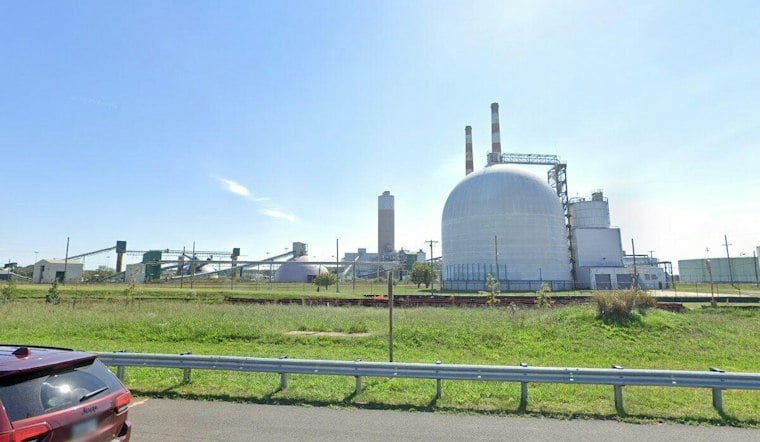
The Newburg/Morgantown tract carries its own redevelopment backstory. The Morgantown Generating Station, a former coal-fired power plant in southern Charles County, closed in 2022, according to Charles County's economic development site. TeraWulf, a Maryland-based energy and digital infrastructure company, purchased the 355-acre property in early 2026, with redevelopment planned in phases — starting with environmental remediation and modernization of the site's energy generation facilities, and future phases expected to include battery storage and a data center campus. The Baltimore Banner reported that FERC approved the sale to TeraWulf on Wednesday, July 29, 2026. Separately, The Baltimore Banner reported that county commissioners declined a zoning change that would have opened the area to data center construction, opting instead to study the issue further.
According to the Chronicle, the county expects the Waldorf designation to facilitate mixed-use and commercial projects, and says it builds on infrastructure spending and planning tied to the proposed Southern Maryland Rapid Transit corridor. The county also said the former Morgantown power plant property could support new industrial uses and advanced manufacturing, and that Opportunity Zone status may widen the investor pool and attract suppliers, related industries and tourism businesses.
How the Tax Break Actually Works
The incentive itself hasn't changed in its basic mechanics. A Qualified Opportunity Fund must invest at least 90% of its assets in Qualified Opportunity Zone property, according to Maryland's Department of Housing and Community Development, which also confirms the new designations take effect January 1, 2027 and remain in place for ten years. The Internal Revenue Service specifies that a Qualified Opportunity Fund must invest 90% of its assets in Qualified Opportunity Zone property to maintain its certification. Investors can defer tax on original gains invested in a qualified fund and can avoid federal tax on investment growth after holding the new investment for at least ten years, per the Chronicle's reporting — though the U.S. Department of the Treasury is careful to note that taxpayers making qualifying investments in designated tracts may be eligible for certain tax benefits, not that they're automatically entitled to them. A Congressional Research Service summary describes the new selection round as covering the ten-year period from January 2027 through the end of December 2036.
Congress tightened eligibility for this second round after the first round of Opportunity Zones drew national criticism for directing benefits to areas that were already attracting development, the Chronicle reports. That criticism lines up with independent research into how the original program performed. A National Bureau of Economic Research summary found that Opportunity Zone designation increased workplace employment in designated tracts by 1.3%, but roughly 84% of those gains were offset by job declines in adjacent low-income communities that weren't designated. The same research, which compared 6,866 designated tracts against 20,522 non-designated low-income communities, found positive job-growth effects in urban zones but no evidence of similar gains in rural tracts — and reported that fewer than one in eight newly created jobs in Opportunity Zones went to residents of the same or other zones, while more than 75% went to residents of comparatively affluent areas.
A separate review from the Urban Institute found that 78% of early Opportunity Zone investments went to just 5% of designated zones, with 95% of investments landing in urban areas as of 2020, and that most of that capital flowed into real estate rather than operating businesses. Initial impact studies of the designations showed mixed, limited or no effects on the neighborhoods involved, the review found. A Treasury Office of Tax Analysis paper cited in that review tallied $48 billion in Opportunity Zone investments from tax years 2018 through 2020, while NBER estimates the program's foregone taxes cost the U.S. Treasury about $8.2 billion between 2020 and 2024.
For now, Charles County's economic development department says businesses, property owners, developers and investors interested in the new designations can reach out at [email protected] before January 1, 2027, when the tax breaks become available for capital gains invested in the designated areas.





