

























































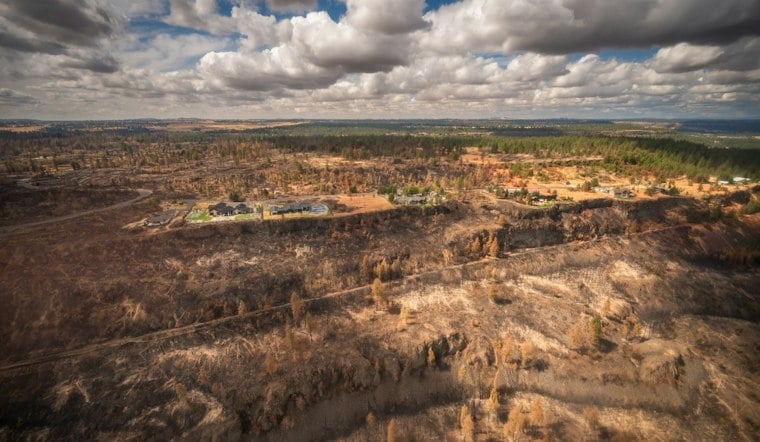
Homeowners rebuilding after wildfires tore through Central and Eastern Washington may soon get a break from some of the state's toughest energy requirements. The Washington State Building Code Council voted on October 30, 2026 to adopt an emergency rule meant to give fire-damaged property owners more flexibility and faster paths back into their homes.
Governor Bob Ferguson announced the move on Facebook, framing it as an effort to make rebuilding more affordable for residents hit by the fires, according to a post from Governor Bob Ferguson. Per the governor's account, the state building code council acted on his request, and local governments now have discretion to let homeowners rebuild using an earlier version of the energy code or a current code with fewer restrictions.
How the Relief Actually Works
The mechanics are more specific than the governor's announcement lets on. Qualifying homes can either be rebuilt to whatever energy code was in effect when the original structure went up, as long as it is no older than the 2015 code, or they can follow a slightly loosened version of today's current energy code, according to the Yakima Herald-Republic. It is not a blanket statewide mandate, however. Local governments must decide for themselves whether to offer the relief at all, and if they do, which of the two paths to allow.
Eligibility is also narrower than it might first appear. The relief only applies to homes damaged or destroyed in a disaster covered by a governor's emergency proclamation, and the report notes the applicant must have owned the property at the time the disaster struck. The outlet also reports that the council's rule has a built-in expiration, lasting up to 120 days.
Fires That Prompted the Fix
The push for flexibility traces back to the Spokane Complex fires, which the same report says destroyed hundreds of homes in August. Those losses left local officials and builders grappling with how to get families back into permanent housing without forcing them to absorb the full cost of the state's current, more stringent energy standards.
That cost question remains contentious. A Spokane builder estimated the difference between rebuilding under the 2015 energy code and current standards at $30,000 to $40,000, according to The Spokesman-Review. But the state council itself said it has no analysis estimating that construction-cost gap, leaving the builder's figure as an estimate rather than a verified state number.
A Recommendation Already on the Table
Before the state council's vote, Spokane County's own planning director had floated a related fix at the local level. The county official recommended a two-year vesting window paired with use of the 2015 energy code specifically to cut down on permitting bottlenecks for wildfire rebuilds, per CitizenPortal. That was described as a recommendation rather than adopted policy, and it is distinct from the statewide emergency rule the building code council ultimately approved.
How Other States Have Handled It
Washington is not the first state to wrestle with easing building standards after a disaster. California Governor Gavin Newsom issued Executive Order N-29-25 allowing homeowners rebuilding after the January 2025 wildfires to use the state's 2022 building code instead of stricter 2025 standards, according to the Santa Monica Daily Press. That order applied to residential properties substantially damaged in fires that burned more than 47,900 acres and destroyed more than 16,250 structures across Los Angeles and Ventura counties.
Notably, the newspaper also cited UC Berkeley research suggesting the energy-efficient route isn't always the pricier one: all-electric homes reportedly cost $7,500 to $9,000 less to build than homes with gas infrastructure, according to the research cited in that report. It is a reminder that the relationship between code stringency and construction cost can cut in more than one direction, even if Washington's own council has not produced a comparable analysis for its 2015-code option.
For now, the practical effect in Washington depends heavily on choices still to be made at the local level. Whether cities and counties across Central and Eastern Washington actually adopt the relief, and which of the two energy-code options they choose, will determine how many fire-displaced families see any real difference in their rebuilding costs or timelines.




