

























































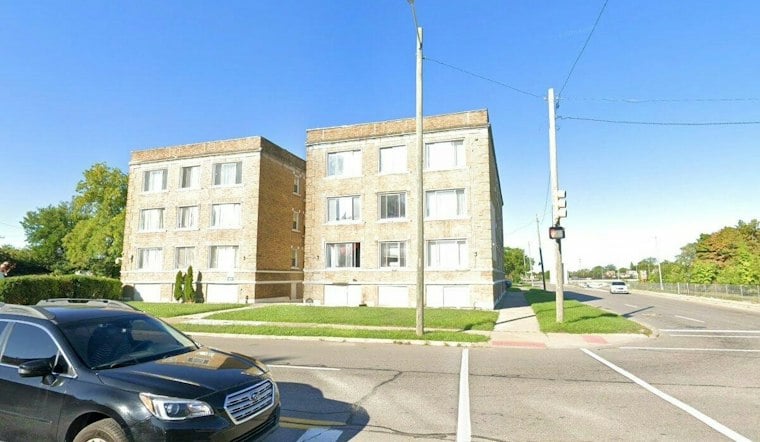
Wayne County commissioners signed off on five affordable-housing actions worth roughly $8.3 million last Thursday, directing money toward the renovation of 217 units spread across Detroit, Westland and Highland Park. The deals mix permanent supportive housing, rental rehabilitation and senior living upgrades, with loan terms designed to keep units affordable for decades to come.
The commission's November 19 vote, as reported by MLive, covers a stretch of projects aimed at preserving affordable housing, improving senior living facilities and providing housing for people experiencing chronic homelessness. Wayne County Community Development Director Betsy Palazzola called it a turning point for the county's role in housing policy. “This is a big moment for Wayne County,” Palazzola said, adding that “We’re sort of entering the game as a major, as a big player.”
Where the Money Is Going
The largest single commitment, $3 million, will rehabilitate 57 senior-housing units in Westland, with another $2 million earmarked for 56 more senior units in the same city. Both Westland projects are managed by Presbyterian Villages of Michigan and, per the same account, will renovate existing senior housing while improving access to supportive services so residents can age in place.
In Detroit, the county committed $2.4 million to rehabilitate 40 permanent supportive-housing units at the Linwood development, which is slated to offer on-site mental health, substance-abuse and employment services for people transitioning out of chronic homelessness. A separate $422,500 commitment will fund renovations to 16 affordable rental units elsewhere in the city. In Highland Park, commissioners amended an existing $500,000 loan agreement to rehabilitate 48 rental units at Highland Manor, though the amendment itself includes no additional funding.
Highland Manor has a history in the neighborhood: Model D Media reported years ago that the 48-unit complex began accepting tenants on March 1, with two-bedroom units renting between $603 and $629 depending on income and three-bedroom units going for $667 to $693.
Interest-Free Loans, Long-Term Affordability
The county's loans carry no interest, and the loan provisions are built to preserve affordability for 30 to 50 years depending on the development, according to the seed reporting. Developers involved in the agreements aim to begin construction before the end of 2026 and place the units into service by the end of 2027.
Most of the units covered by the five agreements are designated for households earning 60% of area median income or less. Federal guidelines peg 80% of area median income at $58,700 for an individual and $83,850 for a family of four, with those thresholds based on income data from Wayne, Oakland and Macomb counties. Commissioners reportedly discussed whether those federal income guidelines accurately reflect the financial circumstances of residents in lower-income communities.
Palazzola pushed back on any suggestion that the county is trying to draw low-income residents in from elsewhere. “Affordable housing and preservation often serve people already living in the community,” she said, stressing that the county's work is not a campaign to move low-income people into Wayne County from outside its borders.
Federal Funding and What Comes Next
The projects draw on federal support through the HOME Investment Partnerships Program and the HOME-American Rescue Plan program. Wayne County expects to have roughly $8 million remaining in federal HOME-American Rescue Plan funding after the Linwood allocation, and it receives approximately $3.5 million annually in ongoing federal HOME funding, which typically supports two to three housing projects a year. Palazzola said that pace is typical for the county's federal funding cycle.
County officials are reviewing approximately five additional permanent supportive-housing developments and plan to conduct a housing-market study to identify individual community needs and guide future affordable-housing policy. For comparison, Detroit has seen other large supportive-housing efforts take shape recently, including Affordable Housing Finance's reporting on The Anchor at Mariners Inn, a $29 million development that combined 44 permanent supportive-housing units with 40 units for people in substance-use treatment, built using a financing structure described as one of the first in Michigan to combine 4% and 9% low-income housing tax credits.



