

























































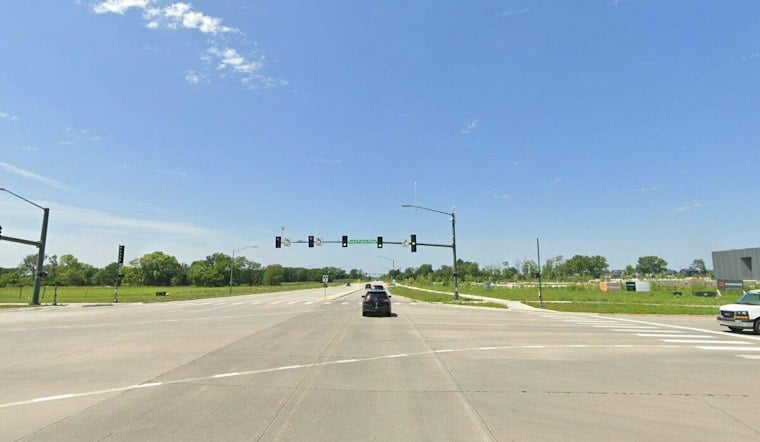
A stretch of farmland in western West Des Moines could transform into a sprawling new community of up to 2,200 homes over the next decade or more. The project, called Trail West, would rise on roughly 300 acres north of Booneville Road and west of Grand Prairie Parkway, with the potential to grow to around 760 acres as it builds out.
The development is being planned by Caliber Homes, which is partnering with Jerry's Homes, according to Axios. Caliber Homes would focus on higher-end housing priced from $800,000 to $3 million, while Jerry's Homes would offer lower-priced housing options, the outlet reports. Jerry's Homes did not immediately respond to Axios' request for comment.
The first phase alone includes 130 single-family home lots, and those first lots are expected to become available by fall 2027, per the same account. Beyond that initial phase, the number of total phases for Trail West remains undetermined, and the full build-out could take anywhere from 10 to 15 years.
What Else Could Land on the Site
Trail West isn't limited to single-family houses. The project could eventually include townhomes, rental condos, apartments and neighborhood-scale retail as it matures, Axios notes. Developers reportedly plan to begin grading the land this fall.
Ryan Moffatt, West Des Moines' economic development director, said Trail West would sit near the planned Grand Experience and the MidAmerican Energy RecPlex expansion, according to the station's report. Ryan Kauffman described Trail West as an urban area with a country aesthetic, rolling hills and tree-lined waterways, telling Axios the development is meant to blend suburban convenience with a more rural feel.
City Leaders Weigh In
Russ Trimble said the project is encouraging and will provide much-needed housing, a comment made during a council meeting last month, per the same account. The project would add housing and pricing options to the growing western suburbs, and it is located in Dallas County, within western West Des Moines.
That growth pressure isn't new. Dallas County's population grew 51%, from 66,133 residents in 2010 to 99,672 in 2020 — a jump that the Des Moines Register ranked fourth-fastest among the more than 3,000 counties in the country. West Des Moines itself grew 21% over that same decade, from 56,609 to 68,723 residents, while neighboring Waukee posted a 74% increase, the largest among Iowa cities with at least 20,000 residents, according to the same report.
A Neighboring Megaproject Nearby
Trail West's location near the Grand Experience ties it to one of the city's most ambitious recent undertakings. That project, a more than 100-acre development west of Interstate 35, is tied to a $400 million development agreement West Des Moines approved in December 2024, according to the Business Record. Plans for Grand Experience call for a 78,000-square-foot indoor water park, a 260-room hotel and 150 workforce housing units, along with market-rate multifamily housing, retail, office and commercial space.
The Grand Experience's construction timeline has shifted since that initial approval. The December 2024 agreement indicated construction could begin in late 2025, with full build-out taking up to 10 years, but reporting from August 2025 said design work was expected to take place in 2026, with construction beginning in 2027. The city separately offered the Grand Experience developer a 20-year, 100% tax increment financing rebate valued at $85.5 million, the Business Record reported.
Trail West's first-phase map is credited to the City of West Des Moines, and the broader pace of residential construction across the county is tracked by federal building-permit data. The FRED series maintained by the St. Louis Fed records housing units authorized by permits across structure types, from single-unit homes to buildings with five or more units, offering one of the few standardized measures of how fast the region is adding housing stock as projects like Trail West move forward.





