

























































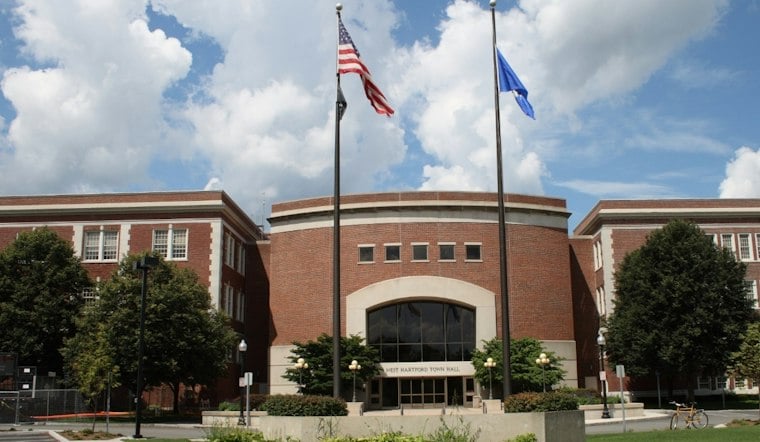
West Hartford property owners opened their mailboxes this week to a jolt: assessment notices showing residential property values have jumped by an average of 58.6%, part of a townwide revaluation that also pushed up values for condos, apartments, industrial sites, and commercial buildings. The notices went out Wednesday, kicking off a monthslong process that will determine what residents actually owe when tax bills arrive next summer.
Town Assessor Joe Dakers confirmed the residential increase, according to we-ha.com, which also reported that condominium values rose 57%, apartment values climbed 56%, industrial properties increased 41%, and commercial properties rose 31%. The new figures represent 70% of each property's estimated fair market value, the outlet noted, and every notice includes a side-by-side comparison with the property's prior market value and assessment from the 2021 revaluation.
Why Values Are Spiking Now
The revaluation is effective October 1, 2026, according to Vision Government Solutions, the firm the town contracted to revalue all residential properties, while Municipal Valuation Services handled commercial properties. The company notes that residential home prices in West Hartford have increased significantly since the last revaluation in 2021. Per the we-ha.com report, the town's Grand List is expected to show dramatic growth as of the October 1 date, driven mainly by revaluation amid a strong residential real estate market, with ongoing commercial development also playing a role.
That growth marks a sharp departure from recent years. A February report from CT Insider found West Hartford's taxable property value had reached $7.3 billion, a comparatively modest 1.1% increase of $81.5 million over the prior year. That same report noted the Grand List typically hadn't grown by more than 1% in non-revaluation years over the preceding decade — it grew just 0.83% one year and 0.08% the year before that. Dakers credited recent multifamily housing development and homeowner renovations for real estate growth in that earlier report.
What the Higher Numbers Do — and Don't — Mean for Tax Bills
Despite the eye-popping percentages, town officials are urging restraint. Vision Government Solutions states plainly that an increased assessment does not by itself mean taxes will rise, since the mill rate and the town's budget also factor into the final bill. The firm adds that no one can say what the mill rate or an individual tax bill will be until a complete Grand List is finished and a new budget is adopted in spring 2027.
The Town Council is scheduled to adopt a new mill rate in April 2027, with resulting bills — including any applicable exemptions — issued in June 2027, per the we-ha.com report. The town has not yet officially started its Fiscal Year 2028 budget process, the outlet reported, and officials say it's premature to speculate about what individual property owners will ultimately owe.
Notably, the question of whether West Hartford might phase in the higher values over multiple years, as it has in the past, remains open. The we-ha.com article states that such a phase-in has not been publicly discussed for this revaluation cycle. A Connecticut statute does give municipalities the option to phase in assessment increases resulting from a revaluation, according to the Connecticut General Assembly, though the specific procedures for invoking that option were not detailed in the available statute excerpt.
West Hartford has leaned on a phase-in before. The Hartford Courant reported that the Town Council voted in April 2022 to divide the impact of the 2021 revaluation over two years, applying 75% of the increase to that year's bills and the remaining 25% the following year. That earlier revaluation was described by the Hartford Courant as dramatically shifting the tax burden from local businesses to homeowners, as residential values climbed while many commercial and retail values fell — with some homeowners near Aiken Elementary and King Philip Middle School in Elmwood facing tax bills that would have been 20% higher had the change taken effect all at once. The town's tax rate ultimately dropped from 42.42 mills to 40.68 mills under that budget, the Courant reported.
How to Challenge Your New Assessment
Property owners who want to dispute their new valuation can schedule an informal conference with the revaluation company and the assessor's office during a window running from Tuesday, November 17, through Saturday, December 19. Those conferences are intended to review property values and assessment data — not tax rates or amounts, which are not addressed in these sessions. Owners with more than one property must schedule a separate conference for each one they're questioning, and conferences run Monday through Friday from 7:30 a.m. to 7:30 p.m., plus Saturdays from 9 a.m. to noon.
The town is asking homeowners to check whether their property information is accurate, review comparable neighborhood sales, and consider whether they could realistically sell their home for the assessed amount. Owners are encouraged to bring recent appraisals, a broker's opinion of value, or comparable recent sales in their neighborhood to make their case. Everyone who attends a conference will receive written notification of the results.
Property owners who remain dissatisfied after their informal conference can file a formal appeal with the Board of Assessment Appeals no later than February 22, 2027, with hearings scheduled for March 2027. Appeal forms are available in the assessment office, Room 142 at Town Hall, as well as online. Property owners can also review their updated market values and assessments online, and the state's standard revaluation cycle requires reassessment at least once every five years.





