

























































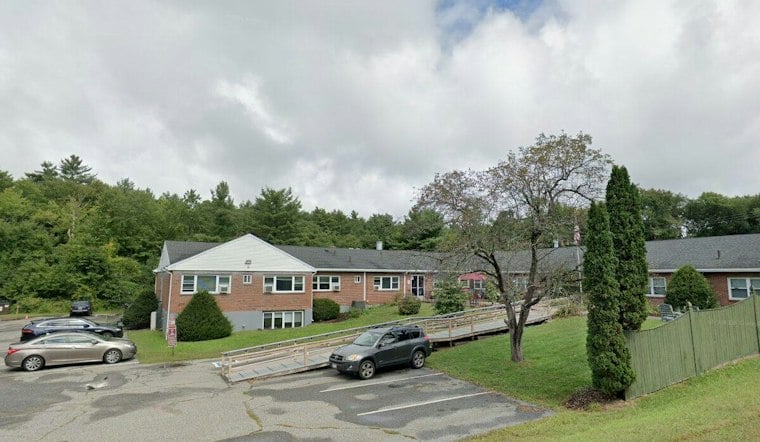
A five-year wait in East Longmeadow did not mean Pat Murray was waiting for a nursing-home bed. It was the estimate she received for an apartment after she retired in 2021; she was 79 when MassLive quoted her in 2026. She kept checking with the housing office and got an apartment more than three years before that estimate was up, MassLive reported. Her experience points to a distinction that can get blurred in discussions of elder care: housing, memory support and skilled nursing are different services, with separate routes to placement.
Licensed beds are not the whole measure
Massachusetts had 38,782 licensed nursing-facility beds, but about 38,000 were staffed, according to The New Bedford Light, citing a state long-term-care task force report. The report also said nursing homes need to hire more than 5,000 direct-care workers; meeting staffing and hourly minimum requirements would require, on average, 744 additional nurses working eight-hour shifts each day statewide, including 244 registered nurses. Those are statewide figures, not a count of beds available to a particular Western Massachusetts family.
The local picture includes both lost capacity and a planned expansion. JGS Lifecare told MassLive that four competing nursing homes in Springfield, Chicopee and Westfield closed in the two years covered by its report, removing nearly 450 beds; nearly 300 residents had to find another placement. At Palmer Healthcare Center, David and William Cavalier are investing $14 million in a renovation and expansion intended to bring the facility to 76 beds and add as many as 30 employees, MassLive reported. The project is a planned addition, not evidence that local placement pressures have eased.
Different needs, different waits
The Pellegrino family’s search illustrates how a move into one setting may not settle the search for another. Mark and Abby Pellegrino are caring for Mark’s 95-year-old mother, who has dementia. She is temporarily in assisted living while the family seeks a permanent place in specialized memory care. A possible Longmeadow opening had not become a placement: she had been passed over twice as current residents moved into the memory unit, and the facility was due to reconsider her admission on November 20, MassLive reported. JGS Lifecare’s regional business-development director also told the outlet the organization had a three-year waiting list.
A previous regional case shows why proposed closures should not be confused with completed ones. In 2020, Trinity Health Of New England Senior Communities revised a plan to close Farren Care Center in Turners Falls after state officials raised concerns, including about transferring residents during the pandemic, MassLive reported. That was a revised proposal, not a report that Farren had closed.
A growing older population, with uncertain capacity forecasts
The New Bedford Light reported that Massachusetts residents age 85 and older are projected to increase from 172,034 to 274,527 by 2040 and 325,148 by 2050. It also described differing assessments of future capacity: the state’s Executive Office of Health and Human Services estimates sufficient long-term-care capacity through 2034, while other projections point to a possible skilled-nursing-bed deficit by 2035. These are projections, not measurements of today’s local wait lists. The UMass Donahue Institute likewise cautions that its modeled population projections are reference points, not predictions.
Families looking beyond facility placement can ask about community-based support. The Massachusetts Executive Office of Aging & Independence says its 23 Aging Services Access Points offer options counseling, home-care programs and caregiver support for adults 60 and older and their caregivers; families can contact an access point to ask about eligibility and service limits: agency information. Those services do not determine whether a particular person can obtain specialized memory care or nursing placement.



