

























































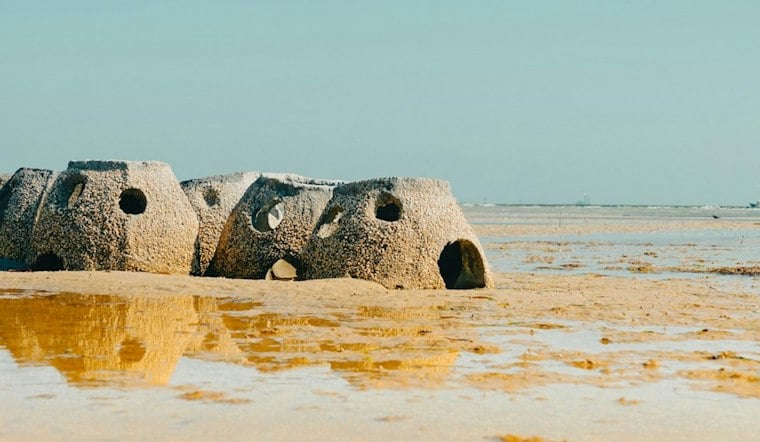
Researchers spent seven hours on the water along the Westport River in October, and by the end of the day they had counted hundreds of oysters clinging to the riverbed. The survey marked the opening move in what state officials call the first large-scale oyster reef restoration ever attempted in Massachusetts, with the Westport River set to become the project's flagship site.
The effort traces back to 2024, when the Massachusetts Division of Marine Fisheries and the conservation nonprofit The Nature Conservancy received a five-year federal grant to restore oyster reefs, according to the New Bedford Light. Beyond Westport, the team is pitching restoration sites in Fairhaven, Mashpee and Bourne, but none compare in scale to the Westport River, which carries 60 acres of proposed oyster reef and has been described as the largest of the proposed sites. As CT Insider reported, the project is located squarely in Westport, Massachusetts, and represents the state's first attempt at restoration on this scale.
Sean Terrill has said the Westport River site meets many of the criteria scientists look for before committing to a restoration project. The river's wide mouth and brackish waters are sheltered from strong currents, conditions favorable for oyster growth, since strong currents can prevent oyster larvae from establishing on the river floor in the first place. Muddy bottoms pose their own hazard, since oysters can become buried if the substrate is too soft.
Counting Oysters, One Square Meter at a Time
The October survey work fell partly to Summer O'Rourke, a seasonal technician for the Massachusetts Division of Marine Fisheries, who spent five hours counting and measuring oysters as part of the baseline assessment. The goal was to establish how many oysters already existed at the future restoration sites before any new shell goes into the water. Some survey areas turned up hundreds of oysters per square meter, numbers that stand out against the benchmark used in the Chesapeake Bay region, where the cited standard for a successful oyster reef is 50 oysters per square meter, restorations there having already proved successful.
Because Massachusetts has no statewide regulatory body managing shellfishing grounds, Terrill and The Nature Conservancy have had to seek town-by-town approvals to seed wild oysters. The plan, per the same account, calls for Terrill and his team to seed the future reef sites in spring with cultch, discarded oyster shells that give new oyster larvae something to grab onto. Once that cultch is placed, scientists will lay down spat-on-shell, a mix of oyster larvae and shells, to help jumpstart the colonies.
Why a Comeback Species Matters for the Whole River
Oyster reefs have declined by thousands of acres over the past 500 years, a drop blamed on overharvesting, fertilizer runoff, sewage and sediment. Terrill has framed the restoration push in blunt terms, saying the goal is to restore a severely degraded wild species and recover the ecosystem benefits that come with it. Those benefits include habitat for fish and other species, along with water-quality gains, since oysters filter nitrogen out of the river and help move excess carbon into the soil.
Terrill has also pointed to a longer-term payoff: if the Westport reefs take hold, they could eventually produce larvae that drift downstream and seed new colonies on their own. “We could restore even further downstream, and hopefully just create a meta population within the system that are all exchanging larvae and increasing genetic diversity,” Terrill said, according to the New Bedford Light. Restored reefs may self-populate over time this way, exchanging larvae with neighboring reefs rather than requiring constant human intervention. Terrill's stated ambition is to restore 2,500 acres of oyster reefs by 2050.
Shell Recycling and a Wider Regional Push
Part of the supply chain for future reef-building runs through the Massachusetts Oyster Project, which helps fish markets and seafood restaurants recycle their discarded oyster shells for aquaculture and restoration projects like this one. Roberta Carvalho, science director for the Westport River Watershed Alliance, is among those tracking the local effort as it moves from survey work toward actual reef construction.
Massachusetts is not alone in this push. Oyster reef restorations are already underway in New York and Rhode Island, and New York's efforts offer a glimpse of what a mature program can look like. On City Island, volunteers recently placed their first six permanent oyster reef balls into Eastchester Bay after more than seven years of research and planning, according to the Bronx Times, securing a New York State Department of Environmental Conservation permit just one day before the installation. Within the new reef-ball habitat, the group observed fish, crabs and shrimp moving in, with oysters already filtering water, though the organization cautioned that oyster restoration cannot solve pollution on its own when the source is sewage and stormwater runoff.
New York's Billion Oyster Project has scaled that model up dramatically, with one report from The Economic Times crediting the initiative with restoring more than 200 million oysters and rebuilding nearly 19 acres of reef habitat in New York Harbor as of September. That same outlet reported the project's goal as restoring 1 billion oysters to the harbor by 2030, though a separate Economic Times report described the target as 1 billion oysters across 100 acres of reef by 2035. Back in 2019, the project was working with 75 restaurants around New York City to collect the discarded shells that make restoration possible, a shell-recycling model not unlike the one now taking shape in Massachusetts.





