

























































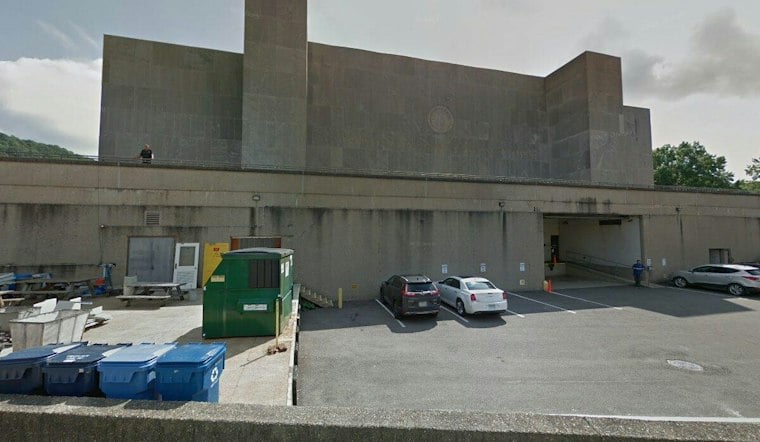
Wheeling City Council heard the first reading Tuesday night of a proposed ordinance that would create new zoning rules for data centers, a direct response to months of community concern over Silicon Foundation's plans to redevelop the former Centre Foundry site. The proposal would establish Article 1365 of the city's planning and zoning code, setting standards for power demand, water use, noise and emissions at data centers built in Industrial districts.
The ordinance's path to the council floor traces back to Silicon Foundation's purchase of the Centre Foundry property, where the company plans to build a phased data center and energy technology campus, according to The Intelligencer. That purchase and the development plans that followed sparked sustained public pushback, with residents turning out to speak at council meetings in July, August and September. Some of those same residents who had criticized the project returned to Tuesday's meeting to thank city officials for introducing the new regulations, the outlet reported.
What the Proposed Rules Would Require
Under the draft ordinance, companies seeking to build data centers in Wheeling's Industrial districts would need to submit a special-use-permit application covering electrical demand, water consumption, wastewater, air emissions and noise, the newspaper's earlier coverage of a draft review detailed. The rules also include guidelines on water reuse, an issue that has drawn particular attention given how much water large data centers can consume. A preliminary draft of the ordinance proposed a $5,000 application fee alongside a $75,000 surety bond, though the city solicitor, Humway-Warmuth, noted that bond figure could be increased, per the same account.
Wheeling Mayor Denny Magruder told the council the ordinance is meant to set limits without closing the door on development entirely. He said the city does not want to shut out economic opportunity, but also wants to make sure residents are safe and that development proceeds appropriately. Magruder added that council members and staff had listened to residents throughout the process but lacked information they could disclose at the time.
A Disputed Power Cap and Lingering Questions
Separate from the zoning ordinance, a memorandum of understanding tied to the Silicon Foundation project has drawn conflicting descriptions of its power limits. Magruder told WTOV the company would never go above 90 megawatts, while The Intelligencer's earlier reporting described the arrangement as the company agreeing to operate under the 90-megawatt threshold, which would keep regulatory jurisdiction within the city rather than triggering state high-impact oversight. Questions have also remained about the project's long-term employment picture, noise mitigation and utility rates, according to WTRF.
Data centers' thirst for water has become a statewide concern as artificial intelligence services and cloud software drive up demand, according to testimony at a West Virginia legislative hearing reported by News From The States. That reporting noted some data centers can use up to 5 million gallons of drinking water per day, underscoring why local water-reuse provisions have become a focal point in Wheeling's debate.
No Existing Template, But a Possible Model for Others
Wheeling's vice mayor said earlier this fall that she could not find any existing example of municipal planning and zoning legislation in West Virginia specifically written for data centers, according to The Intelligencer's October report on the draft rules. That gap in precedent is part of why the city's proposed ordinance could end up mattering beyond Wheeling. The Intelligencer has reported that Article 1365 could serve as a template for other communities seeking to regulate data centers that fall below the state's high-impact threshold.
Other West Virginia localities have taken their own approaches. In Charleston, a council member has proposed an ordinance requiring data centers to secure council approval, meet property-line setbacks, demonstrate they will not overtax water supplies or the energy grid, and maintain emergency response and decommissioning plans, per Mountain State Spotlight. Putnam County, meanwhile, passed a resolution setting expectations that data centers cover utility costs, protect water supplies and mitigate light and noise, though the outlet noted a resolution functions only as a statement of the governing body's opinion rather than an enforceable rule.
State Plan Would Shift Infrastructure Costs to Developers
West Virginia's broader Responsible Data Center Development Plan proposes that developers, not existing utility customers, bear the cost of the power capacity and electrical infrastructure their projects require, according to WV News. The plan also encourages closed-loop cooling systems, liquid immersion cooling and reclaimed water as ways to cut down on water use, and it calls for a Data Center Advisory Council that would hold public meetings and help shape statewide recommendations on issues like property setbacks and noise mitigation.
Back in Wheeling, the ordinance remains in proposed form. City council is expected to hold a second reading and take a vote during its next meeting, scheduled for Dec. 1.





