

























































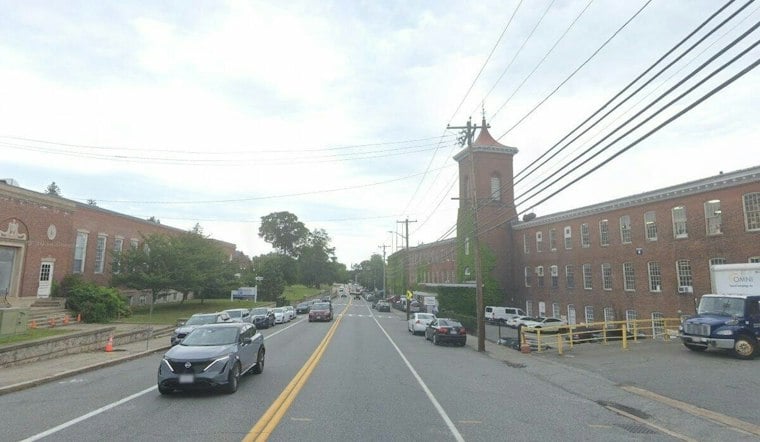
The sprawling former Whitin Machine Works complex in downtown Whitinsville, more than a million square feet of 19th-century industrial real estate, has new owners — and they didn't have to go far to find it. Whitinsville Works LLC closed on the 1,007,647-square-foot property at 1 Main St. for $13.2 million on Oct. 29, with the buying group led by two men who already run a manufacturing business inside the building.
John Rowland and James Sherman Rowland, who lead Highland Park Lapidary Co., an existing tenant occupying space inside the complex, headed the investment group behind the purchase, according to Worcester Business Journal. The deal was backed by $10.2 million in financing arranged by Marcus & Millichap Capital Corp., structured on a 10-year term at a 6.85% interest rate, with a 75% loan-to-value ratio and a 25-year amortization schedule, the outlet reported.
A Deal Built on Borrowed Money and Private Equity
Robert Damigella, who secured the loan with a regional bank, said in a statement that properties with this much character and history are rare, and that the goal was to deliver a financing structure that supports the buyer's plans for the asset. He added that his team was pleased to close a competitive loan that supported the buyer's plans, per the same account.
Whitinsville Works LLC is described as a newly formed Massachusetts commercial real estate entity. A federal Form D filing showed the company launched a $5 million private placement offering, with $3 million in initial equity sold Oct. 28, the day before the sale closed. The report notes that the LLC raised money from private investors to help fund the down payment and closing costs.
Paperwork tied to the purchase also points to another new entity: RWP Management LLC, registered in Massachusetts by John Rowland and James Sherman Rowland on Oct. 15, which listed 1 Main St. in Whitinsville as its principal business address, according to the article. The property transfer was recorded alongside a 38-page commercial mortgage and an assignment of leases and rents, and two prior mortgages on the property were formally discharged on Wednesday, Nov. 18.
From 1847 Textile Giant to Modern-Day Mixed-Use Hub
The mill's roots run deep. Whitin Machine Works was founded in 1831 by Paul Whitin and his sons, with the building itself constructed in 1847. By the 1920s, the company had grown into the world's largest manufacturer of textile machinery, and at its post-World War II peak it employed more than 5,600 people, per the report.
Textile machinery manufacturing at the site ceased in 1976, and the complex sat largely vacant until 1984, when WRT Management, operating on-site as Whitinville Redevelopment Trust, acquired the property and reimagined it as a multi-tenant industrial, warehouse and office hub. As Connect CRE put it, the historic property has since been reimagined into a commercial hub. Today the complex houses dozens of commercial tenants and sits in downtown Whitinsville with access to interstates 495 and 90 and Route 146, Worcester Business Journal reported.
What Happens Next Is Still an Open Question
Representatives for Whitinsville Works LLC and WRT did not respond to requests for comment regarding future capital improvements and property plans, leaving the new ownership group's intentions for the building unclear for now.
The sale lands amid a tight industrial market across the region. Worcester-market industrial asking rents averaged $10.94 per square foot NNN in the third quarter of 2026, up 4.0% year over year, according to Lornell Real Estate. Overall industrial vacancy in the Worcester market stood at 9.3%, compared with just 3.9% for small-bay space under 20,000 square feet, and the firm noted that industrial rents in Worcester run 30-50% below Greater Boston.
The purchase also arrives as regional planners take a closer look at the fate of Central Massachusetts' old mill buildings. Planning officials completed a project tracking historic mill use and adaptive-reuse challenges across the region, according to the Sentinel & Enterprise, which reported that the project's interactive StoryMap covers the status of historic mills in 15 selected mill towns. Whether Whitinsville's massive mill factors into that broader reuse conversation remains to be seen, but for now, it's firmly in the hands of the people already working inside it.




