

























































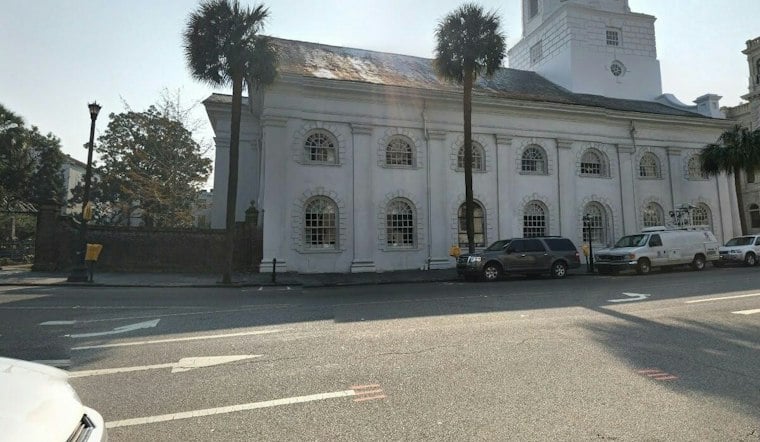
Jack Simmons stood before Charleston City Council last week and asked the city to set aside $1 million every single year for pedestrian safety. His wife, Annelise Simmons, a 78-year-old retired teacher and bed-and-breakfast owner, was killed on March 26 while on her daily morning stroll around the peninsula, struck by a pickup truck at the red-brick crosswalk where King and Broad streets meet.
Simmons described the morning of his wife's fatal collision as forever engraved in his psyche, according to the Post and Courier. He joined other residents at the October 27 council meeting pushing for what the paper calls a recurring, annual commitment in the city's budget, rather than a one-time pledge tied to a single grant or project.
He was not alone. Residents, parents and activists asked the city to reserve $1 million for safety improvements regardless of whether it receives a pending federal grant, and a petition on the issue has collected more than 2,000 signatures since spring. Hart Hagerty, who identified herself as a mother, business owner and seventh-generation Charlestonian, told council the city budget reflects its values.
A Mayor's Earlier Promise, Still Unfulfilled
The push is not entirely new. Back in April, Mayor William Cogswell said he supported adding $1 million to the city's budget for pedestrian safety projects, according to the Charleston City Paper. He also intended to move forward with the $1 million in the budget request, the same outlet reported. The Post and Courier reported that he directed city staff to find $1 million to fund additional pedestrian safety improvements. Whether either of those directives has translated into dollars actually written into a budget remains unclear.
Cogswell has said pedestrian safety is important and that the funding cannot come soon enough, per the Post and Courier's reporting. City spokesperson Deja McMillan told the Post and Courier that the city will pursue every resource and partnership to improve street safety and that leaders heard residents' request to prioritize the issue, but she said the city cannot yet promise the requested budget funding. Making room for it, she said, requires careful budget work over coming weeks.
Charleston is now drafting a budget that will take effect in January 2027, with a first reading scheduled for December 1. The city's 2026 budget topped $381 million, of which just over $9.3 million went to the traffic and transportation department — but less than $900,000 of that landed in the specific traffic safety cost center, according to public records cited by the Post and Courier.
Grant Money and Signal Timing Already in Motion
Charleston staff have applied for a federal grant aimed at improving street safety for pedestrians, cyclists, transit riders and motorists. The city's Traffic and Transportation Committee approved a grant application seeking $4 million from the Department of Transportation for pedestrian improvements across the city; if it comes through, the city would owe roughly $1 million of a larger grant total as its local match, per the Post and Courier.
Separately, the city said it would re-time every traffic light and pedestrian signal by June and add intervals that let people start crossing before vehicle traffic gets a green light, the Charleston City Paper reported in April. By September 2027, the city plans to complete pedestrian crossing safety features at several intersections. The King and Broad intersection where Annelise Simmons died was added to those planned improvements after her death, and city staff are also designing improvements to an intersection where a child was struck while walking to school this fall.
None of this emerged from nowhere. Charleston passed a resolution in 2025 aimed at reducing traffic-related fatalities and adopted a Safety Action Plan the same year listing 52 safety improvement projects across the city, according to Live 5 News. The city expects to complete a progress report on that plan in the first quarter of 2027. Charleston has also received grants in recent years to plan and pilot pedestrian safety measures, while residents are now seeking a recurring $1 million annual commitment.
How Charleston's Danger Rankings Stack Up
The urgency behind the push is rooted in numbers that paint a grim regional picture, though the exact ranking depends on which report you read. The Charleston City Paper reported in April that one analysis placed the Charleston metro area ninth nationally for pedestrian danger, citing an annual average of 3.66 pedestrian deaths per 100,000 residents from 2018 to 2022. By June, the outlet reported that the 2026 Dangerous by Design report ranked the metro area 12th nationally for pedestrian fatalities per capita — a different study with a different period, but a similarly bleak conclusion.
What is not in dispute is the trend line. The Charleston metro area recorded 154 pedestrian deaths from 2020 through 2024, up from 125 during the previous five-year span from 2015 through 2019, per the Charleston City Paper. Statewide, South Carolina averaged 184 fatal and 205 serious-injury pedestrian crashes annually from 2019 through 2023, and fatal crashes have been climbing even as serious-injury crashes have slightly declined, according to the South Carolina Department of Transportation.
A Countywide Tax Vote Looms
Charleston County voters will decide a half-cent transportation sales tax referendum on Tuesday, a measure city officials say would provide $22 million to Charleston specifically for bike and pedestrian improvements, according to McMillan. The broader county plan calls for $190 million dedicated to bicycle and pedestrian accessibility projects, with $90 million set aside for the Better Northbridge project and the remaining $100 million providing roughly $4 million annually for municipal projects, the Post and Courier has reported.
That would mark a jump from earlier arrangements, under which a 2004 county tax provides $1 million a year for bike and pedestrian projects through 2031, before a 2016 tax takes over and boosts that to $2 million annually through 2042. County public works officials have said they receive between $30 million and $50 million in municipal project requests every year — far outstripping what is currently available. The full tax package is projected to generate roughly $4.25 billion over 25 years, according to Charleston County Transportation.
For Jack Simmons and the residents who joined him at the podium, those countywide dollars are welcome but beside the point. Their ask is narrower and more immediate: a dedicated, recurring line in Charleston's own budget, not contingent on a grant application or a tax referendum, that guarantees $1 million a year goes toward making the city's crosswalks safer than the one that killed his wife.



