

























































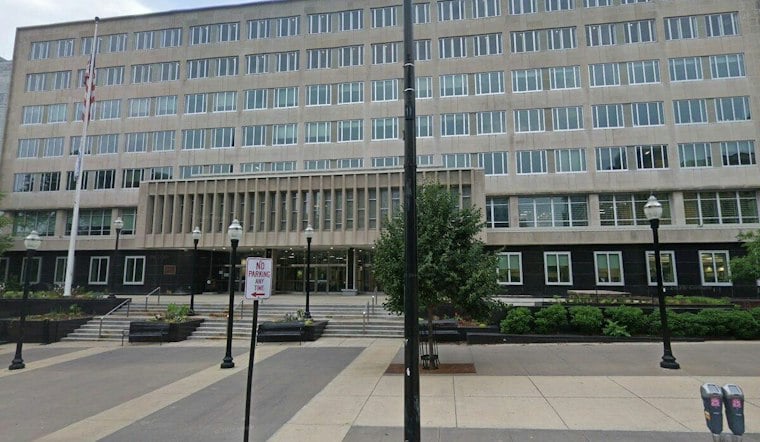
A conservative legal group has fired off letters to officials in six Wisconsin cities and six counties, warning them that grant programs, hiring goals and contracting rules tied to race and sex may now violate the state constitution — and giving them until Dec. 16 to drop the policies or face lawsuits.
The Wisconsin Institute for Law & Liberty says it sent the notices to Beloit, Kenosha, Madison, Milwaukee, Racine and Wausau, along with Dane, Door, Milwaukee, Racine, Walworth and Wood counties. “We have sent notices to 12 Wisconsin cities and counties demanding that they suspend and repeal unconstitutional race-based and sex-based ordinances and policies, or face litigation,” the group said, according to a statement posted by Wisconsin Institute for Law & Liberty. WILL attorney Dan Lennington said in a statement that cities and counties should end programs that discriminate based on race or sex or face court action, as reported by the Milwaukee Journal Sentinel.
The push follows the Nov. 3 passage of a state constitutional amendment barring public entities from discriminating against or granting preferential treatment based on race, sex, color, ethnicity or national origin in public employment, education, contracting or administration, according to the Journal Sentinel. Republican authors and conservative supporters have argued the amendment bans affirmative action and government or school diversity programs that offer preferential treatment, the paper reported.
Madison's Small-Business Grants in the Crosshairs
Among WILL's specific targets is a Madison program offering small-business grants of up to $10,000 with eligibility tied to ownership by “people of color” and women, the group said in a release posted by Wisconsin Institute for Law & Liberty. WILL attorneys argue that taxpayer-funded program delivering grants to small businesses owned by minorities and women now violates the law, according to the Yahoo News report on the letters. A City of Madison spokesman did not respond to a request for comment, per the Journal Sentinel.
Madison's existing Minority Business Enterprise program, however, is narrower than some descriptions suggest — the city notes on its own site that the MBE program applies only to certain federally funded contracts the city awards, and that a bidder on a project with an MBE goal must meet it using certified MBE firms or show good-faith efforts to do so, according to the City of Madison.
Milwaukee and Dane County Ordinances Flagged
In Milwaukee, WILL attorneys argued a city ordinance governing commission membership violates the new amendment, pointing to a requirement that the Social Development Commission include representatives of clergy and minority groups. Lennington and fellow WILL attorney Rebecca Furdek warned that spending tied to the ordinance could face legal challenge by impacted taxpayers, per their letter as described by the Journal Sentinel. Neither Milwaukee city officials nor Milwaukee County officials responded to requests for comment on the letters, the paper and the Yahoo News report on the letters both noted.
WILL attorneys separately identified eight Milwaukee County ordinance provisions they argued conflict with the amendment's goals, including one requiring the county ethics board's membership to reflect the racial and ethnic makeup of the county and another requiring contractors with 50 or more employees to maintain affirmative action plans, per the Journal Sentinel. In Dane County, WILL identified 10 ordinances tied to affirmative action and the racial and gender makeup of county commissions. Dane County official Aaron Collins said in a statement that the county received WILL's letter and would work with its legal team to evaluate the concerns and determine whether policy or ordinance changes are necessary, the station's report notes.
A Deadline Looms, but the Legal Fight Is Just Starting
WILL says it is asking for the flagged programs to be formally rescinded by Dec. 16, 2026, and that it plans to represent Wisconsin taxpayers and file lawsuits if officials fail to act, according to the group's own statement. Programs that could eventually face litigation, per the Yahoo News report, include state scholarships that consider race, Milwaukee's Office of African American Affairs and Wisconsin's Supplier Diversity Program.
Legal experts told the Journal Sentinel that the amendment's passage could prompt lawsuits testing the limits of its language, and that some local governments may end or alter programs or eligibility requirements simply to avoid becoming a test case. Commentators quoted by The Capital Times went further, suggesting the amendment's real-world reach will be defined by courts rather than the ballot language itself. “It could take a long time before we get that first decision,” one commentator said, according to that outlet.
How the Amendment Passed — and What It Leaves Out
Reports differ slightly on the exact margin by which Wisconsin voters approved the measure on Nov. 3: The Capital Times reported it passed with 56.5% of the vote, while Yahoo News reported that nearly 60% of voters approved the ballot question and 44% voted no. Opponents of the amendment raised concerns that the ballot language was misleading and omitted reference to existing state-law antidiscrimination protections, per the Journal Sentinel.
Wisconsin Public Radio also reported that the amendment itself does not mention discrimination on the basis of sexual orientation or gender identity, leaving that question outside its explicit text. Separately, Milwaukee County Executive David Crowley was elected governor of Wisconsin on Nov. 3, the same election that produced the amendment, according to the Journal Sentinel.
Wisconsin's fight echoes an older national template: in November 2006, 58% of Michigan voters approved Proposal 2, which barred public universities and schools from using race as a factor in admissions and prohibited preferential treatment in public education, government contracting and public employment based on race, sex, ethnicity or national origin, according to the Legal Information Institute at Cornell Law School. Wisconsin Statutes already require certain municipal commissions to be nonpartisan and include citizens representing clergy and minority groups, per the Wisconsin Legislature, though how that older statutory language squares with the new amendment remains an open legal question the courts have not yet addressed. For now, the Dec. 16 deadline WILL has set gives the dozen targeted governments roughly a month to decide whether to fight, comply, or wait for a lawsuit to force the issue.



