

























































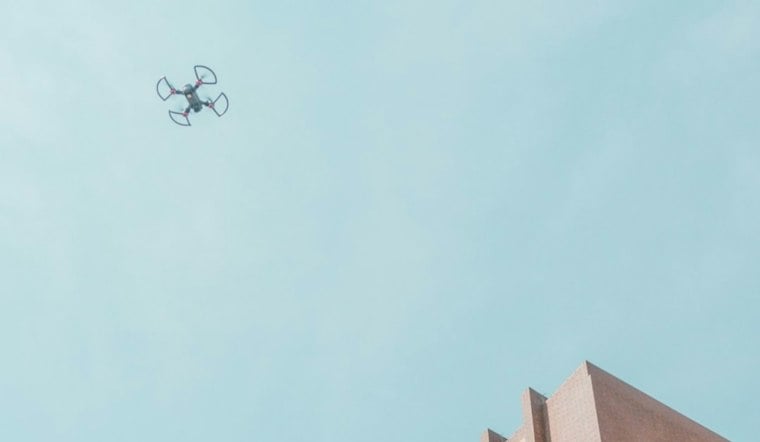
Woodland Park's Mayor and Borough Council unanimously introduced an ordinance on Oct. 21 that would bar commercial drone-delivery companies from using municipal property for takeoffs, landings and package drop-offs without authorization. The proposal would still let lawful drone deliveries reach private homes, subject to applicable laws, but it stops short of regulating flight paths, altitudes or where drones can legally fly over the borough.
According to TAPinto, the ordinance targets ground-level activity rather than airspace itself, focusing on launch and landing locations, package drop-off points and the facilities that support them. A proposed drone-delivery facility would need to comply with borough zoning regulations and obtain any required land-use approvals, permits and municipal authorizations before operating. Such facilities, which could include rooftops, loading areas, parking lots, platforms and other launch, landing, charging, storage or maintenance locations, would not be considered a permitted principal or accessory use unless expressly authorized under borough regulations — meaning an existing commercial establishment would not automatically be allowed to operate one.
Public Property Off-Limits Without a Permit
Under the proposal, commercial drone-delivery companies would be barred from using borough-owned land, buildings, parks, playgrounds, parking areas, sidewalks, streets and other public property for drone operations unless specifically authorized. The same companies could still use public property when given that authorization. Meanwhile, drone delivery operations conducted on private property would have to comply with applicable federal and state laws, and the ordinance carves out exceptions for law enforcement, first responders, emergency management, medical emergencies, authorized government operations and legally protected activities.
Mayor Tracy Kallert framed the ordinance as a preemptive move rather than a reaction to any specific incident. Per the same report, Kallert said the borough is proactively addressing the growing use of drone delivery technology and wants to tackle potential effects on neighborhoods before frequent commercial drone activity becomes commonplace. “Residents should be able to enjoy their homes, backyards and parks without unnecessary noise or intrusion,” Kallert said, adding that the ordinance reflects a commitment to thoughtful planning and prioritizing community interests.
Enforcement and Penalties
Mike Sica, chairman of the borough's Ordinances Committee, said the goal is to get ahead of potential safety concerns as drone delivery technology continues to develop. The mayor and council cited public safety, noise, privacy and the effects of drone activity in densely developed residential and commercial areas as reasons for the proposal, the article notes.
Violations would fall under the borough's existing general penalties, with each prohibited takeoff, landing, package drop-off or pickup potentially counting as an individual violation, and each day a drone-delivery facility operates unlawfully treated as a separate offense. Enforcement could come from the Woodland Park Police Department, the zoning officer, the construction official or the code enforcement officer. The ordinance still needs a public hearing and final approval before it could take effect.
Why Towns Are Racing to Get Ahead of Drone Delivery
Woodland Park is hardly alone in trying to write rules before drone delivery becomes routine. As DRONELIFE reports, local municipalities nationwide are scrambling to enact regulations to limit potential negative impacts on their communities as the industry expands. Walmart and Wing, for instance, expect their delivery network to exceed 270 locations in 2027 and reach more than 40 million Americans, according to a separate DRONELIFE report, and Wing drones are already making deliveries in Atlanta, Charlotte, Dallas-Fort Worth, Houston and Orlando, per Colorado Public Radio.
Other communities have taken varied approaches. In California, Belvedere's City Council passed a commercial drone-delivery ordinance on first reading by a 3-2 vote, restricting facilities to mixed-use zones with a conditional-use permit and proposing delivery hours of 7 a.m. to 9 p.m. Sunday through Thursday and 7 a.m. to 11 p.m. on weekends, The Press Democrat reported. Northglenn, Colorado, has floated a one-year special-use permit requirement limiting hubs to industrial zones, capping operating hours between 7 a.m. and 10 p.m., capping noise at 65 decibels at the property line, and requiring 200-foot buffers from homes, schools and childcare facilities, per the DRONELIFE report. Salem, Oregon's City Council, meanwhile, voted simply to study what regulations it could impose on drone delivery operations.
The Legal Limits on Local Drone Rules
Any local ordinance has to operate within boundaries set by state and federal law. New Jersey statute specifies that a municipal law concerning the private use of an unmanned aircraft system is preempted when it conflicts with the state act, according to the New Jersey Legislature. That same law also makes clear it doesn't block public employees, public entities or first responders from using drones for official duties performed in compliance with federal rules. The Federal Aviation Administration, for its part, oversees aviation safety and the national airspace, with its package-delivery framework addressing safety in the National Airspace System, operator certification under Part 135 and compliance with National Environmental Policy Act regulations.
That preemption question has already played out in New Jersey courts. Lodi adopted its own drone ordinance, Chapter 217, in June 2025, but a federal judge later held that the ordinance's ban on flights below 400 feet was preempted, according to DroneXL. Woodland Park's proposal takes a different tack by steering clear of flight-path and altitude restrictions altogether, focusing instead on ground facilities and municipal property — an approach that leaves the question of where drones can fly to federal and state law rather than local rule.





