

























































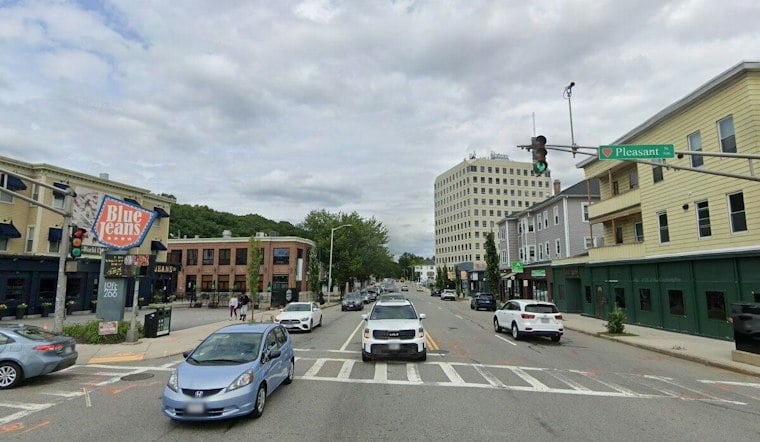
Maria Guadalupe Rodriguez and Rosalio Carmona built El Sombrero Taqueria from a food court stall into a two-location business, and now they want a third. But rising food costs are squeezing margins at the Kelley Square restaurant, and the 55-year-old chef says she isn't fully confident a bank will say yes when she applies again.
Rodriguez and Carmona, 52, own El Sombrero Taqueria, which they opened in 2022 after reopening a restaurant business using financing from Rodriguez's brother, who works in Mexico's petroleum industry, according to This Week in Worcester. The pair had previously run another Worcester restaurant that closed during the Great Recession. Their comeback started small: the first restaurant opened in the food court of Solomon Pond Mall in Marlborough in 2022, according to Livability, before a second location followed a few years later in Kelley Square.
Rodriguez is the chef at El Sombrero, and the outlet's reporting describes her developing additional revenue through employer pop-up events and Snackeria takeout, with her children and nieces working at Snackeria. Carmona, who studied hospitality at Quinsigamond Community College, works in the kitchen at the Beechwood Hotel in Worcester and invests his earnings back into the taqueria, per the same account. Rodriguez has said she and Carmona want to grow El Sombrero Taqueria, and the business is reportedly considering a third location on Park Avenue in Worcester, though it also anticipates raising prices as food costs squeeze margins.
A Family Business Built on Grants and Relatives' Backing
The restaurant's growth hasn't come from conventional bank financing alone. Rodriguez received a $25,000 City of Worcester grant for kitchen equipment, and she credits that grant, along with determined staff and a passion for the work, for the business's accomplishments, Livability reports. The company is a family affair in the fullest sense — Rodriguez works alongside six brothers, two sisters and extended family across the two locations, according to the outlet.
Despite that track record, Rodriguez plans to try again for a business loan to support expansion in 2027, per This Week in Worcester's reporting, and has said she isn't fully confident of approval but will try anyway. Carmona, meanwhile, hopes to buy a mobile home in Worcester, and the couple's 2005 purchase of a four-bedroom home in Shrewsbury is part of the backdrop the outlet lays out for their finances.
The Numbers Behind the Hesitation
The uncertainty Rodriguez describes tracks with broader lending data cited in the reporting. A March 2025 Federal Reserve report found that small-bank loan, credit-line or cash-advance applicants received at least some funding at a 75 percent rate in 2023, compared with 66 percent for large-bank applicants. A separate 2024 Federal Reserve survey, covering small employer firms nationwide, found white-owned businesses were denied financing at an 18 percent rate, compared with 29 percent for Hispanic-owned businesses and 39 percent for Black-owned businesses.
Those figures echo what a statewide survey found more broadly: 70% of Latino business owners and 68% of Black business owners identified getting capital as a high priority, compared with just 32% of white-owned businesses, according to the 2025 Massachusetts Small Business Survey, which polled 1,049 small business leaders with fewer than 500 employees between September 5 and October 13, 2025. Hispanic entrepreneurs owned 70,512 Massachusetts businesses, or 9.9 percent, according to 2022 census data cited in the SBA's Massachusetts small business profile, though more than 92 percent of those Hispanic-owned businesses had no employees.
Worcester's Ownership Gap by the Numbers
Locally, the disparity is stark. Worcester County employer businesses are owned by Black people and by Hispanic people each at a share below 1 percent, according to Worcester County Insights, a data initiative of the Greater Worcester Community Foundation and the Worcester Regional Research Bureau — figures that exclude sole proprietors and businesses without paid employees. The initiative traces such gaps to historical systems and policies that have harmed Black, Latino, Indigenous and other communities.
Elizabeth Cruz, president of the Worcester-based Latin American Business Organization, has said distrust of financial institutions and reluctance to discuss personal finances can discourage Latino borrowers from seeking loans in the first place. LABO connects entrepreneurs with city-backed grants, pitch competitions and Worcester Regional Chamber of Commerce membership, and has received funding from the Greater Worcester Community Foundation. Cruz, who told the publication her organization has about 400 members and close to 800 people active in some capacity, has said LABO members make important contributions in the country, and separately identified language barriers, access to capital, and understanding regulations and business processes as the chief challenges facing the businesses she serves.
Banking on Change, and Facing a Policy Shift
Monica Thomas-Bonnick, a Webster Five vice president and commercial lending officer, has said people like her have not had equal access to business ownership resources, and she advocates for technical assistance and borrower education on loan requirements and credit scores. Webster Five, based in Auburn, now emphasizes income-based eligibility criteria under new federal guidance after the Trump administration rescinded in August a 2022 federal statement that had said special homeownership programs for people of color did not violate federal regulations — with the administration saying the earlier interpretation could not be reconciled with the Equal Credit Opportunity Act or the Fair Housing Act.
On the homeownership side, the same reporting lays out a gap that mirrors the lending disparities: greater Worcester white residents have a 71 percent homeownership rate compared with 33 percent for greater Worcester Black and Hispanic residents. Nationally, a 2025 NAR report found white households had a 72 percent homeownership rate in 2023, compared with 51 percent for Hispanic households and 45 percent for Black households. U.S. Census Bureau data from 2022 found 22.6 percent of U.S. employer firms were minority-owned.
Darryl Caffee, senior vice president of home lending at Webster Five who joined the bank in 2018 after graduating from law school in 2012, connects aspiring homeowners with reduced-down-payment mortgage products and first-time buyer incentives, and has said access to such mortgage programs is necessary for aspiring homeowners. The Massachusetts Housing Partnership and Fannie Mae provide mortgage options beyond conventional mortgages, the reporting notes.
For restaurateurs weighing their next move without the benefit of a bank loan, Worcester has shown there are lower-stakes ways to test the market: Taste of Worcester, a Polar Park staple since the 2022 season, lets local restaurants set up in a small restaurant space for up to six games in a homestand without paying a participation fee, according to Edible Boston, with restaurants keeping 90% of profits on Monday-through-Thursday games and 80% on Friday-through-Sunday games.
For now, Rodriguez and Carmona's path to a third location runs through the same loan process that has left them uncertain before. Rodriguez's plan, as described in the original reporting commissioned by the Greater Worcester Community Foundation through the Worcester County Insights reporting project, is to try again in 2027 — hopeful, but not assuming the answer will be yes.





