

























































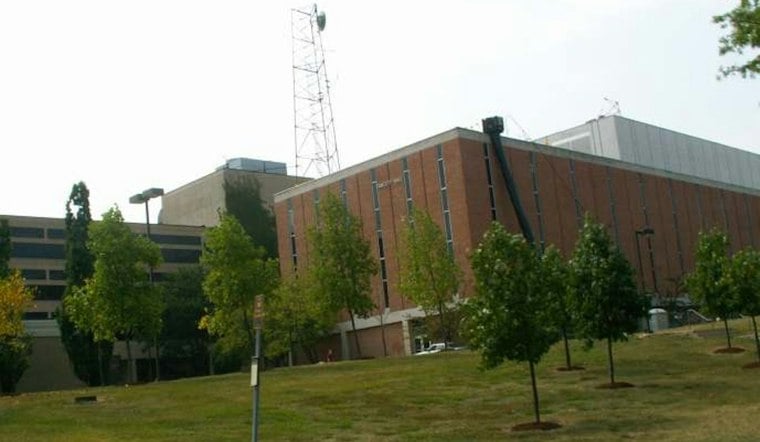
More than 100 choral voices and 45 instrumentalists will fill Antioch College's Foundry Theater this weekend as the World House Choir joins the Yellow Springs Community Chorus and Orchestra for Ralph Vaughan Williams' cantata “Dona Nobis Pacem,” a 40-minute plea for peace first written on the eve of World War II. The program, titled “Study War No More,” is open to the public, with performances running Friday through Sunday; Friday’s performance starts at 7 p.m.
The concert, held Nov. 13 through 15, pairs the Vaughan Williams cantata with several shorter works chosen to frame it, according to The Yellow Springs News. World House Choir director Catherine Roma will conduct those opening pieces and will also sing with the choir's tenor section during the cantata itself, while James Johnston takes the podium to conduct “Dona Nobis Pacem.” The piece's Latin title translates to “grant us peace,” and Antioch College's event listing describes it as a dramatic work that weaves together the words of Walt Whitman, the Old Testament and the Latin Mass.
A Cantata Roma Has Returned to in Times of War
This is not the first time Roma has turned to Vaughan Williams' cantata in a moment of global tension. She first conducted the piece about 35 years ago, around the time of the Gulf War, and conducted it again in 2003 as the United States moved toward war in Iraq, leading her church choir at St. John's Unitarian Universalist in Cincinnati alongside strings, percussion and piano. She began considering the cantata for the World House Choir at the beginning of 2026, saying she wanted the program to address war both through peacemaking and through depictions of war's carnage.
Vaughan Williams composed the cantata as fascism rose across Europe, and the work has been called a fervent plea for peace by Classical Music, which notes Albert Coates conducted its premiere in Huddersfield on Oct. 2, 1936. The composer drew on the Latin Mass, scripture — including words from Isaiah promising that nations will not make war — three Walt Whitman poems, and an 1855 speech by British parliamentarian John Bright, delivered against his country's growing involvement in the Crimean War.
New Voices Find Old Relevance
Among the singers this year is Kana Wisniewski, who moved from Iowa to the Miami Valley in July to start medical school at Wright State University and joined the World House Choir soon after. Wisniewski had previously worked with Mary Cohen in Iowa; both Cohen and Roma have led choirs of incarcerated singers in prisons. Wisniewski said the cantata remains relevant because people were asking for peace when it was written, and people are still asking for peace now.
Ellen Bierhorst, who has sung with the choir for several years, said the cantata sounded dissonant and unusual to her at first but later thrilled her. Roma has described her choir's singing as an act of resistance, and said she selected the preceding works to bring women's voices and perspectives into a program that otherwise draws heavily on men's words.
Opening Works Set the Program's Tone
The program opens with “Mother's Prayer” by Canadian songwriter Connie Kaldor, a piece that asks whether those who profit from war have no babies of their own to hold.
Roma has also connected the concert to broader concerns about arts funding, saying she sees the Trump administration's actions involving the Kennedy Center and arts funding as part of an effort to suppress creative expression and protest. The concert will feature soprano and baritone soloists alongside the full chorus and orchestra at Foundry Theater.





