

























































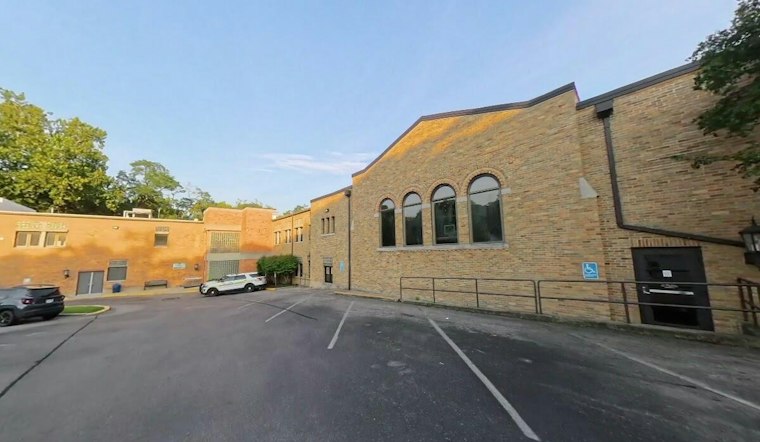
Yellow Springs Village Council is scheduled to vote Monday, Nov. 16, on a $20,689,366 budget for 2027. The proposal includes a $2.38 million police allocation, the largest in village history according to local reporting, and plans for major utility and capital spending; projected expenses exceed revenue, with reserves expected to cover the overall gap.
The Nov. 9 account by The Yellow Springs News says the budget appropriates $6.2 million for the general fund and $2.38 million for the Yellow Springs Police Department in 2027. It estimates Village revenue at $18,996,160. An October report on the preliminary budget gave a different revenue estimate — $18,646,160 — and projected expenses of $19,715,334. The reports do not explain whether the revenue estimate changed between the preliminary and final versions.
Police Spending in Recent Years
The available historical figures offer a partial comparison for the proposed $2.38 million allocation: The Yellow Springs News reported that YSPD spent $1,730,806 in 2024 against a $1.94 million public-safety budget, and that its 2025 budget was $2,044,258, then the department’s largest. These figures do not provide an adopted 2026 police budget or explain what staffing or service assumptions account for the 2027 amount.
A Budget Built Around Reserve Use
The budget relies on cash reserves to cover the projected difference between revenue and expenses. The October preliminary figures put 2027 reserves at $16.2 million, down from $17.3 million in 2026, and projected a $688,234 general-fund deficit, with $5.2 million in revenue against $5.9 million in expenses, according to ysnews.com. The Nov. 9 report gives a different general-fund deficit estimate of $983,234 and says the Village has $15.6 million in cash reserves and may need to draw on them to cover the overall gap.
Council President Gavin DeVore Leonard has said that passing a deficit budget has been the norm for Yellow Springs in recent years, describing it to ysnews.com as “par for the course” for the last several years. Yellow Springs began 2026 with a deficit budget that officials expect to balance by year-end, according to a memo cited in the same report. DeVore Leonard and Tiffany Hiser, the Village's primary financial consultant with the Shared Resource Center, have characterized the Village's practice of overestimating expenses and under-projecting revenues as a conservative budgeting approach.
Capital Spending Spans Utilities and Public Spaces
The 2027 plan appropriates $10.2 million across enterprise funds for water, electric, sewer, solid waste and storm water. Those funds are expected to have balanced budgets except for storm water and sewer, where projected expenses exceed revenue from consumer fees, tap fees and reimbursements. The budget also allocates $2.3 million to special revenue funds and $1.7 million to the capital project fund.
Among the capital allocations are $728,200 for sewer improvements, $372,810 for facilities, $319,220 for parks and recreation, $309,000 for electric improvements and $70,400 for the water capital fund. The Nov. 9 Yellow Springs News report also identifies $300,000 for sanitary-sewer slip-lining and about $100,000 for work on the Bryan Center roof. The plan includes $75,000 for tornado-siren upgrades and about $100,000 for new softball and baseball backstops at Gaunt Park.
Other proposed work includes $40,000 for curb replacement, $20,000 for continued sidewalk repairs, a $25,000 accessible ramp at the Village-owned Walnut Street building rented by the Community Foundation, and an $18,500-per-year contract with a consultant on accessibility compliance. The budget also includes $27,500 for an accessibility assessment of Village-owned rights-of-way and facilities, $15,000 for a Glass Farm wetland delineation study, and $80,000 to carry out a strategic plan. The October preliminary-budget report said a $100,000 capital improvement plan was spread across multiple utility budgets; it also noted that Council budget sessions would determine which projects moved forward and at what levels.
Vacancies and Staffing Assumptions
The budget assumes all administrative positions will be filled and that staff will use full employment benefits, although the village manager, assistant manager, public works director and finance director positions are vacant or staffed on an interim basis. General-fund allocations include $916,925 for administrative personnel; special-revenue funds include $871,370 for parks and recreation and $946,929 for street maintenance and repair. The affordable housing fund is budgeted at $155,473.
Housing Feedback Before the Vote
Before the budget vote, Council will hold a housing listening session Monday, expected to run from 4 to 5 p.m. and conclude by 6 p.m. Community members may speak about housing in Yellow Springs for up to three minutes each, after which Council members may ask clarifying questions.
Angie Hsu said the format would give speakers equal time and allow Council to follow up with questions, according to a memo cited in the Nov. 9 report. The session is intended to inform Council members ahead of a future housing retreat. Residents who cannot attend may send comments, questions or concerns to [email protected].
Housing Needs Behind the Listening Session
The listening session comes amid documented housing-cost pressures in the village. The Yellow Springs News, reporting on the Bowen housing needs assessment, said nearly 500 of Yellow Springs’ 1,884 households paid more than 30% of their income toward housing costs.
A 132-Year-Old Holiday Tradition Continues
Separate from the budget vote, Council approved $1,000 at its Nov. 2 meeting for the Village's annual flour and sugar distribution, which will again go out to Yellow Springs widows and widowers during Thanksgiving week. The tradition is in its 132nd year, tracing back to Wheeling Gaunt, who started the holiday flour distribution and bequeathed a nine-acre tract of land to the Village that is now Gaunt Park. Gaunt, who died in 1894, stipulated that funds generated by that land be used to buy and distribute flour at Christmas to Yellow Springs widows described in his bequest as just and worthy — a provision later broadened to include sugar and widowers as well.




