

























































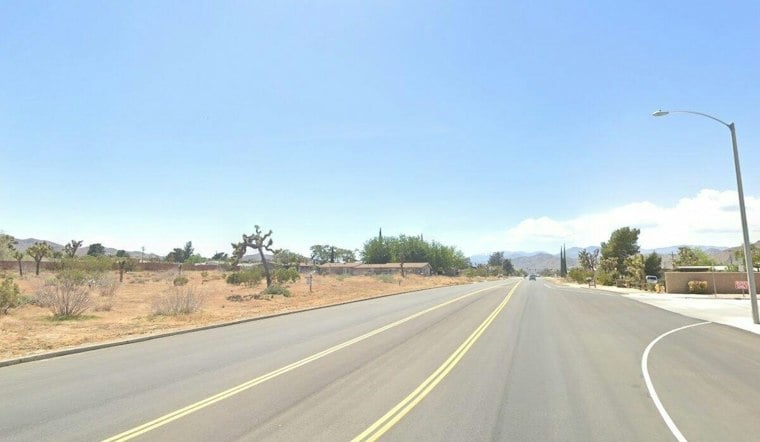
A longtime Yucca Valley family is speaking out about the financial strain of California's Western Joshua Tree protections, just as a newly signed state law takes aim at how those fees get calculated. Ruieta Da Silva, whose family has lived in the high desert community since 1978, says current regulations tied to the tree's protected status have created what she describes as an overwhelming financial burden for people who have owned their land for decades.
The law at the center of the debate is Senate Bill 1062, introduced by state Sen. Rosilicie Ochoa Bogh, a Republican representing Yucaipa. Gov. Gavin Newsom has signed SB 1062 into law, according to a report from the Banning Record Gazette. The bill directs the California Department of Fish and Wildlife to weigh project impact proportionality when it reviews and adjusts mitigation fees, and to consider tiered fee structures based on project type, size, or other relevant criteria, per that same report.
The Western Joshua Tree Conservation Act relies on in-lieu mitigation fees paid by permit applicants to fund land acquisition, restoration, and long-term conservation efforts, according to the Record Gazette's reporting. Existing law already required periodic review of the tree's status and adjustments to those fees, but it did not explicitly direct wildlife officials to account for fee proportionality when projects differ substantially in size and impact — a gap SB 1062 is meant to close.
A Family's Decades-Long Stake in the Land
Da Silva, a Yucca Valley homeowner, says her family has invested in local land and small businesses while paying property taxes over the decades, and that they have protected Joshua trees on their own property throughout that time. Her comments underscore the stakes for landowners who feel caught between conservation goals and the realities of compliance costs.
Those costs aren't hypothetical. A typical Yucca Valley property on Amador Avenue with roughly 74 individual Western Joshua Trees was estimated to face $46,700 in mitigation fees under a proposed conservation plan, according to figures from Coachella Valley-based civil engineering firm MSA Consulting reported by Z107.7 FM. That plan would charge mitigation fees for any improvement involving ground disturbance within 50 feet of a Western Joshua Tree, the station reported.
Beyond the fees themselves, the station's report noted that projects could also need a Western Joshua Tree “take permit,” a process that can tack on weeks or months to a timeline. One local example cited in that coverage: a Dutch Bros. location reportedly sat in a holding pattern because Western Joshua Trees stood within 50 feet of the proposed building site.
Advocacy From Apple Valley to Sacramento
The push for changes to the fee structure wasn't limited to Yucca Valley. Kari Leon, mayor pro tem for the Town of Apple Valley, traveled to Sacramento to speak in support of SB 1062 on behalf of Apple Valley and other High Desert communities, according to the Record Gazette. Leon said the state senate unanimously supported the bill before Newsom signed it into law.
Sen. Ochoa Bogh framed the legislation as a balance between species protection and fairness for property owners. She said protecting Western Joshua Trees can coexist with recognizing that projects differ in scope and impact, and that SB 1062 simply asks the state to weigh actual project impacts when setting mitigation fees, per the same report.
What the Law Is Meant to Fix
According to the Record Gazette's account, SB 1062 addresses a potential mismatch between mitigation fees and the actual impact of a given project, and may reduce the risk that smaller or lower-impact projects end up bearing the same financial burden as significantly larger, higher-impact developments. Ochoa Bogh has also pursued broader legislative efforts this session aimed at addressing implementation of the Western Joshua Tree Conservation Act while still maintaining protections for the species.
The underlying conservation framework has been evolving for more than a year. The California Fish and Game Commission approved the Western Joshua Tree Conservation Plan in August 2025, describing it as a living document meant to conserve the species amid habitat loss and a warming climate, according to the California Department of Fish and Wildlife. The agency has since held public meetings on regulatory updates to the fee structure, including one in early February on changes tied to the Western Joshua Tree Conservation Act.
Yucca Valley officials have said that any significant changes to the proposed plan and its fees would most likely require legislative action — exactly the route SB 1062 has now taken. For families like the Da Silvas, the hope is that a more proportional fee system will finally ease the cost of staying on land their family has called home since 1978.




