
























































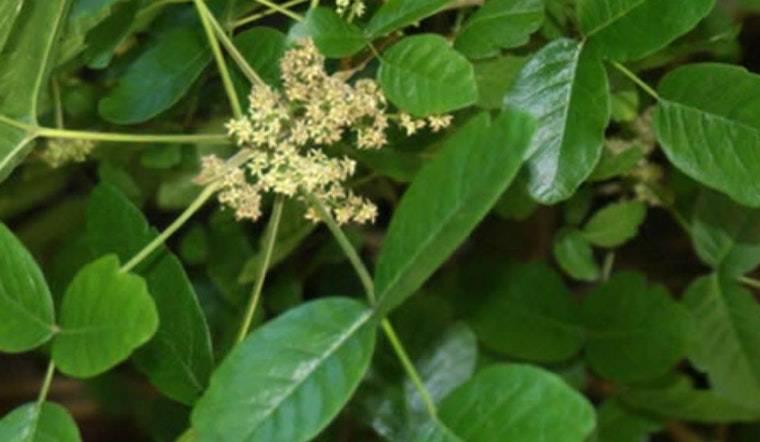
This Valentine's Day from the annals of unusual loves, we bring you a story from the horticultural world: a recent advertisement on the Haight's NextDoor offering a free, healthy sample of a California native shrub called Toxicodendron diversilobum, also and more lovingly known as Western Poison Oak.
The offering, which reads initially as a possible prank, reads as follows:
This plant is just emerging from winter having very few tiny leaves – a perfect time to plant! I would be happily plant it for the right person, which is someone who understands and appreciates native plants. NOTE: Poison Oak inflicts harm ONLY if provoked.
Poison Oak is part of the Sumac family and is attractive year round even in winter when it is deciduous. Small to medium size, erect shrub can grow to 3' to 10' foot in height or climbing vine on fence; easily maintain to any size. Shiny dark green leaves in spring and summer, which turn varying shades of red and yellow in the fall. Small, fragrant, long-stemmed, inconspicuous, yellowish-green hanging flower clusters. Plant in moist to dry, well-drained sites in the sun or shade, very drought hardy once established.
But indeed, the lead checks out: Bay Natives in China Basin offers, among other and more commonly popular California natives, small poison oaks for the especially dedicated native gardener in your life.
According to the original advertiser, this particular specimen ended up potted and well-loved on someone's front deck (at least for now).
According to the San Francisco Botanical Garden's information on the species, "Poison Oak is California's most prevalent wild shrub. It will form dense thickets, grow as a climbing vine, shrub or a small tree. Deserts, dense forests and altitudes above 4000-5000 feet are the only restraints to its growth. The common name refers to the striking similarity of the leaves to the genus Quercus (Oak)."
The plant thrives in our sandy, foggy, sunny climate, to the extent that SF Rec and Parks systematically removes it from public parks on a regular basis, although you can still rely on finding it around Corona Heights, Buena Vista Park, Golden Gate Park, Mt. Davidson and pretty much any other park with a wild streak.
For decades, Bay Area residents have fought poison oak with a battery of strategies, including herbicide and, more famously, roving herds of rental goats, which can eat poison oak without harm. Other, more traditional methods for clearing poison oak often result in heartbreak, because the toxic oils are present on the leaves and branches, and are easily inhaled when poison oak brush is burned.
So whichever way your garden love leads you this year, make sure you use adequate protection.




