

























































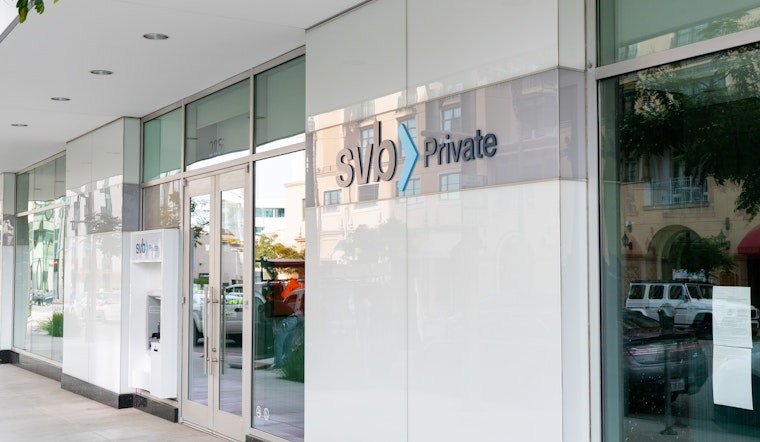
US authorities are currently investigating Goldman Sachs' role in the weeks leading up to Silicon Valley Bank's (SVB) collapse, specifically focusing on the advice Goldman Sachs provided to the bank, which eventually led to a public panic and a ripple effect throughout the regional banking system, as originally reported by the New York Times. Goldman Sachs has stated that it is cooperating with various governmental bodies, supplying the necessary information regarding their involvement with SVB around March 2023, when the bank sought their help in raising capital and sold them a portfolio of securities.
The investigations circle around Goldman Sachs advising SVB to sell a $21 billion portfolio of US government debt that had lost significant value due to rising interest rates, according to a New York Times article. SVB followed this advice, quickly selling the portfolio and revealing a resulting $1.8 billion loss. The investment bank also attempted to arrange the sale of SVB's stock, but as described by a Bloomberg article, they were unable to finalize the deal and the bank run that ensued ultimately led SVB to collapse.
Goldman Sachs says "various governmental bodies" are engaging in “investigations and inquiries” about its role in Silicon Valley Bank's doomed capital raise https://t.co/91cJlbyhf8
— WSJ Markets (@WSJmarkets) May 4, 2023
This financial crisis not only affected SVB, but it also began impacting other regional banks, sparking fears regarding their stability, and reaching as far as Europe, wherein Swiss banks Credit Suisse and UBS were forced into a government-orchestrated merger, as mentioned in the Bloomberg report. The banking crisis has since worsened, with First Republic Bank's failure leading to the second-largest bank bailout in US history. Two finance professors, Andrew Metrick of Yale's School of Management and Paul Schmelzing of Boston College and Stanford's Hoover Institution, predicted this scenario six weeks prior to the events, basing their expectations on the behaviors of regulators during historical banking-sector interventions in 138 countries, dating back to the 13th century, as reported by MarketWatch.
With these recent turn of events, questions arise regarding the Federal Reserve's supervision in handling the crisis. In a report prepared by Michael Barr, the Fed Board of Governor's vice chair of supervision, it is revealed that the supervision of SVB was inadequate and that the bank was poorly managed, with little attention paid to liquidity and asset-liability-management practices, according to a Barron's article. Various supervisory weaknesses were identified, and though the examiners found these weaknesses, there seemed to be a lack of critical action taken towards correcting them. With the current state of the industry holding trillions of dollars of loans and securities, the change in policy and increased risks suggest that more trouble may lie ahead, yet it remains unclear if the impact can be managed.
The ongoing investigations into Goldman Sachs' involvement in SVB's collapse, the subsequent reverberations throughout the banking system, and the predicted "systemic bank-distress episode" pose challenges and concerns not only for those directly involved in the matter, but also for the industry as a whole. What remains to be addressed are the supervisory processes and the ultimate responsibility for these events, as Barron's highlights the report's lack of discussions regarding the Fed's chain of command and how decisions are made. With the crisis having just entered its third month and similar events historically lasting months to years, per Schmelzing's interview with MarketWatch, the industry braces itself for an uncertain future and the potential for further complications.





