

























































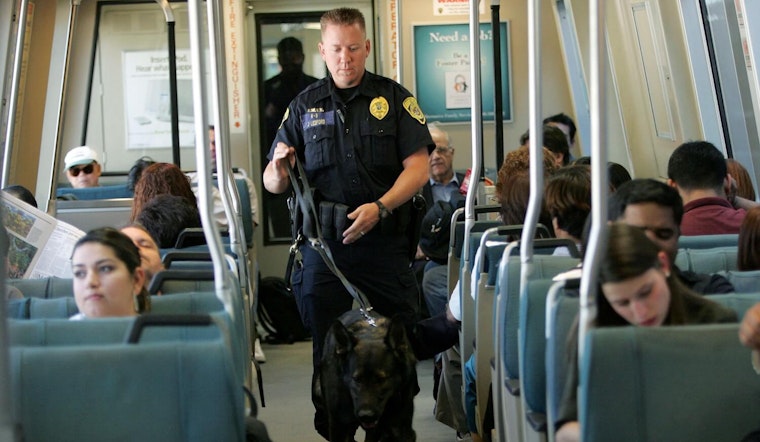
Bay Area Rapid Transit (BART), a vital transportation system for the San Francisco Bay Area, is preparing to undergo a significant study centered around its policing tactics and their response to fare evasion, with the primary focus being the potential involvement of racial bias in their methods, according to ABC7 News. This 18-month-long study will be conducted jointly by the Center for Policing Equity (CPE) and BART's Office of the Independent Police Auditor, aiming to provide the transit authority with data-driven recommendations for improvement.
Fare evasion has long been a monetary drain on BART; officials estimated that the agency lost around $25 million per year before the pandemic, as reported by the San Francisco Chronicle. To curb this issue, BART increased its response to fare evasion in 2018 by requiring proof of payment from riders inside fare gates and on trains. Adults caught without proof face a $75 charge, while minors face a $55 charge.
With such significant financial losses attributed to fare evaders, it's no wonder that BART has taken a more strict approach. However, a crucial question arises—could racial bias play a role in BART police's approach to fare evasion enforcement? As another Axios article mentioned, previous research found that Black BART riders were stopped by BART Police Department (BPD) officers eight times more frequently than White riders and experienced BPD use of force 15 times more often.
The study takes on added importance in light of these findings, as it seeks to uncover the root causes of such disparities. The researchers will look into evasion enforcement data, review BPD's legal policies and practices, and gather input from community members, as reported by Axios. The aim is to ensure that BART's reform efforts are effective in promoting racial equity, while also being sustainable in terms of transit system operational costs.
Hans Menos, Vice President of the Triage Response Team at CPE, said in a statement that all transit riders should have a sense of belonging, freedom, and safety while using public transportation, which includes "protection from racial bias, and freedom from harassment at the hands of law enforcement," according to CPE's official announcement.
The study will incorporate various sources of information, such as community opinions on fare evasion enforcement and its impacts, an in-depth analysis of enforcement data, and a review of national trends and best practices among transit agencies regarding fare evasion enforcement. Financial analyses of BART's current fare evasion enforcement operations, including evaluating evasion-related impacts on revenue and assessing the recuperability of losses, will be supported by Stout Risius Ross, LLC (Stout).
BART's willingness to address racial equity concerns in its policing strategies comes at a pivotal time in America's ongoing struggle with racial injustice. The results of this study, and the implementation of its recommendations, hold great potential for improving public safety while promoting equitable treatment for all BART riders. By working toward eradicating racial bias and building a more inclusive transit system, BART can act as a trailblazer for other transportation agencies across the country to follow the path of reform and racial equity in their policing practices.



