

























































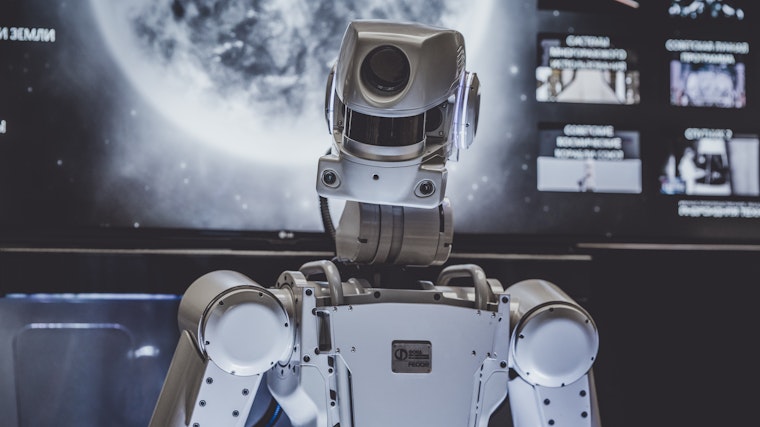
What if the future of relationships and love looks entirely different than what we know today? A former Google research and development executive, Mo Gawdat, has recently made startling predictions about the potential for AI-powered sex robots to feel "alive" and not only transform our intimate experiences but also our understanding of love and relationships, as reported by OutKick.
Speaking on the "Impact Theory" podcast, Gawdat speculated that technological advancements in artificial intelligence (AI), virtual reality (VR), and augmented reality (AR) could cause humans to blur the line between actual sexual encounters and those that are with AI-powered sex robots. One day, we may not even be able to discern between a real human and a robot during intimate moments, according to New York Post.
While some view this prospect as a horrifying dystopia, others believe it's an inevitable part of our rapidly evolving technology. One could argue that society is already beginning to grapple with the introduction of AI into our love lives. For instance, a 23-year-old Snapchat influencer, Caryn Marjorie, recently created a ChatGTP-powered doppelgänger of herself for erotic pillow talk, which boasts over 1,000 "boyfriends" who each pay $1 a minute for its services, per the New York Post.
Moreover, Rosanna Ramos, a 36-year-old mother of two from the Bronx, virtually "married" an AI bot created with the Replika app, which uses AI to learn and mimic users' texting styles, providing a more human-like experience.
On the other hand, critical voices argue that this type of technological advance could have severe implications for human development and our ability to connect with one another authentically. The introduction of dating apps has already led to concerns about the decline in young people's communication skills. It's not hard to imagine that a world dominated by AI-powered sex robots could exacerbate these issues and fundamentally change interpersonal relationships for the worse.
The primary concern surrounding AI sex robots is not necessarily their potential to imitate human interactions, but rather the philosophical and ethical questions they raise. Some may argue that if our brains are convinced a robot is sentient or experiencing emotions, it might not matter whether they are or not.





