

























































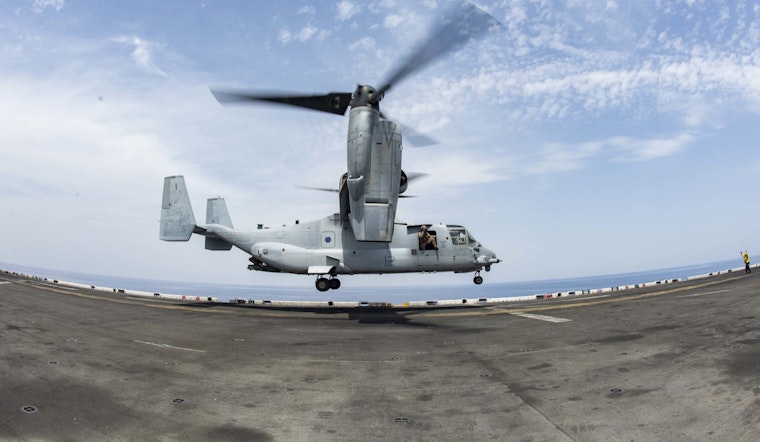
On June 8, 2022, a tragic V-22 Osprey crash caused the deaths of five Marines, and now, over a year later, officials have determined the cause to be a mechanical failure. According to a Fox News report, the investigation ruled out pilot and maintenance errors and deemed the crash "catastrophic, unpreventable and unanticipated." The specific issue was identified as a "dual hard clutch engagement" that led to engine failure.
Five Marines lost their lives in the accident, including two pilots and three crew chiefs. The Marine Corps and families of the deceased were briefed on the investigation's findings, which absolved the aircraft's crew and maintainers of any errors, as reported by Breaking Defense. Following the incident, various assessments and stand downs were conducted to address the Osprey's gearbox problem across the joint force, including the Air Force, Navy, and Marine Corps, all of which currently operate variants of the aircraft.
The investigations conducted since the catastrophe have helped further the understanding of hard clutch engagement (HCE), but the definitive root cause of the issue has yet to be identified. However, as mentioned by Col. Brian Taylor, a program manager, several solutions have been implemented to reduce the likelihood of an HCE event and increase aircrew safety, as cited in a Military.com article.
Despite concerns over the potential risk of HCE-related accidents, military forces continue to fly the V-22 Osprey. Maj. Gen. Bradford Gering states in a letter following the investigation that the input quill assemblies, new solutions implemented in February 2023, only reduce the risk of a mishap due to HCE and do not provide a complete understanding of the root cause or a definitive fix to the problem. The V-22 program office further claimed that efforts to mitigate HCE have reduced the risk of its occurrence by more than 99%, as reported in Military.com.
Since the fatal crash in June 2022, the Marine Corps has worked with industry partners to improve the aircraft's drivetrain and flight control system software while also integrating a crash-survivable, high-temperature, fire-resistant flight data recorder into all MV-22B aircraft. These actions complement the Marine Corps' efforts to improve aircrew safety. However, as the root cause of HCE remains unknown, some concerns linger about the long-term safety of the aircraft platform, which is flown not only by the U.S. military but also by the Japanese military, with other countries such as Israel and Indonesia expressing interest in the Osprey over the past decade.





