

























































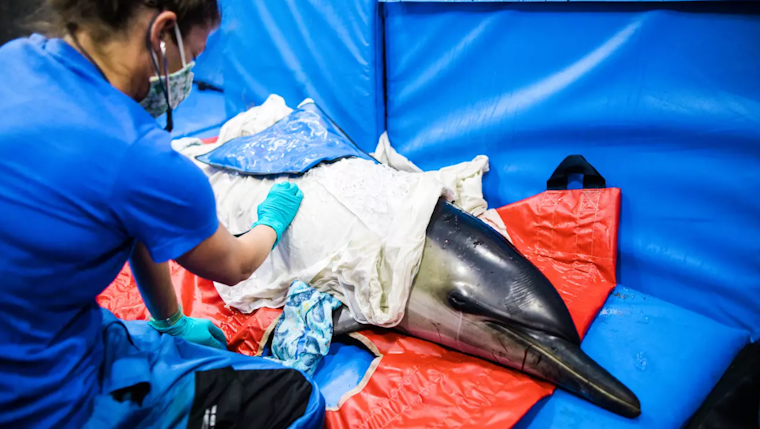
With the unfortunate title of 'most dolphin strandings in the world,' Cape Cod is facing a growing marine ecological crisis. To aid in the rescue and rehabilitation of stranded dolphins and porpoises, the International Fund for Animal Welfare (IFAW) opened a first-of-its-kind Dolphin Rescue Center in Orleans, Massachusetts. This new facility aims to not only resolve the immediate dangers these mammals face but also to bolster research and education surrounding the phenomenon. According to the Boston Herald, the center provides a short-term rehabilitation option for stranded marine mammals, offering them a chance at survival through advanced diagnostics, treatments, and additional recovery time.
The state-of-the-art facility, which occupies a former retail space, includes two large pools, filtration systems, a veterinary laboratory, a pharmacy, and office spaces that can accommodate around 12 patients a year. The IFAW, which has been federally permitted under the National Oceanic and Atmospheric Administration for 25 years, is no stranger to the issue of stranded marine animals. Responding to over 400 live stranded dolphins, whales, and porpoises in the past five years, the IFAW has provided crucial support and expertise in marine mammal rescue and research. As reported by NBC Boston, Brian Sharp, the director of IFAW's Marine Mammal Rescue Team, highlights the goals of the new facility: "It's innovative in that it's looking at doing intensive care short-term, so animals will be here for about 24 hours to 96 hours, so one to four days receiving advanced diagnostics, advanced treatments, all in the effort to get them back out into their habitat as quickly as possible."
It is essential to understand what drives the frighteningly high number of strandings on Cape Cod. Sharp explains that dolphins often follow fish into the Cape, only to become trapped when the tide recedes rapidly. Navigating the sandbars becomes impossible for these creatures, which leads to stranding and, in many cases, death. The new Dolphin Rescue Center seeks to provide critical medical support for animals in distress and promises to expand research and international training opportunities. As noted by NBC Boston, the center has already attracted interest from around the globe, with two members of the Kenyan stranding team training with the IFAW in June.
In addition to the direct support that the facility offers, one of the center's key functions is to serve as a hub for compassionate expertise. The IFAW staff, including marine biologists, veterinarians, and animal care specialists, provide around-the-clock care for their marine patients, all while working to advance our understanding of these strandings. The facility will not be open to the public; however, a public outreach center will offer access to educational materials and surveillance footage of the treatment areas.
The IFAW urges citizens to report stranded animals or unusual marine activity in at-risk areas: If spotted early enough, small boats may be able to escort dolphins out of harm's way before they become stranded. Ultimately, the Dolphin Rescue Center seeks not only to rehabilitate the animals that find their way into its care but also to prevent future strandings and protect the viability of marine mammal populations in the region.





