

























































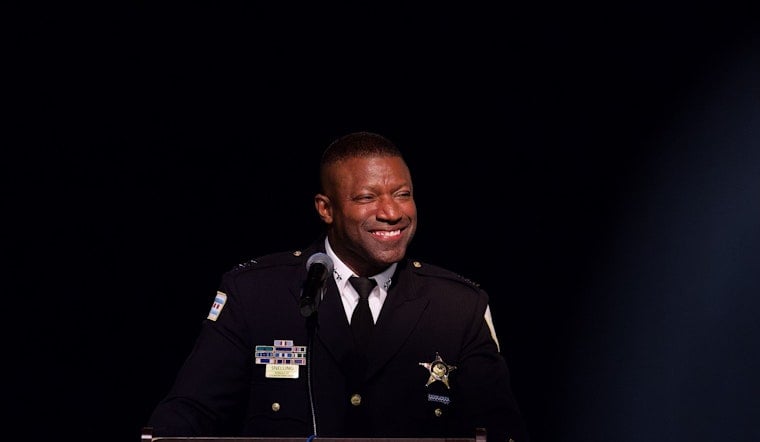
Larry Snelling is the city of Chicago's presumed next superintendent of the Chicago Police Department (CPD). Snelling took public questions for the first time at a forum.
Addressing various public safety concerns in a question & answer session, Snelling emphasized the importance of collaboration between city residents and police officers. As the Chicago Tribune reported, he stated, "We have to be partners in this. These officers have to be a part of the community, they have to embrace the community, and I'm sure they would love it if the community embraced them the same way. This is the only way we get to the bottom of this."
In his career, Snelling rose through the ranks of the CPD, garnering a reputation as a longtime training academy instructor. However, the South Side Weekly revealed that Snelling faced multiple excessive force complaints during his time as a beat cop in the 1990s, two of which resulted in suspensions.
Now as a nominee for Chicago's top cop, Snelling's history raised concerns about his ability to lead a department grappling with issues of police reform and community trust. The Chicago Sun-Times also noted that interim Superintendent Fred Waller's recent personnel changes may affect Snelling's ability to assemble his own leadership team should he be confirmed as the CPD superintendent.
During the forum hosted by the National Museum of Mexican Art in Pilsen, Snelling was asked how he planned to maintain his independence amid the inevitable criticism that accompanies such a high-profile position. He responded, "Great leaders have no fear of criticism, and it’s going to come."
Snelling also drew upon his own experiences growing up in Englewood to urge the community to address the root issues of youth violence. He reminded his audience, "Our children have become victims, and not just victims of crime, [but] victims of being ignored."
In order for Snelling to become the permanent superintendent of CPD, he must receive approval from the full City Council. For now, he is using the forum as an opportunity to clarify his positions and lay the groundwork for open discussion with the community.





