

























































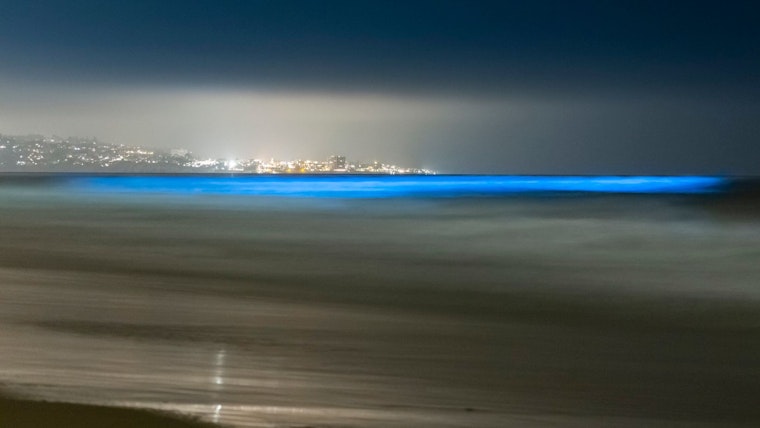
This week, the coast of Del Mar witnessed a captivating spectacle as the ocean waters turned a rusty shade of red while electric blue bioluminescent waves rolled into parts of San Diego. The phenomenon is a result of an algal bloom, caused by the phytoplankton 𝘓𝘪𝘯𝘨𝘶𝘭𝘰𝘥𝘪𝘯𝘪𝘶𝘮 𝘱𝘰𝘭𝘺𝘦𝘥𝘳𝘢 (L. poly), which casts a reddish hue to the waters during the day, and at night, it creates a mesmerizing bioluminescent glow, according to Scripps Oceanography.
Red tides are common occurrences in most coastal regions but they differ greatly in intensity, duration, and effects. According to Drew Lucas, an associate professor with Scripps Institution of Oceanography, the discoloration is a result of the accumulation of billions of cells of L. poly, a type of dinoflagellate plankton. The bioluminescent waves are created when the L. poly organisms are physically disturbed, like from breaking waves or marine life moving through the water, triggering the plankton to release a flash of light.
This magical transformation has brought delight and fascination to beachgoers, as photos and videos of the glowing waves have been captured in several San Diego areas including Scripps Pier north, Encinitas D Street, Moonlight State Beach, Terramar Point in Carlsbad, and Oceanside's south strand, as per Fox 5 San Diego report.
Red tides typically last for several weeks, but major events such as this one can last for a month or even longer.





