

























































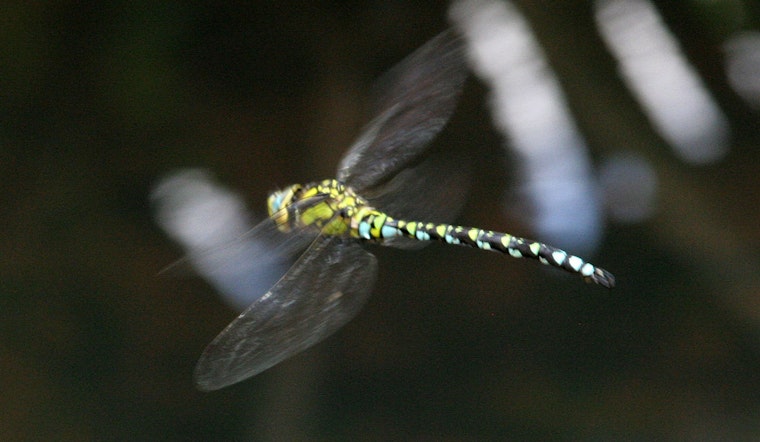
In recent weeks, millions of common green darner dragonflies have migrated across Lake Michigan, making Chicago their temporary home on their journey from Canada to the Gulf Coast. Their increasing presence has left residents and experts alike in awe, and there's more to this incredible phenomenon than meets the eye. Accordingly, an investigation into the reasons behind this surge in dragonfly populations is underway, as reported in a recent article from the Chicago Sun-Times.
Chicago's lakefront is now a pit stop for these fascinating creatures during their biannual, multigenerational mass migration across North America. These dragonflies are in search of suitable aquatic habitats to lay their larvae, which will develop over the winter and spring months before emerging when the surrounding water temperature is ideal. As entomologist Melissa Sanchez Hererra of the University of Alabama explained, "You want to be in a place where your larvae will not freeze. So that’s basically the reason why they’re like looking and moving all around."
Douglas Taron, curator of biology at the Peggy Notebaert Nature Museum, further noted that the phenomenon of dragonfly swarms is quite uncommon in the Chicago area during this time, especially the "feeding swarms" where dozens that, might turn into hundreds of dragonflies whirl around each other hunting smaller insects such as mosquitoes and gnats. As seen in NBC Chicago, this migration of green darner dragonflies typically takes place in the fall.
Why the sudden surge of dragonflies in the Chicago area? One theory suggests that the increased presence of these captivating insects could be attributed to the large numbers of mosquitoes in the region. "With all of those mosquitoes there was a big food supply for the dragonflies and so it's possible that a lot more of them successfully became adults," Taron said in an NBC Chicago interview.
Jacob Drucker, a doctoral student studying ornithology at the University of Chicago and the Field Museum, recently began tracking swarms of dragonflies using weather radar. This unusual form of remote sensing, typically used for precipitation detection, has captured the extent of their migration patterns and demonstrated the significant impact of wind on their movement. Drucker's research sheds light on the potential for using weather radar as a tool for monitoring biodiversity and understanding a severe loss of species worldwide.
Although it remains uncertain how long these dragonflies will inhabit Chicago's lakefront, experts urge residents and visitors not to be alarmed by their increased numbers. Dragonflies are not dangerous to humans, as they don't bite or sting. In fact, their presence can be beneficial for the environment acting as natural pest control, and their seemingly choreographed swirling dances contribute to the beauty of Chicago's lakefront landscape.





.jpg)