

























































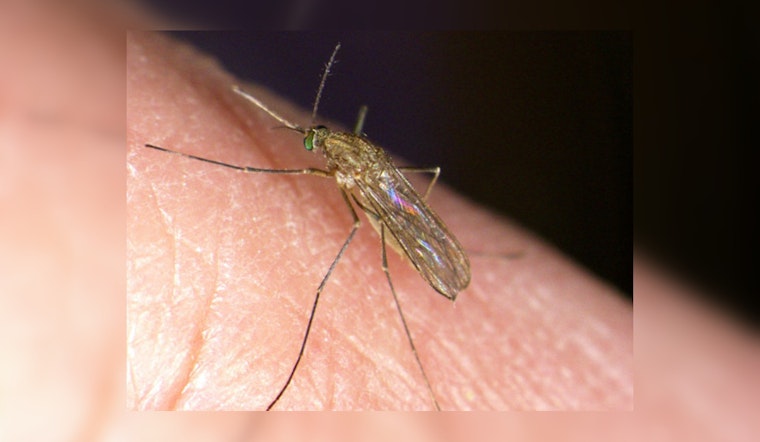
As the threat of West Nile virus continues to grow, the Contra Costa Mosquito and Vector Control District (CCMVCD) has taken action to safeguard communities in Discovery Bay, Brentwood, and Concord. Yesterday, mosquito control measures were implemented in 12 locations throughout the area, according to a post by the City of Concord, California.
From dawn (approximately 5:00 a.m.) to 8:00 a.m., the CCMVCD used truck-mounted, ultra-low volume sprayers and backpack sprayers to control adult mosquitoes at various locations, such as Cambridge Park, Eagle Peak Greenspace, and Walnut Country Clubhouse. To view an interactive map and learn more about the operation, visit the CCMVCD website.
The insecticide Suspend SC was used, applied at a rate of 1.0 ounce per 1,000 sq. ft. by backpack sprayers. The Environmental Protection Agency (EPA) has registered these pesticides for controlling mosquitoes and protecting public health, and according to the CCMVCD, they pose minimal risks to human health and the environment when used according to label directions.
According to the CCMVCD, there is generally no need to relocate during mosquito control operations, as the pesticides have been evaluated and found to have low risks.
West Nile virus is a cause for concern as it can have serious health implications. The Centers for Disease Control and Prevention (CDC) states that about 1 in 5 people infected with the virus develop a fever and other symptoms, while around 1 in 150 will develop a severe illness affecting the central nervous system, such as encephalitis or meningitis. The elderly and those with underlying health conditions are at a higher risk of developing severe illness from the virus. In such a context, mosquito control measures implemented by CCMVCD are critical to prevent further spread of the illness.
Communities across the United States have also faced increasing pressure to control mosquito populations due to the spread of West Nile and other mosquito-borne viruses. A report by the National Association of County and City Health Officials stated that since 1999, West Nile virus has been detected in more than 300 mosquito species. Experts believe that investing in integrated mosquito management, surveillance, and public education are essential strategies to combat the growing threat.





